Can You Use HSA or FSA for Braces? The Tax-Free Loophole Most Families Miss (2026 Guide)

Quick Answer
Yes. Orthodontic treatment is a qualified medical expense under IRS Section 213(d), making it fully eligible for both HSA and FSA funds. Paying through pre-tax accounts reduces effective cost by 20 to 30 percent. HSAs are preferable because funds roll over indefinitely — FSA funds expire at year end.
If you’ve been overlooking a $5,000+ orthodontic invoice and questioning how on earth you’re supposed to pay for it, there’s a financial tool sitting right inside your employee benefits portal that most people totally forget about.
Health Savings Accounts (HSAs) and Flexible Spending Accounts (FSAs) can legally be used to pay for braces, Invisalign, retainers, and really every different orthodontic cost — all with pre-tax greenbacks.
That unmarried sentence can prevent anywhere from $1,200 to $2,800 in typical dental care, depending on your federal tax bracket. And, in line with the Employee Benefits Research Institute, kind of the forty% of employees who have access to their money who don't contribute a dollar in any way.
In this booklet we will destroy precisely how to picture HSAs and FSAs for dentistry, important differences between them, IRS rules that need to be followed (and most of those blogs are wrong), and with a step-by-step playbook to help maximize your tax savings before the calendar year deadline hits.
1. HSA vs. FSA: What’s the real difference?

Before you start throwing cash into an account, you need to grasp who you really are — because HSA and FSA operate under totally extraordinary sets of rules, and combining them can cost you money.
Health Savings Account (HSA)
The HSA is paired with a high deductible health plan (HDHP). If your medical health insurance has a deductible of at least $1,650 for people or $3,300 for families (2026 IRS limits), then you in all likelihood qualify.
- Contribution limit (2026): $4,300 for individual coverage; $8,550 for family coverage.
- Rollover: The fund rolls over year after year indefinitely. There is no "use it or lose it" rule.
- Portability: The account is entirely yours, even if you switch employers.
- Triple Tax Benefit: Contributions are tax-deductible, growth is tax-free, and certified withdrawals are tax-free.
Flexible Spending Account (FSA)
An FSA is offered to your organization in the course of open enrollment, no matter what type of fitness plan you receive. It’s easy to install, however there are stricter rules.
- Contribution Limit (2026): Corresponds to $3,300 employees.
- Rollover: This is where people burn. Most FSAs have "use it or lose it" coverage. At the break of the plan yr, the unused finance expires. Some employers offer a $640 carryover or a grace length of 2.5 months, but not all do.
- Portability: If you depart your company, the account is gone.
2. Who are eligible for orthodontic expenses?
This is the component where most articles cross over when they come up with a vague list. Let’s be unique, due to the fact the IRS has only described this under Publication 502 quite definitively.
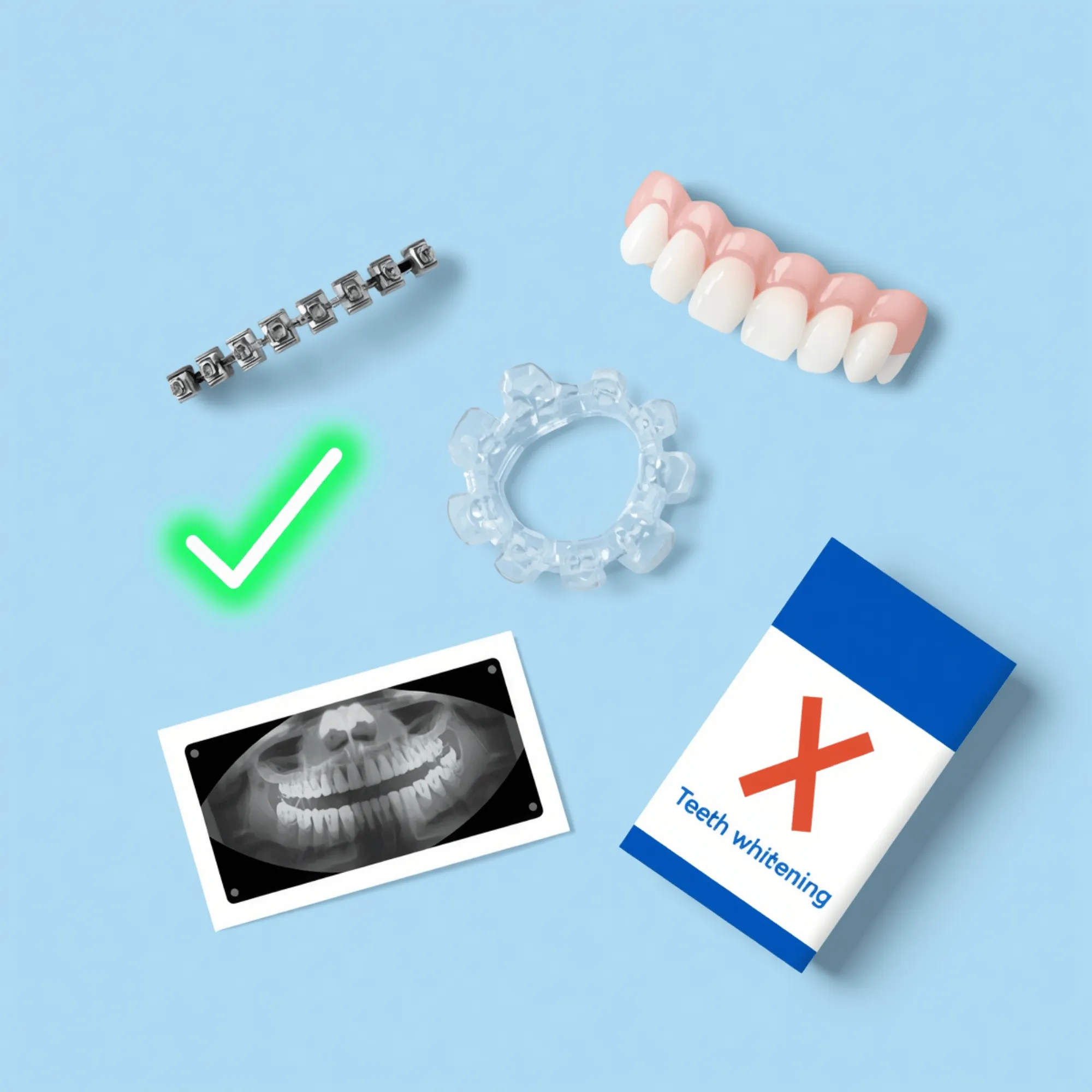
Fully eligible expenses (HSA & FSA):
- Traditional Metal Braces (Brackets, Wires, Fastenings)
- Ceramic Braces
- Invisalign and clear aligners (when prescribed through a licensed dentist)
- Lingual Braces
- Retainer (Hawley and Permanent)
- Dental Consultation & Diagnostic X-Ray
- Emergency Bracket Maintenance
- Adjustment Appointments
Not eligible:
- Teeth whitening (considered beauty/cosmetic)
- Over-the-counter aligners purchased without a prescription
- Cosmetic Veneers (Except Medically Important)
Here's something most blogs may not tell you: The line between "aesthetic" and "medically necessary" dentistry is blurrier than you worry. If your dentist documents your functional issues — jaw pain, difficulty chewing, setting uneven teeth — the IRS class goes from aesthetic to medical, and your HSA/FSA fully becomes usable.
3. FSA "Lump Sum" Trick IRS Allows

This is one of FSA’s most powerful and understated features when it comes to braces. Here’s how it works:
With an ordinary FSA (not HSA), your entire annual election is available on the first day of the plan yr, even if you haven't actually contributed all of the cash yet.
Real-world example:
Let’s say you elect $3,300 to your 2026 FSA at some point in open enrollment. Your plan starts January 1st. On January 15, you only have one paycheck deducted (about $127). But you can go to your dentist’s office that same day and use your FSA debit card to pay the entire $3,300 towards the cost of your braces.
And here's where it gets even extra exciting: If you leave that employer mid-year, you don't usually have to back less the difference. The IRS calls this the "uniform coverage rule," and it really works closely within the employee's wishes.
4. How the IRS Treats Dental Payments
Here’s the rule that travels on additional people rather than anything else: For dental treatment in particular, the IRS considers the date of the charge to be the date of the carrier.
Why does this count? Because braces are a multi-year treatment. You get the braces in October 2026, make month-to-month payments through 2027, and finish them in March 2028. General FSA guidelines say you can claim only for services provided for the duration of your plan year.
However, dentistry provides a special exception. According to IRS Revenue Ruling 68-452:
- If you pay a lump sum in 2026 for treatment that extends through 2027, the entire cost is an expense in 2026 — eligible for your 2026 FSA.
- If you bill month-to-month, bills made within the 12 months of the 2026 calendar are eligible for your 2026 FSA.
5. HSA vs. FSA: Which should you use for braces?
If you’ve got access to both, here’s the most honest solution financial advisors will come up with:
Use the FSA first. Save the HSA.
Why? Because FSA funds expire. HSA funds do not. Your HSA is largely a retirement funding account with a clinical spending option. Every dollar you leave for your HSA can develop tax-free for decades. The math strongly favors burning through FSA bucks first and treating your HSA as a last resort.
6. How to Stack HSA/FSA with Insurance
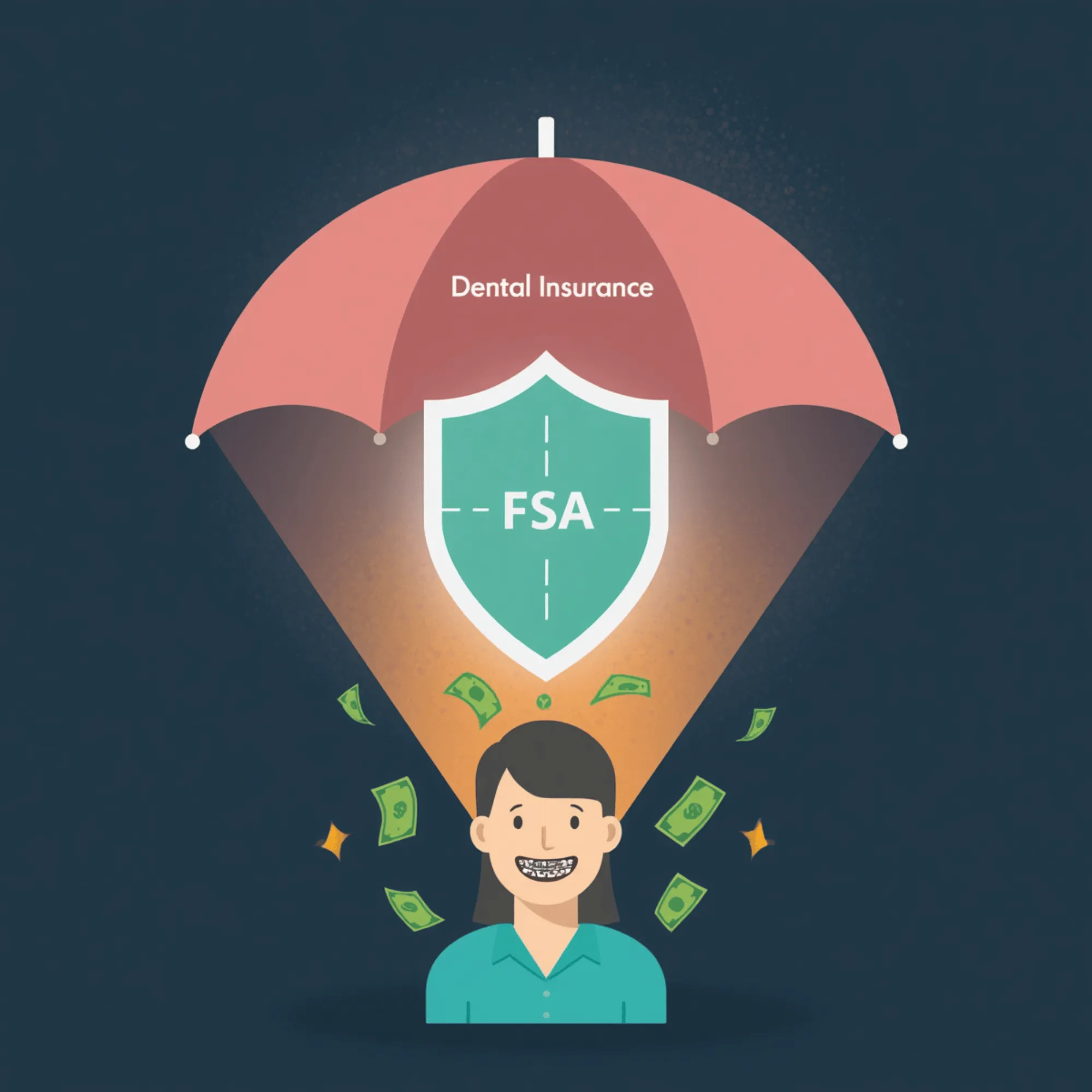
If you’ve got dental coverage plus an HSA or FSA, you can legally do all 3 levels to reduce your out-of-pocket cost to about 0.
- Submit to dental insurance first. Let your insurance pay for its element.
- Pay off the final balance using the FSA/HSA value range. Your FSA or HSA covers some stuff that insurance won’t — co-pays, deductible differences, etc.
- Request an itemized declaration from your dentist showing the coverage fee and your personal duty.
Example status:
- Braces Treatment Price: $6,000
- Insurance Lifetime Maximum Payout: $2,000
- Balance out of pocket: $4,000
- FSA election used: $3,300 (pre-tax)
- Actual coins out of pocket: $700
- Financial savings tax on $3,300 FSA (24% bracket): $792
7. Year-end deadline rush: Don’t let your FSA dollars disappear

If you’re reading in Q4 (October thru December), pay close attention. This is the window where thousands of bucks evaporate in FSA benefits every 12 months because people are not working on time.
Your year-end checklist:
- Check the stability of your remaining FSA. Log in to your benefits portal.
- Schedule an orthodontic session now. The session itself is FSA-eligible.
- Ask for an estimated down payment. Ask your dentist to accept a lump sum down payment.
- Purchase eligible supplies. Tooth wax, prescription mouthwash, and electric toothbrushes.
- Check your business enterprise carryover policy. Know your plan's unique policies.
8. Common Mistakes That Get Claims Denied
- Submitting a "treatment estimate" instead of a paid receipt.
- Failing to include the orthodontist's Tax ID (EIN).
- Using an HSA/FSA for a family member who isn't a tax dependent.
- Claiming the full treatment cost in Year 1 when you're on monthly payments.
- Missing the claims submission deadline.
Summary: Your HSA/FSA Orthodontic Action Plan
Braces are one of the largest out-of-pocket medical prices. Using your HSA or FSA properly turns the tax code into an appropriately cut price for your dental care.
View Full Cost Guide