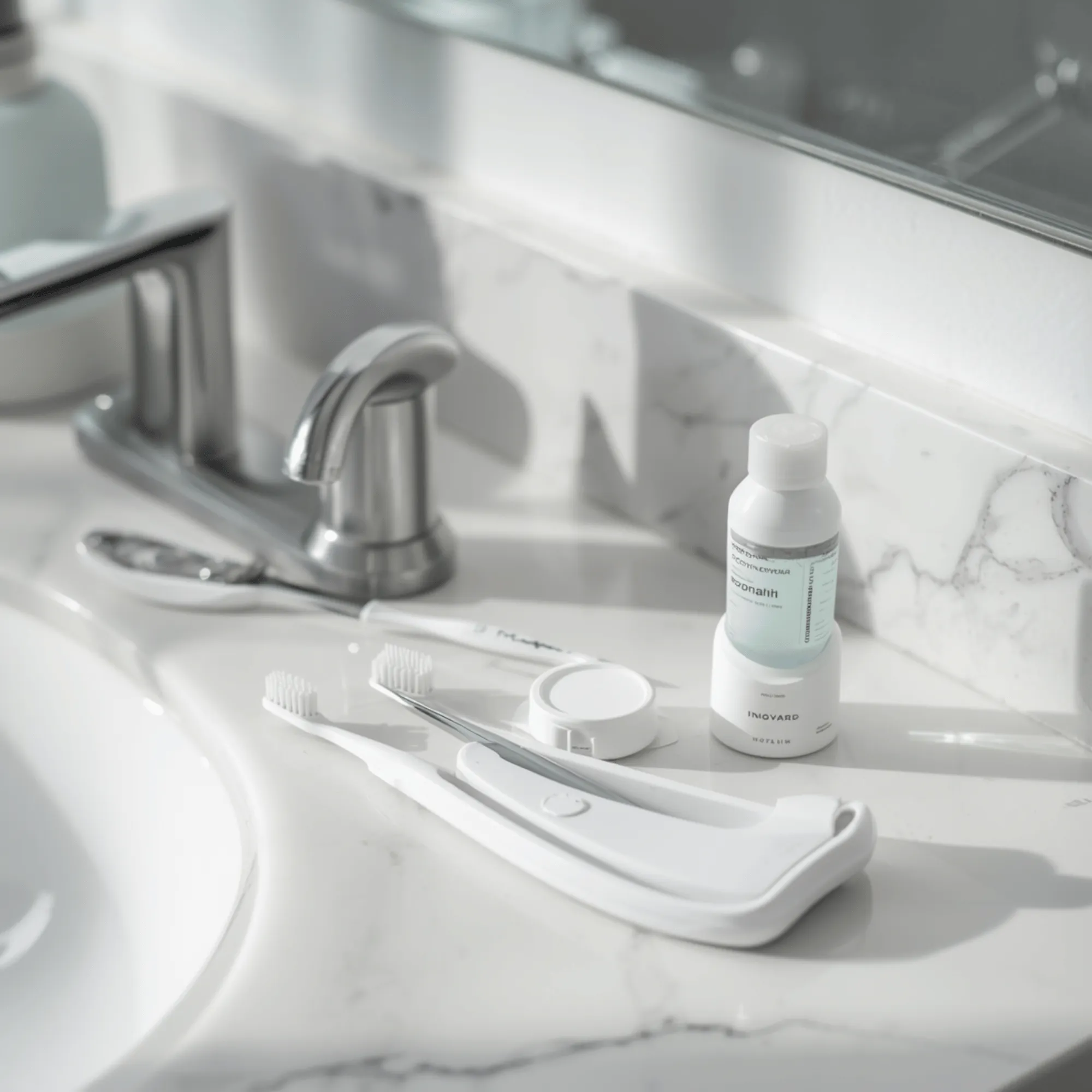
Getting braces is a huge milestone toward a straighter smile, but it comes with one important lifestyle change: your oral hygiene routine needs a complete overhaul. The moment those brackets and wires are bonded to your teeth, you suddenly have dozens of new surfaces where food, plaque, and bacteria can hide — surfaces your old brushing routine was never designed to clean.
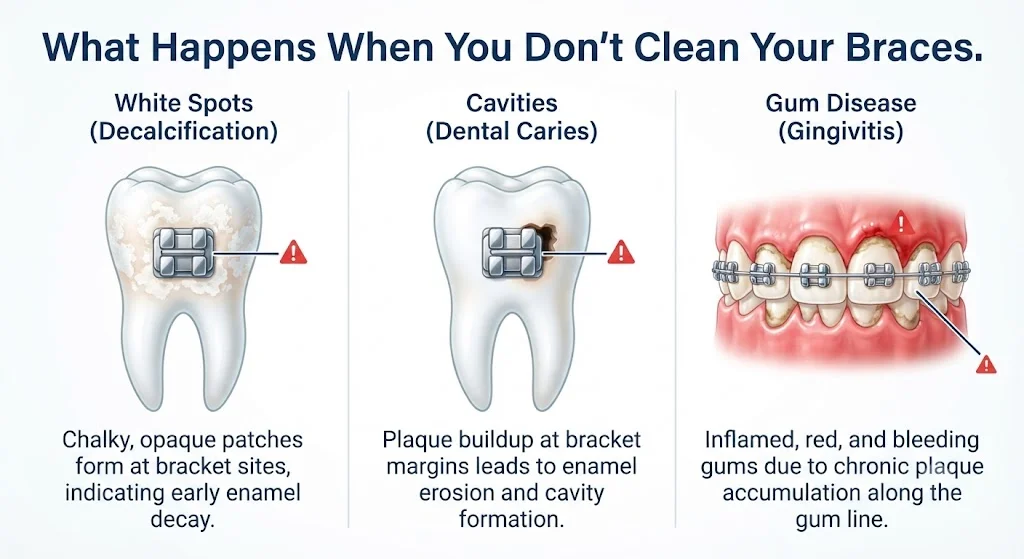
If you don't keep your braces clean, you risk plaque buildup, cavities, swollen gums, and the dreaded white spots — permanent enamel damage that shows up the day your braces come off, right where each bracket was.
This guide covers the daily hygiene routine, the best tools to use (water flossers, electric toothbrushes, interdental brushes), product choices, and how to prevent white spots before they start.
1. The Daily Routine: Brushing with Braces
With braces, brushing twice a day is no longer enough. You need to brush after every meal and snack to prevent food and plaque from sitting against your brackets. Plaque acid production begins within 20 minutes of eating — and with braces trapping food in place, that acid stays in contact with your enamel far longer than it would otherwise.
How to Brush with Braces (Step-by-Step)
- Rinse first: Swish with water before brushing to loosen and wash away large food debris trapped in the wires and brackets.
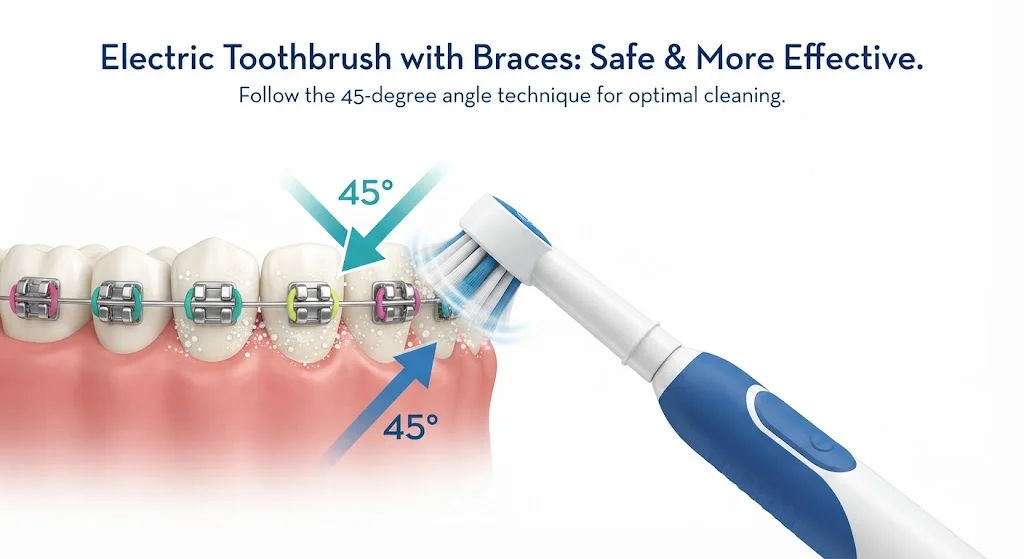
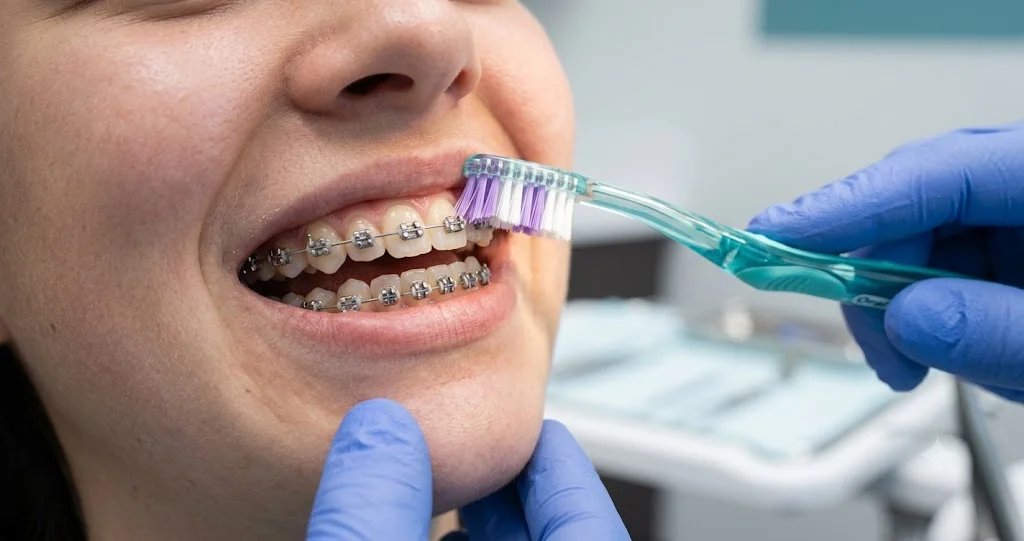
- Angle above the bracket: Hold your toothbrush at a 45-degree angle pointing down toward the top edge of each bracket. Use small circular motions to clean the gap between the bracket and the gumline above it.
- Angle below the bracket: Flip the angle upward toward the bottom edge of each bracket. Clean the gap between the bracket and the tooth surface below it. These two angles are what standard brushing misses entirely.
- Clean all surfaces: Brush the front, back, and chewing surfaces of all teeth as normal. Brush gently along the gumline on all sides.
- Check your work: Look in the mirror. Run your tongue along the bracket edges — if anything feels rough or sticky, you have missed a spot. Brush again until it feels smooth.
Flossing Around the Wire
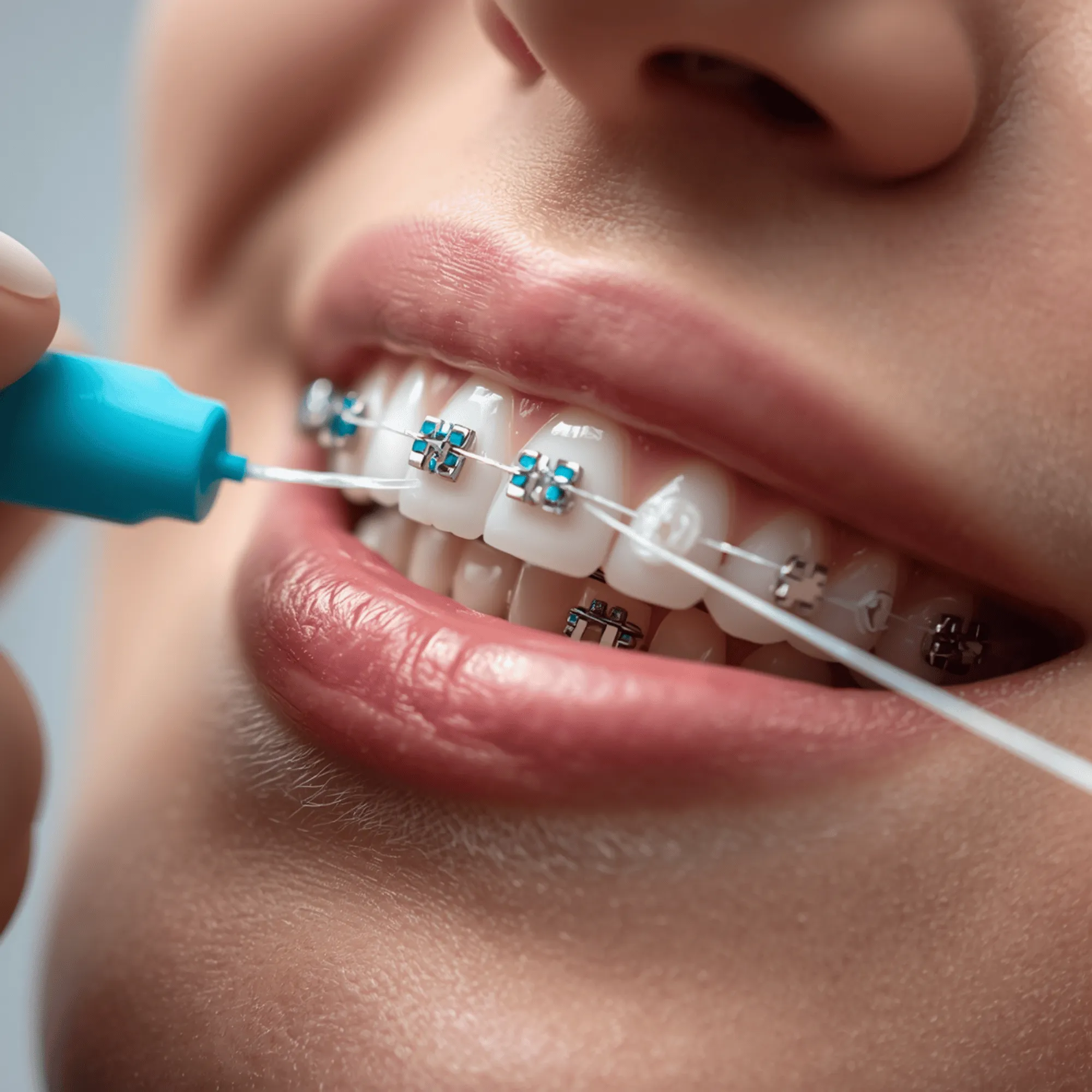
Flossing is the hardest part of braces hygiene, but it is also the most important. The archwire blocks standard floss from entering the spaces between your teeth, so you need a different approach.
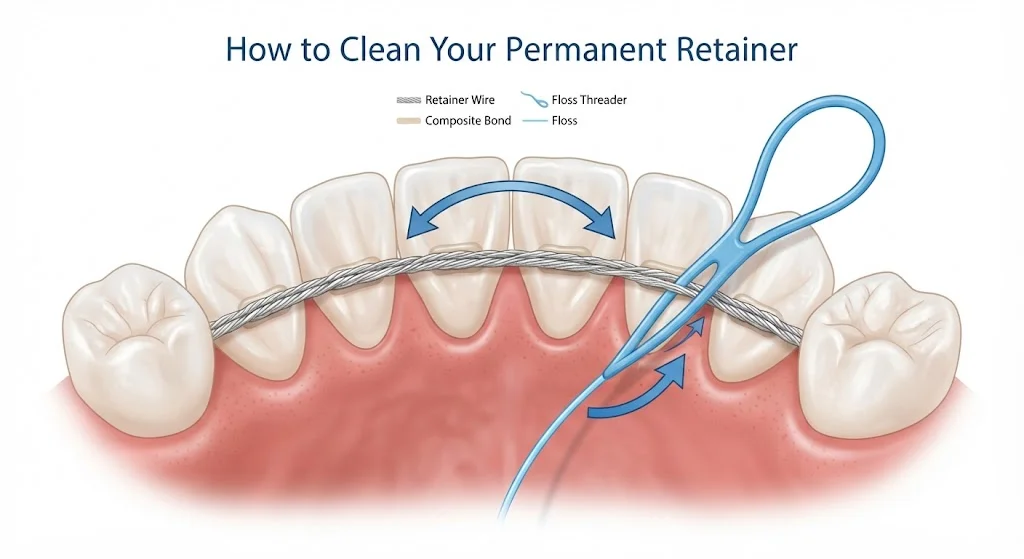
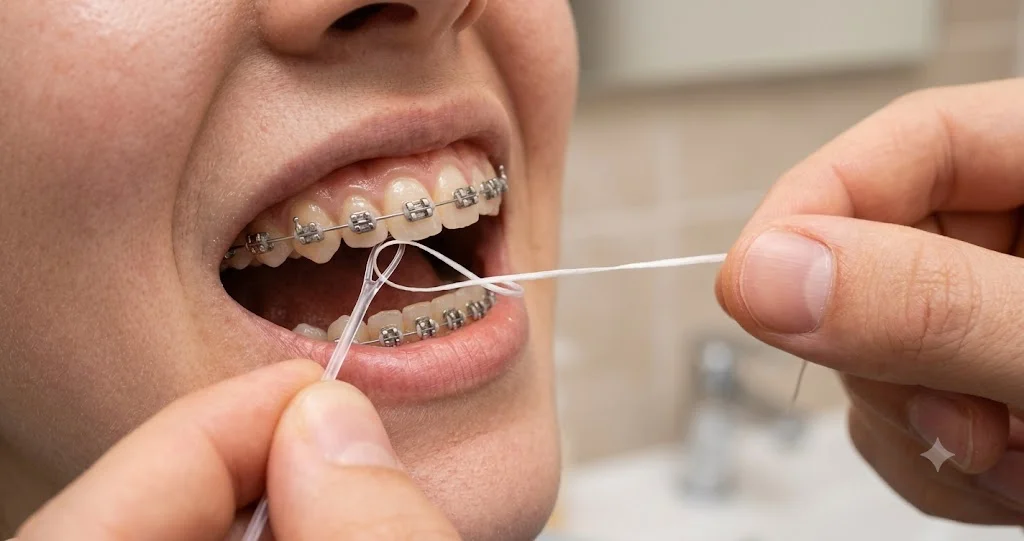
- Floss Threaders: A flexible plastic needle that allows you to thread standard floss under the archwire and into the contact point between each pair of teeth. Most thorough method — takes about 5 minutes for a full mouth.
- Orthodontic Flossers (e.g., Platypus Flossers): These have a thin, flat arm that slides behind the archwire without threading, allowing you to floss with one hand. Faster than threaders and easier to build into a daily habit.
2. Water Flossers: Are they a game-changer?
One of the most common questions from new braces patients: "Can you use a water flosser with braces?"
Yes — and orthodontists actively recommend them as a supplement to regular flossing.
Why Use a Water Flosser?
Water flossers use a pressurized, pulsating stream of water to flush food debris and disrupt plaque from around brackets, under wires, and along the gumline — areas that are genuinely hard to reach with a brush alone.
- Speed: A full-mouth water floss takes about 60 seconds — far faster than threading floss between every bracket.
- Gentle on gums: The pulsating water massages and stimulates gum tissue, reducing inflammation and bleeding over time.
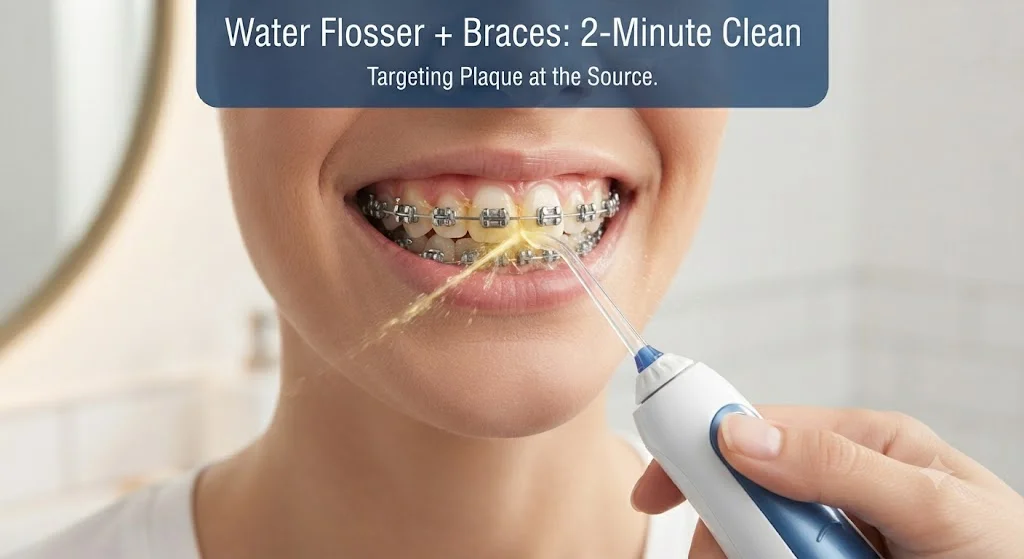
Important: Water flossers are excellent at flushing loose debris and disrupting plaque biofilm, but they cannot replace string flossing. Physical floss is the only tool that scrapes the adherent plaque film from the contact surfaces between teeth. Use both for the best results.
3. Choosing the Best Braces Friendly Products
Using the proper tools makes a huge difference in how smooth you can get your teeth. Here's what you should be looking for:
What Toothpaste Is Best for Braces?
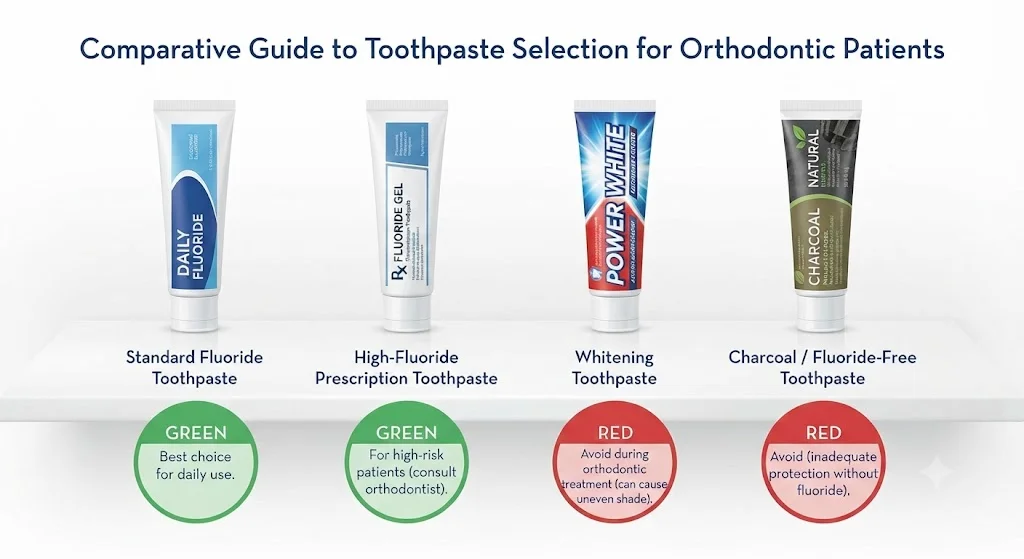
Use a toothpaste with fluoride — every session, no exceptions. Fluoride remineralizes enamel and directly counteracts the early-stage decalcification that causes white spots. Standard US over-the-counter toothpastes (Crest, Colgate, Sensodyne) contain 1,000 to 1,500 ppm fluoride, which is sufficient. Choose one that also controls tartar and provides cavity protection. Avoid highly abrasive toothpastes — some whitening and charcoal pastes are abrasive enough to scratch the composite resin used to bond brackets.
Can I Use Whitening Products with Braces?
Two questions orthodontists get constantly:
- "Can you use whitening strips with braces?"
- "Can you use whitening toothpaste with braces?"
The answer to both is no — avoid all whitening products until your braces come off.
Here is why: whitening agents only reach the enamel they can physically contact. The area of each tooth directly under the bracket is sealed by the bonding composite and stays untouched. If you whiten while wearing braces, you lighten all the exposed enamel while the patch under each bracket stays its original shade. When the braces are removed, you will have a dark square in the center of every tooth where the bracket was.
Wait until treatment is complete. Once your braces are off, your teeth can be professionally cleaned and then whitened evenly — with none of the bracket shadow problem.
Fluoride Mouthwash: Your Extra Layer of Protection
After brushing, rinse with an alcohol-free fluoride mouthwash (ACT, Colgate Fluoride Guard, or any store-brand fluoride rinse) for 60 seconds. Do not eat or drink for 30 minutes afterward. Mouthwash reaches the microscopic spaces between brackets and enamel that bristles cannot physically contact, depositing fluoride directly onto vulnerable enamel surfaces. Choose alcohol-free — alcohol-based mouthwashes dry out the oral tissue and reduce saliva flow, which actually increases plaque acid accumulation.
4. The Nightmare of White Spots and Stains
Many patients ask: "Do braces stain your teeth?"
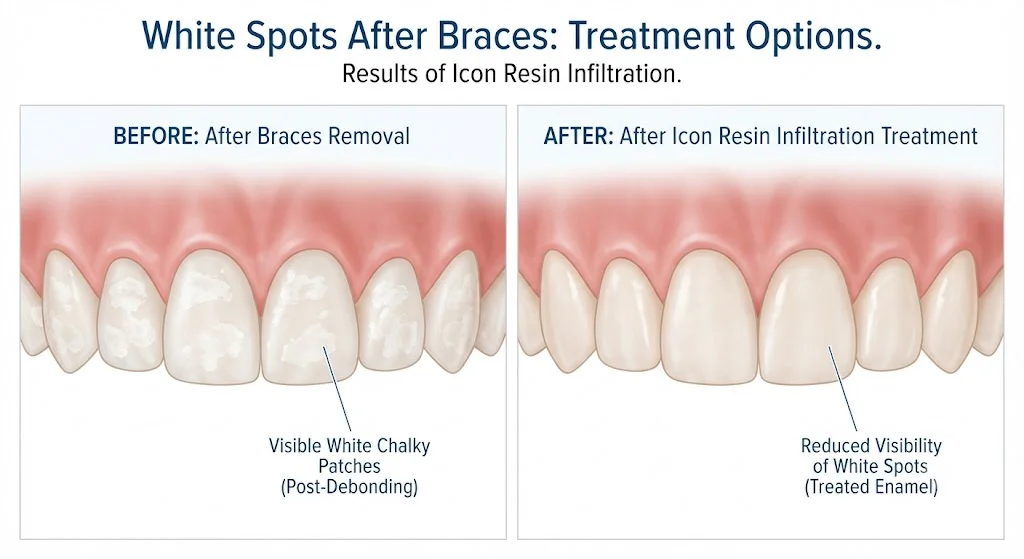
Braces themselves do not stain your teeth. What they do is create a grid of brackets and wires that traps plaque against the enamel. If that plaque sits long enough, the acids produced by oral bacteria dissolve calcium and phosphate from the enamel crystal structure — a process called decalcification. The result is permanent, chalky white spots on the enamel surface around each bracket.
When the brackets come off, the white spots become more visible because the rest of the tooth has naturally picked up slight staining from food and drink over months of treatment — while the area directly under each bracket stayed its original, untouched color. The contrast makes the damage stand out sharply.
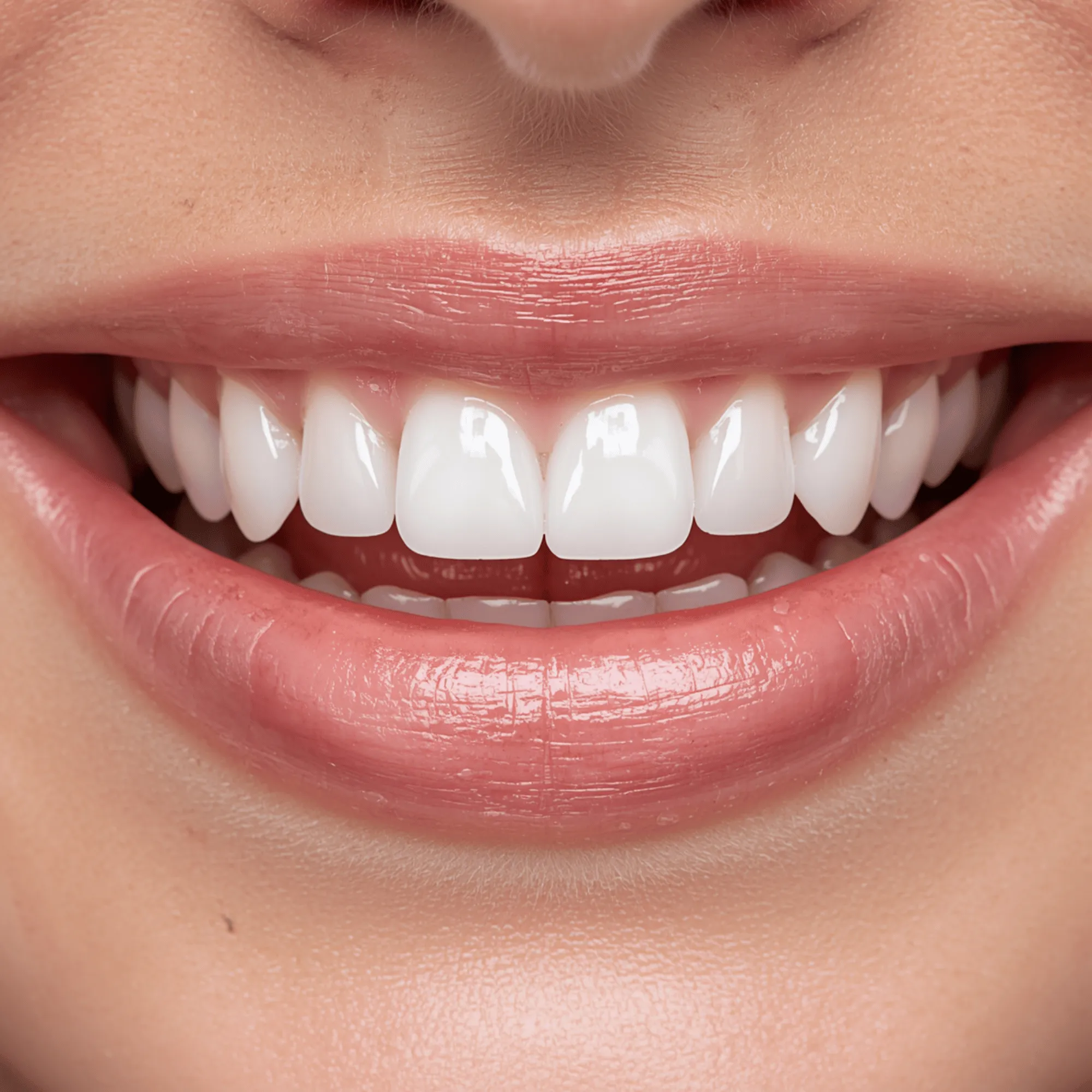
How to get rid of white spots from braces
If you've got white spots after removing your braces, there are several methods to cope with them:
- Remineralization: A prescription fluoride paste (such as MI Paste or GC Tooth Mousse) helps rebuild mineral content in the affected enamel and can fade minor, early-stage white spots over several months of consistent use.
- Microabrasion: The dentist removes a very thin layer of enamel from the affected surface using a mild acid and abrasive paste, reducing the opacity of superficial white spots.
- Icon Resin Infiltration: A non-invasive procedure where the dentist applies a special resin that penetrates the demineralized enamel and blends its light-scattering properties with the surrounding healthy enamel, making the white spot visually disappear.
- Dental Bonding or Veneers: For severe cases where other methods are insufficient, a thin layer of composite resin or porcelain is applied over the affected tooth surface.
The best treatment is prevention. None of these options are as reliable or as affordable as consistent brushing and fluoride use throughout treatment. White spots that require Icon infiltration or veneers represent permanent structural changes to healthy enamel — changes that could have been avoided entirely with a two-minute brushing routine.
5. Cleaning Hacks & Emergency Care
These practical habits cover the situations your regular routine does not:
- Carry a Travel Kit: Keep a small zip pouch with a travel toothbrush, travel toothpaste, orthodontic flossers, and a tin of wax in your bag or backpack. You will never know when a meal leaves something wrapped around your archwire — a 90-second brush after lunch makes a real difference.
- Interdental Brushes (Proxy Brushes): These small, pipe-cleaner-style brushes slide under the archwire and directly along the bracket edges, reaching plaque in areas neither a regular brush nor floss can access. Use one daily after flossing.
- Stay hydrated: Drinking water throughout the day washes away food debris and maintains healthy saliva flow. Saliva is your mouth's natural defense — it buffers acid and remineralizes enamel between brushing sessions. Dry mouth significantly increases plaque buildup and cavity risk.
Summary: Your Effort Pays Off
The habits you build now determine what your teeth look like the day your braces come off. Brush after every meal, floss every night, use fluoride toothpaste without exception, and skip the whitening products until treatment is complete. Follow that routine and you will finish with clean, spot-free enamel that makes the result worth every adjustment appointment.
What's next?
Proper care goes hand-in-hand with a safe diet. Read our complete guide to find out which foods are safe and which ones to avoid to protect your brackets.
View Diet & Eating GuideMore on Maintenance & Care
Detailed guides on keeping your braces and teeth spotless.