
Everyone wants a straight, sweet smile, and investing in your smile can be one of the best decisions you make. But before that, there is one question that everyone usually asks: “How much do braces cost?”
In this extremely well-written, comprehensive guide, I am going to break everything down step by step—simple and easy to understand, like teaching ABCs to a kid. We are going to talk about the financial side of orthodontics, the cost of treatment from average national costs to state-specific Medicaid rules, and of course, how to maximize your insurance benefits.
1) How much do braces cost in 2026?
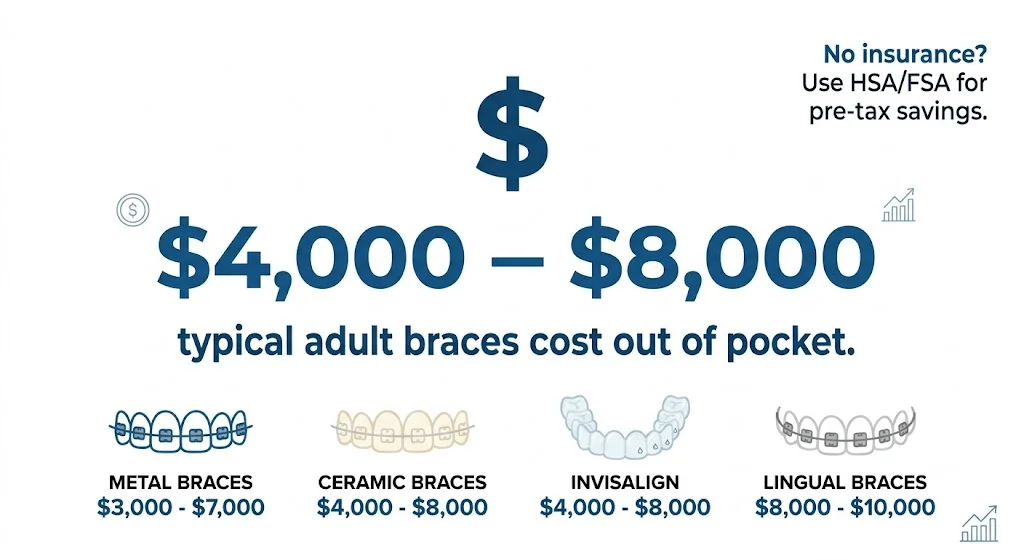
Without wasting time, here is the breakdown by type:
The above cost of braces depends on the type of treatment you choose. It can also vary based on the complexity of your case and your location, which plays a major role. These estimates are based on a treatment plan of 18 to 24 months.

Cost With vs Without Insurance
Why are braces so expensive?
If you think you are paying only for the braces, then think again. You are actually paying for the following:
- ✔Professional Expertise: Years of specialized training by your orthodontist
- ✔Regular Adjustments: 15–20 office visits over two years
- ✔Materials: High-grade titanium, ceramic, or customized plastic aligners
- ✔Retainers: Devices needed to keep your teeth straight after the braces come off
Hidden Costs Most People Ignore:
- Initial consultation fees
- X-rays and scans
- Emergency visits (broken brackets, wires)
- Retainer replacement ($100–$500)
2) Braces with Insurance: How to Maximize Your Coverage
Does dental insurance cover braces? Yes, most of the time—but it is rarely 100%.
Most insurance plans include a “Lifetime Orthodontic Maximum.” What this means is there is a fixed amount, usually between $1,000 to $3,500, that your insurance company will pay toward your braces once in your lifetime. Remember—only once.

Popular Providers and Typical Coverage
3) Braces and Medicaid: Can You Get Them for Free?
I get it—we all want to save money. So the question is: “Are braces free with Medicaid?”
Here’s the thing: Medicaid may provide full coverage, but there is a catch. It is strictly limited to cases that are “medically necessary.”This means your teeth must be severely misaligned and causing functional issues like difficulty in eating, speaking, or even breathing.
Some State Highlights by Medicaid:
- 📍 Florida: Covers under 21 with high Salzmann Index score.
- 📍 Texas: Requires a strict pre-authorization process.
- 📍 Michigan: More comprehensive for youth, but requires severe malocclusion.
👉 Note to remember: Medicaid almost never covers braces for adults over 21 for cosmetic reasons.
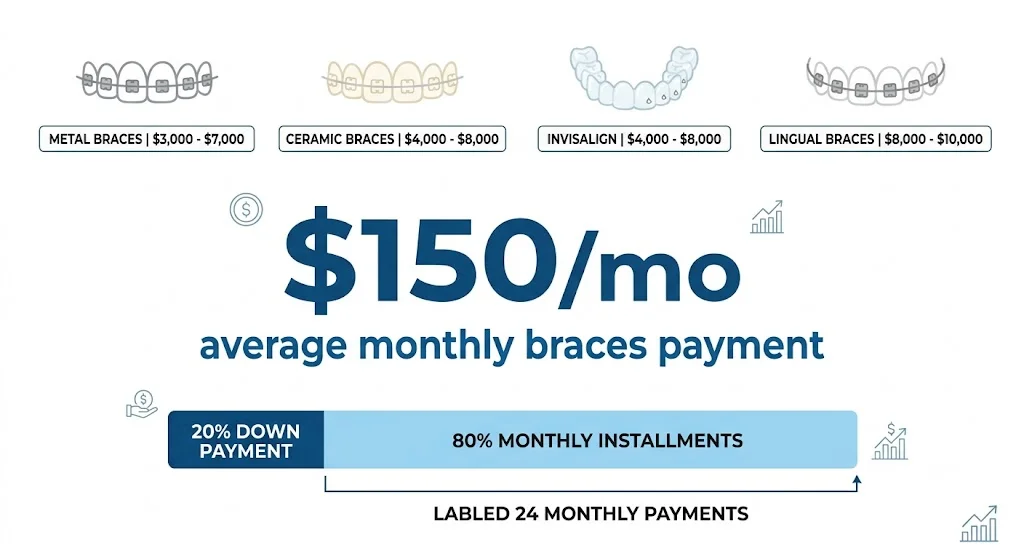
4) How much are braces monthly? (Financing & Payment Plans)
If you don’t have insurance, or your plan doesn’t cover enough (braces without insurance), you don’t have to pay everything upfront. Most orthodontists offer internal financing.
Using FSA and HSA for Braces
Can you use your FSA (Flexible Spending Account) or HSA (Health Savings Account) for braces? Short answer: Yes.
Braces are a qualified medical expense. Using these accounts allows you to pay with pre-tax dollars, effectively saving 20–30%, depending on your tax bracket.
5) Braces Cost by State (2026 Comparison)
6) How to Get Cheap Braces

Dental Schools
Treatment by students under expert supervision. Save 30-50%.
Charities
NGOs like Smiles Change Lives help low-income families.
Pay-in-Full
Ask for a 5-10% discount for paying the total balance upfront.
Lastly, Is the Investment Worth It?
There is no such thing as a free lunch. Some investments may seem expensive, but they are worth it—and braces are one of them. In the long term, they improve your confidence, oral health, and help you avoid future dental issues.
Try Our Cost Calculator
Estimate your out-of-pocket price for braces based on age and insurance.
Launch Tool →More in Cost & Insurance
Deep dives into specific cost-related topics.