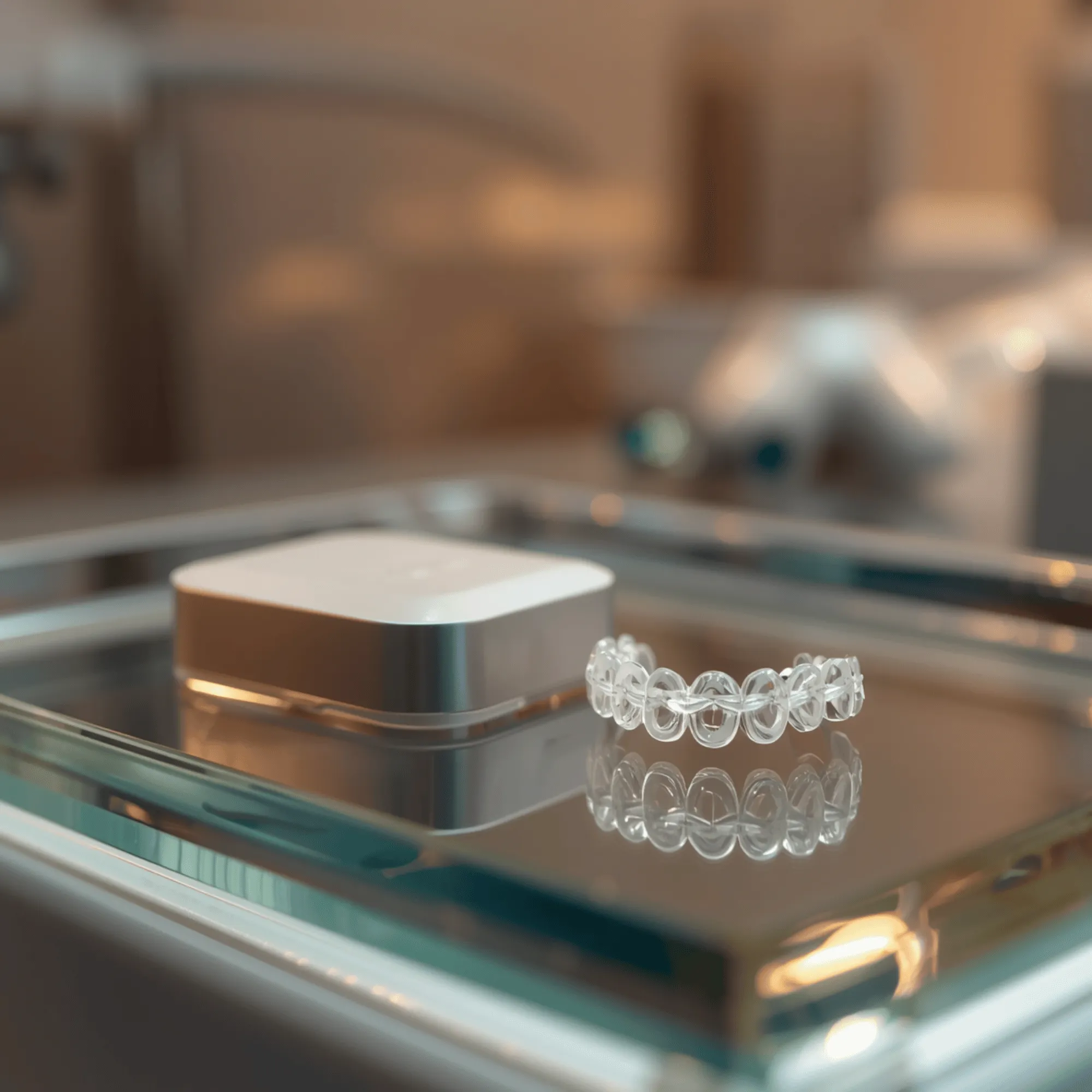
You finally get the brackets off after 18 to 24 long months. You run your tongue over your smooth teeth, take selfies, and think you are done with the orthodontist forever. But then they hand you a clear plastic retainer case and say, "You need to wear this every night, for the rest of your life."
Here is the reality: they are right. If you don't wear your retainer, your teeth will shift back. But what if you have already stopped wearing it, your teeth have moved back toward their original position, and you don't want to spend another $5,000 on braces?
In this guide we break down the retainer relapse options most patients don't know exist, explain the hidden fixes orthodontists use for minor shifts, and show you how to handle small movements without restarting full treatment.
Calculus Bridges: Why Permanent Bonded Retainers Fail
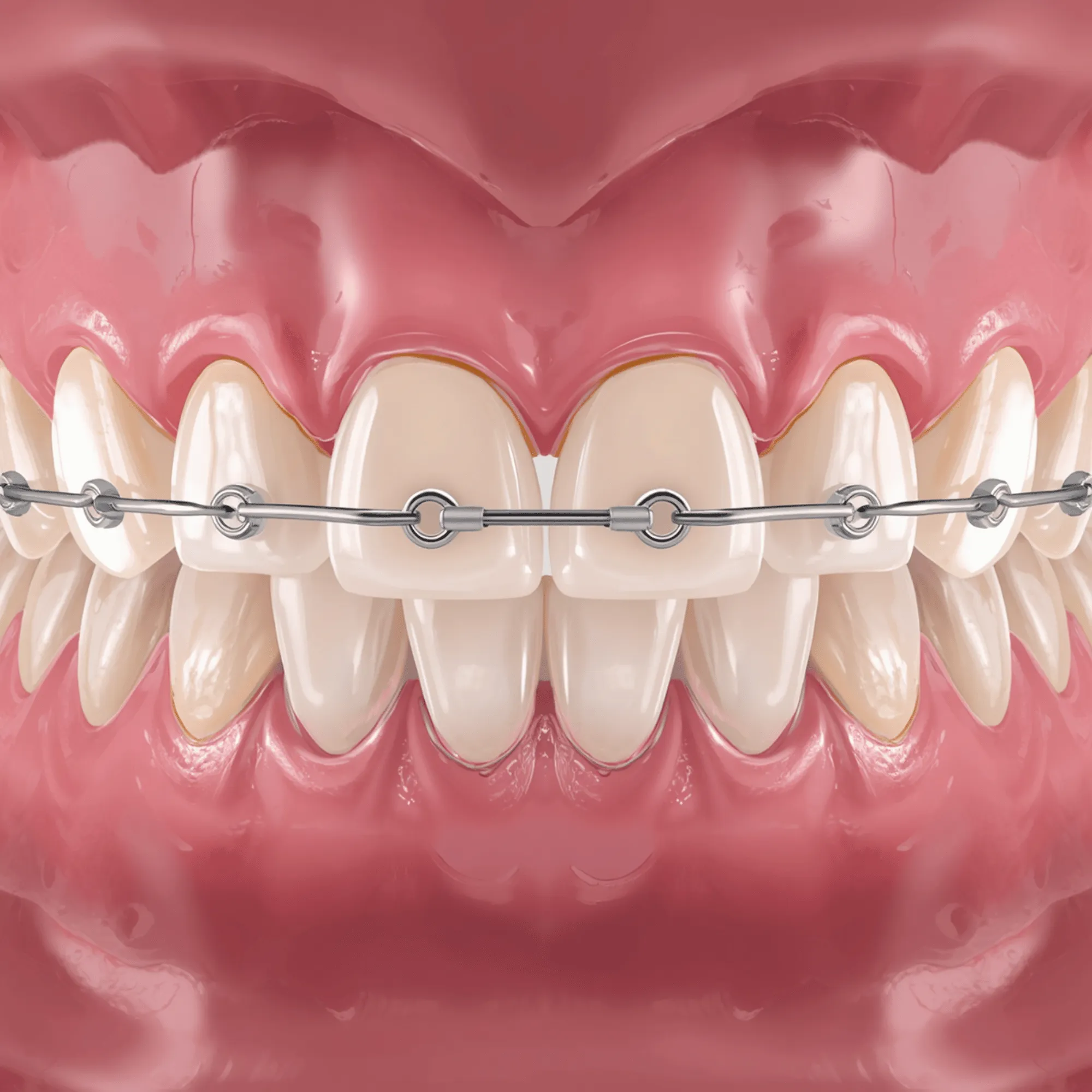
Many patients choose a permanent bonded retainer — a thin wire glued to the back of the front teeth — thinking it eliminates the daily hassle of removable clear retainers. It does. But it comes with a hidden risk that orthodontists rarely explain upfront:
- Calculus Bridge: The metal wire creates a ledge where salivary minerals accumulate over months and years, forming a hardened calculus (tartar) bridge that spans across the wire and cannot be removed with regular floss. It requires professional scaling.
- Bone Loss Risk: Over 5 to 10 years, this chronic plaque and calculus accumulation can cause localized gum infections and gradual bone loss around the front teeth. The teeth may look straight, but the bone and gum tissue supporting them slowly deteriorate.
- The Smart Approach: If you have a permanent wire, ask your orthodontist for a clear Essix retainer to wear over it as a backup. After a few years, once the bone has fully stabilized, many patients have the wire removed and switch entirely to nightly clear retainer wear.
The "Retainer Activation Trick": How Orthodontists Fix Minor Shifts
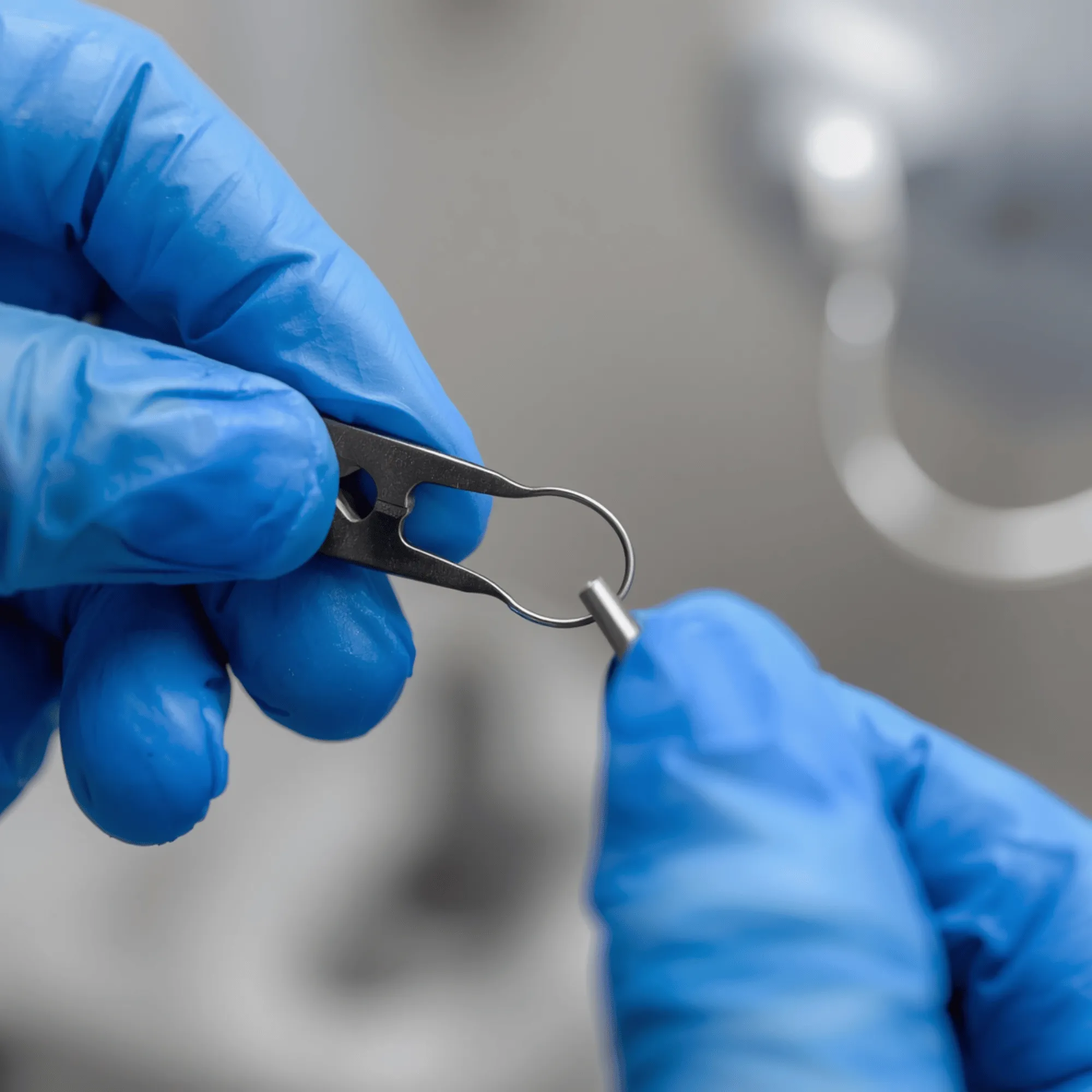
Here is an insider secret: if your teeth have only shifted slightly (we call this a minor relapse), you don't need new braces or Invisalign. Orthodontists have a trick to activate your old retainer.
- For Hawley Retainers (Metal Wire & Acrylic): The orthodontist uses special optical pliers to slightly bend the outer wire loops (called the U-loops). This increases the pressure on the shifted teeth, pushing them back into line over a few weeks.
- For Essix Retainers (Clear Plastic): Orthodontists use a specialized heating tool to apply spot-heat to the plastic mold. This creates a tiny dimple in the plastic that applies direct force to the specific tooth that has moved.
- The Cost Saving: Instead of charging $1,500 for minor aligners, many offices will perform these minor adjustments for a simple office visit fee of $100 to $200. Always ask if they can "activate" your current retainer before agreeing to a new alignment package.
The Night-Only Relapse Loophole
If you stopped wearing your retainer for a few months and find the clear mold now feels very tight when you try to put it back in — don't throw it away. You may still be able to recover your alignment without new treatment.
- The 48-Hour Reset: Put the tight retainer in and wear it full-time (removing only to eat) for 48 to 72 hours. The pressure will feel like the first day of braces, but minor shifts can often be guided back into place this way as long as the movement is recent and small.
- Return to Nightly Wear: Once the retainer fits comfortably again, switch back to wearing it every night without skipping. The shift happened because you stopped — consistent nightly wear is what prevents it from happening again.
- Know the Limit: If the retainer won't seat all the way onto your teeth, or pops off when you open your mouth, do not force it. The teeth have shifted too far for this approach, and forcing an ill-fitting retainer can crack teeth or damage roots. See your orthodontist instead.
DIY Mail-Order Aligners vs. Orthodontist Supervision
If your teeth have shifted beyond what a simple retainer tweak can fix, you will see ads everywhere for mail-order clear aligners. Here is what to watch out for:
- No X-Rays, No Safety: Mail-order kits move teeth without looking at the bone or root health. If you have active gum disease, moving your teeth can actually cause them to fall out.
- Hybrid Aligner Systems: Many local orthodontists now offer "in-house" minor aligner packages. Because they print the 3D models in their own clinic instead of sending them to a major lab, they can correct minor relapses for $1,000 to $1,800 under direct medical supervision.
Summary Checklist: Keeping Your Smile Straight
Call your orthodontist office to discuss the shift before buying any online kits. Ask these three questions first:
- Is your permanent retainer wire still fully glued to all teeth?
- Can your old clear retainer be adjusted or spot-heated to correct the movement?
- What is the clinic's fee for a single replacement clear retainer mold?
Once you have your alignment secured, protect your enamel from staining. Read our Braces Maintenance Guide for safe cleaning procedures.