Results & Facial Changes
Do Braces Change Your Jawline? What's Real vs. Social Media (2026 Guide)
Quick Answer
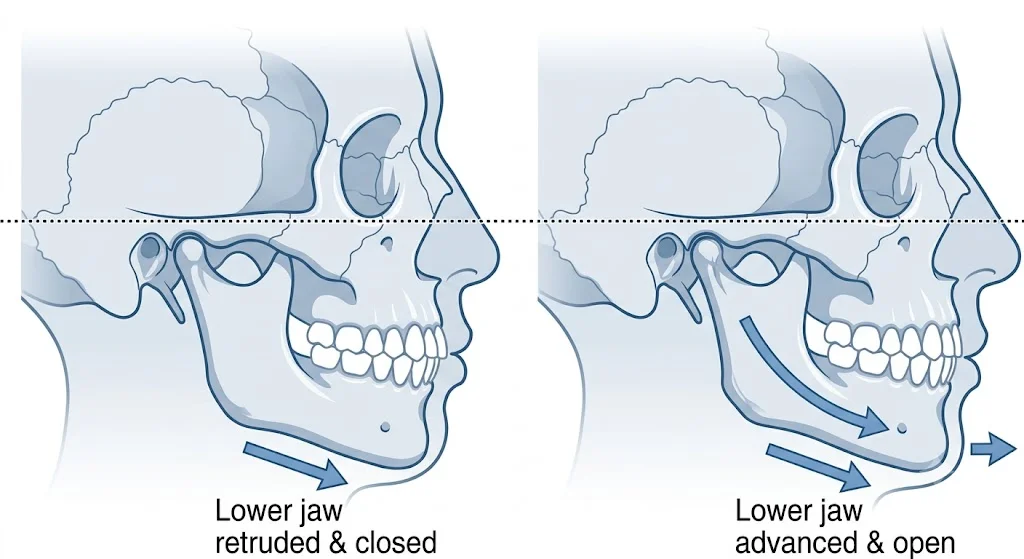
Braces do not move the jawbone — but they can make the jawline look noticeably more defined by correcting how the upper and lower teeth meet. When the bite is off, the jaw cannot close in its natural resting position, which distorts the lower face. Correcting that bite lets the jaw sit where it belongs, which often sharpens the angle between the chin and neck. In growing patients, functional appliances can actually guide jaw development. In adults, the change is positional, not structural — but it is real and visible.
Part of the Results & Facial Changes Guide — how braces reshape your face, jawline, lips, and profile.
What "Jawline" Actually Means Anatomically
The jawline is defined by the mandibular bone shape, soft-tissue fat distribution, and occlusal resting position. Braces sharpen the jawline by adjusting how the jaw closes, letting the lower face rest in a natural, symmetrical posture.
The jawline is the visible border of the mandible — the lower jaw bone — running from the chin to the angle of the jaw just below the ear. Its sharpness depends on three things: the shape and size of the mandible itself, the thickness of the soft tissue (fat and muscle) overlying it, and how the jaw is positioned when it closes.
That third factor — jaw position at rest and at closure — is the one braces can influence. The first two are determined by genetics and body composition, not orthodontics. When the bite is correct and the teeth interlock properly, the mandible closes in its natural, anatomically neutral position. When the bite is off — an overbite, underbite, or deep bite forcing the jaw to compensate — the mandible rests in an abnormal position, which can make the jawline look softer, less defined, or asymmetric even if the underlying bone structure is fine.
Bite Correction: Where the Jawline Change Actually Comes From
Jawline definition improves when braces correct deep overbites or crossbites, which un-traps the lower jaw from a backward position. Opening the vertical bite dimension allows the chin to drop into a balanced, prominent profile.
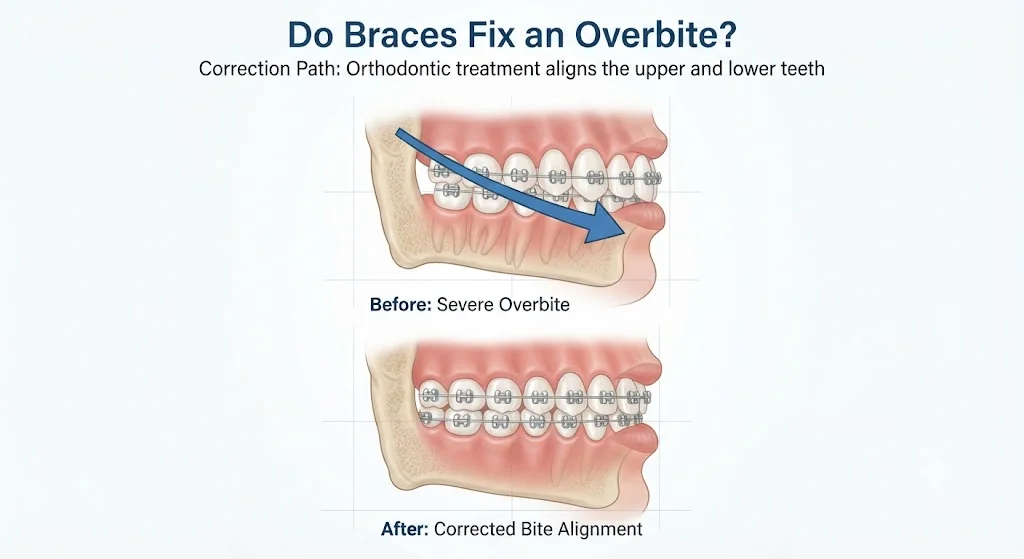
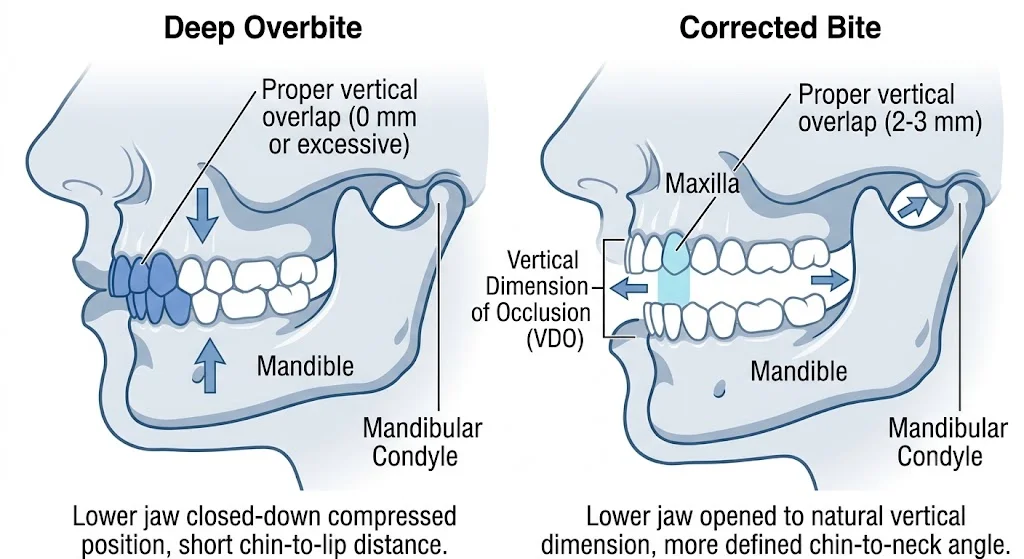
The most common jawline change from braces comes from correcting a deep overbite — where the upper front teeth cover too much of the lower front teeth when biting down.
In a deep overbite, the lower jaw is essentially trapped in a closed-down, retruded position. The chin sits too close to the upper lip, the lower third of the face looks compressed, and the mandibular angle at the back of the jaw is less visible. Patients with severe overbites often describe their profile as weak before treatment.
When braces correct the overbite — by intruding the front teeth, extruding the back teeth, or a combination of both — the lower jaw can open to its correct vertical dimension. The chin drops slightly into a more natural forward position. The angle between the chin and neck becomes more defined. The entire lower face lengthens slightly and looks more proportionate. This is not a bone change — the mandible is the same bone it was before — but its resting position is now different, and that difference is visible.
Class II vs. Class III: The Two Cases With the Biggest Jawline Impact
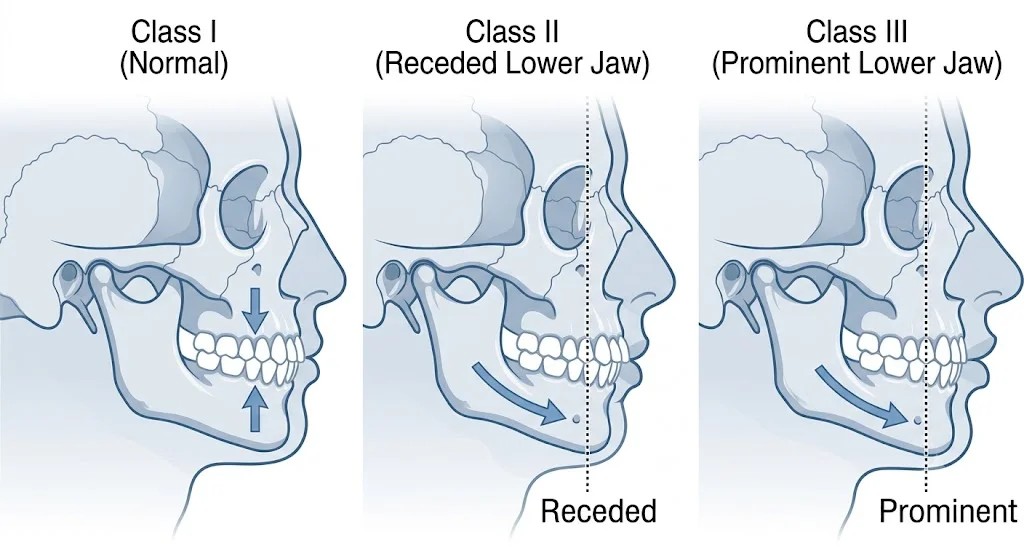
Skeletal Class II cases (receded chin) and Class III cases (protruding jaw) show the largest jawline changes. Growing children achieve true jaw growth guidance with functional appliances, while adults achieve lip-chin camouflage or require surgery.
Class II — Receded Lower Jaw
In a skeletal Class II, the lower jaw is positioned behind the upper jaw. The profile shows a prominent upper lip and front teeth with a chin that sits behind a vertical reference line from the forehead. The jawline often looks soft or absent from the side.
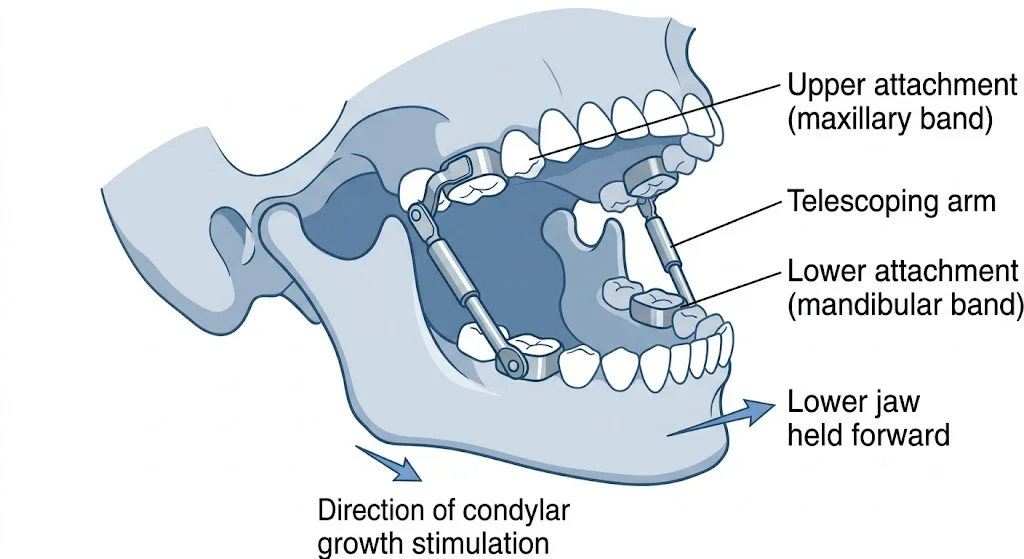
For growing patients, this is the most treatable case for jawline improvement. Functional appliances — the Herbst appliance, Twin Block, or mandibular advancement devices — apply continuous forward force on the lower jaw during the growth phase, stimulating the condylar cartilage to grow. This produces genuine forward mandibular development, not just tooth movement. For adults with Class II, braces can camouflage the discrepancy by moving the upper teeth backward and the lower teeth forward, which improves the lip-to-chin relationship. But the mandible itself stays where it is. Significant skeletal Class II correction in adults requires orthognathic surgery.
Class III — Prominent Lower Jaw
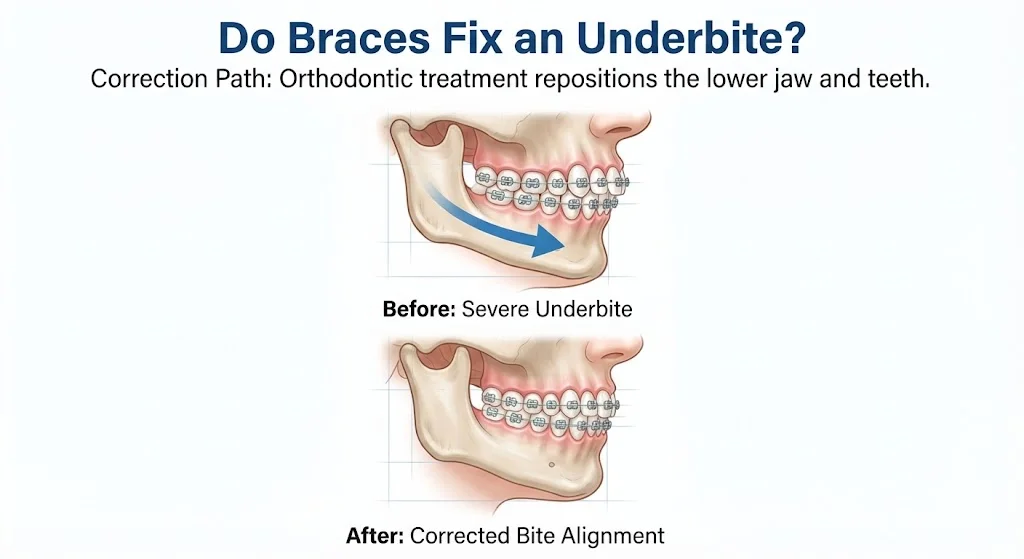
In a skeletal Class III, the lower jaw protrudes past the upper. The chin is prominent, the lower lip sits in front of the upper. The jawline is often very visible — sometimes overly so. For growing patients, reverse-pull facemask headgear can redirect upper jaw growth forward. Braces can camouflage mild cases in adults by protracting the upper teeth and retracting the lower. Severe skeletal Class III in adults requires Le Fort I osteotomy (upper jaw forward) and/or mandibular setback surgery to correct the underlying bone position.
Growing Patients: Where Real Jaw Change Is Possible
In growing teenagers, functional appliances like the Herbst or Twin Block guide active mandibular growth plates, achieving true skeletal jaw repositioning. Adult jawbones are fully fused, limiting non-surgical changes to dental alignment.
In patients who are still growing — generally under 16 for girls and under 18 for boys — the mandibular condyle (the growth center of the lower jaw) is still active. Functional appliances that position the lower jaw forward during wear create a biological stimulus at the condyle that encourages forward and downward jaw growth. This is not the same as braces moving teeth — it is guided skeletal development.
Studies show Class II growing patients treated with Herbst appliances or Twin Block devices gain measurable skeletal improvement — real changes in mandibular length and position — that persist into adulthood. The jawline is genuinely different, not just repositioned. This is why early orthodontic intervention (Phase 1 treatment in children 8 to 11 years old) can produce results that are structurally impossible in adults without surgery.
What Braces Cannot Change
For adults, several common jawline concerns are outside what braces can address:
- Receding chin (retrognathia): Requires genioplasty or mandibular advancement surgery — braces cannot move the chin bone forward.
- Weak mandibular angle: Structural, determined by the shape of the mandible. Cannot be changed by orthodontics.
- Asymmetric jaw bones: Skeletal asymmetry requires orthognathic surgery to correct.
- Excess soft tissue over the jaw: Related to body composition, not orthodontic treatment.
- Short lower face height: Vertical jaw surgery is required — braces alone cannot lengthen the face vertically.
Social media before-and-afters showing dramatic jawline transformations alongside braces almost always involve one of: teenage growth during the treatment period, significant weight loss over 18 to 24 months, or combined orthodontic and jaw surgery labelled as braces alone.
Realistic Expectations by Case Type
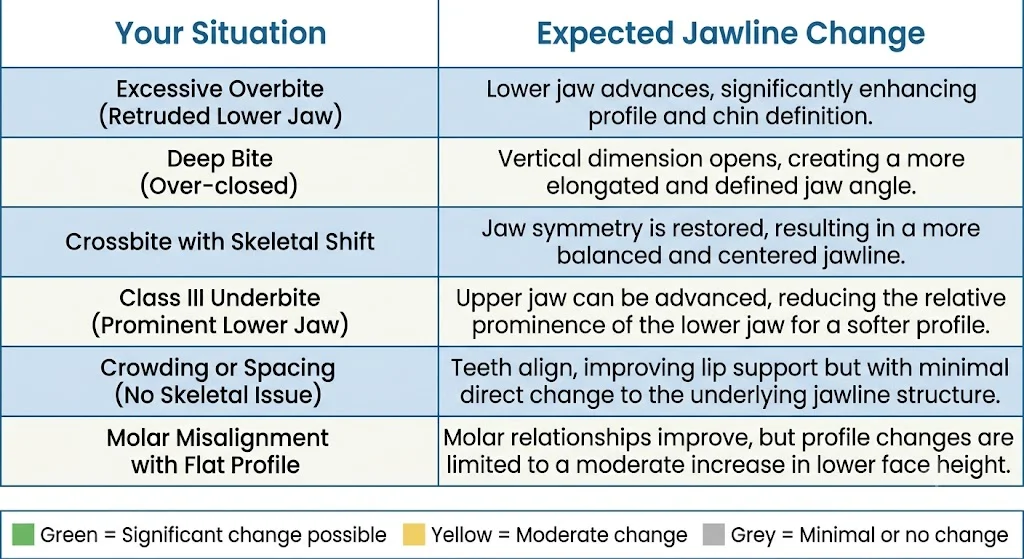
The table below outlines key comparison data and practical guidelines for do braces change your jawline? what's real vs. social media.
| Your Situation | Expected Jawline Change |
|---|---|
| Deep overbite, adult | Moderate — lower face lengthens, chin-to-neck angle improves |
| Class II, growing patient | Significant — forward jaw growth possible with functional appliance |
| Class II, adult | Mild — camouflage only; jaw surgery needed for skeletal correction |
| Class III, growing patient | Moderate — facemask can redirect upper jaw growth forward |
| Well-aligned bite, crowding only | Minimal to none — jawline change unlikely |
| Skeletal asymmetry | None from braces — orthognathic surgery required |
Want to see the full picture?
Jawline changes are one part of a broader facial transformation. Read our complete guide on how braces change your face shape, lips, and profile.
How Braces Change Your Face Shape →