How Long Do You Have to Wear a Retainer? (The Real Answer for 2026)
Quick Answer
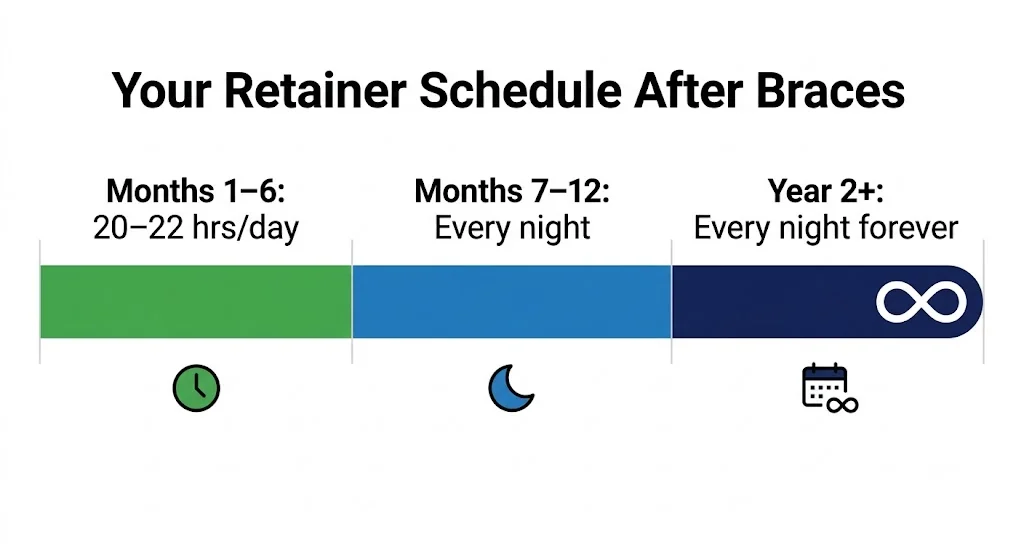
The honest answer is: indefinitely. Teeth move throughout your entire life due to natural bone remodeling, aging, and muscle pressure from your lips and tongue. Most orthodontists now recommend wearing a retainer every night for life after treatment ends. The old advice of “two years full-time, then just nights” has been largely replaced with “nights forever.” The first six months after braces are the highest-risk window — teeth are most likely to shift quickly during this period.
Part of our Alternatives & Aftercare Master Guide.
1. The New Consensus: Retention Is Lifelong
For decades, the standard advice was to wear a retainer full-time for 6–12 months after braces, then nights-only for 2 years, then stop. That advice has been revised. Current orthodontic consensus, supported by long-term retention studies, is that teeth shift throughout life and the only way to maintain orthodontic results permanently is permanent retention — either a bonded retainer, a removable retainer worn nightly, or both.
The biological reason: alveolar bone (the bone holding teeth in place) is living tissue that continuously remodels in response to pressure. Lips, cheeks, tongue, and the forces of chewing create low-level pressure on teeth every day. Without the stabilizing force of a retainer, teeth gradually drift in the direction of least resistance.
2. Post-Treatment Wear Schedule
The table below outlines key comparison data and practical guidelines for how long do you have to wear a retainer?.
| Phase | Timeline | Wear Requirement |
|---|---|---|
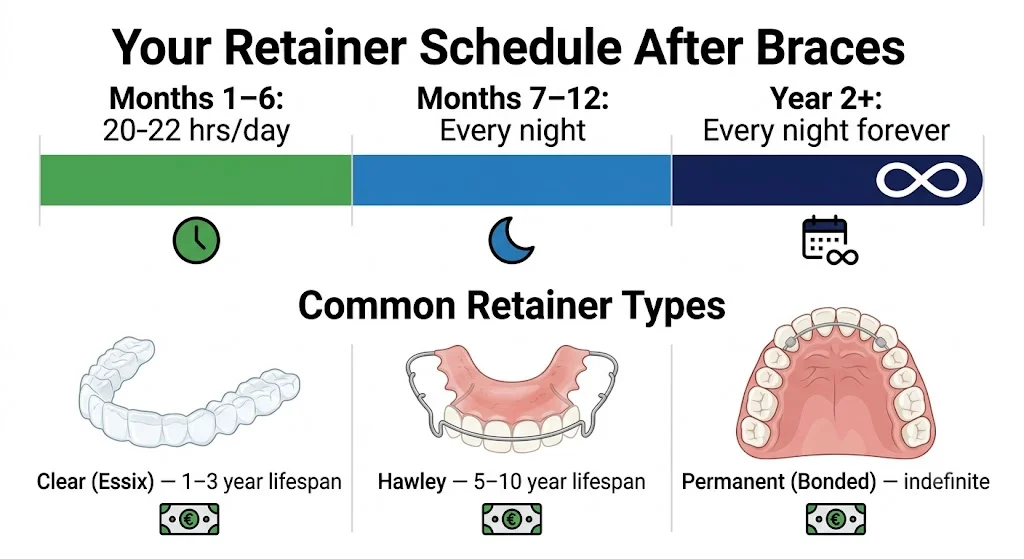
| Active retention | Months 1–6 | 20–22 hours/day (remove only to eat and brush) |
| Early maintenance | Months 7–12 | Every night |
| Long-term maintenance | Year 2+ | Every night indefinitely |
| Stable long-term | After 2+ years (ortho confirmed) | Some move to every other night |
Note: Data reflects typical clinical guidelines and average provider estimates across standard treatment plans.
The first 6 months are the most critical. During this window, the periodontal ligament (the fiber network that holds each tooth to the bone) is still reorganizing after being stretched and compressed by orthodontic forces. The bone surrounding the teeth has not fully mineralized in the new position. Skipping retainer wear during this period risks rapid relapse.
3. Types of Retainers and How Long Each Lasts
Clear plastic (Essix) retainers are the most common removable retainer — they look like a thin Invisalign tray. Lifespan: 1–3 years with nightly use before the plastic warps, cracks, or becomes too worn to seat properly. Replacement cost: $150–$300 per arch.
Hawley retainers are the wire-and-acrylic retainers many patients remember from older treatment. The wire runs across the front teeth; acrylic covers the roof of the mouth. Lifespan: 5–10 years. More durable than Essix but more noticeable if worn during the day. Replacement cost: $150–$300 per arch.
Permanent (bonded/lingual) retainers are thin wire glued to the back surface of the front 4–6 teeth. They require no patient compliance — the wire maintains position 24 hours a day. Lifespan: indefinitely if properly maintained, though the wire can break or debond and must be repaired by an orthodontist. They require special flossing technique (threader under the wire) and regular cleaning to prevent calculus buildup.
4. What to Do If Your Retainer Stops Fitting
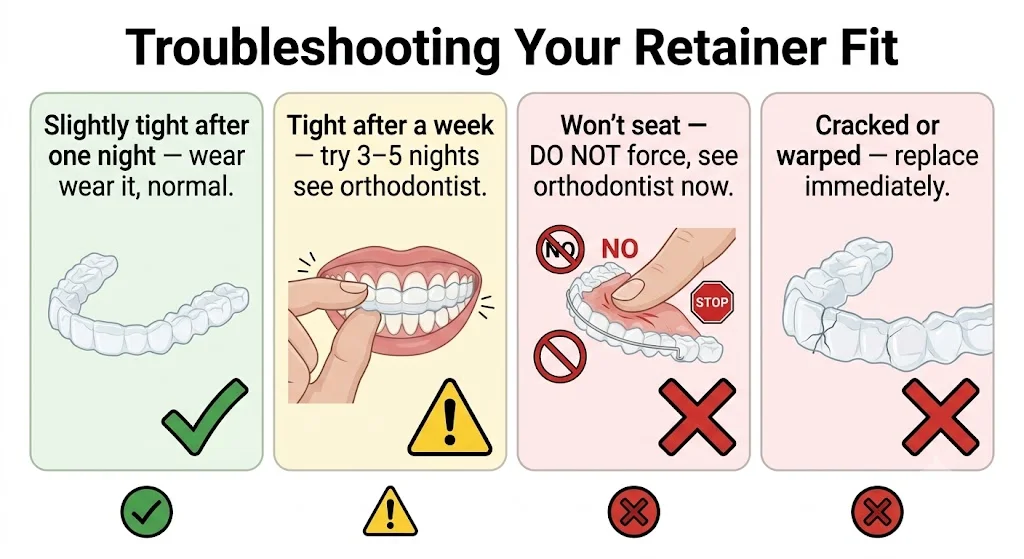
- Slightly tight after one night off: Insert it gently and wear it — it should reseat within a few hours as light pressure corrects minor drift.
- Tight after a week off: Try wearing it nightly for a few days. If it does not seat fully after 3–5 nights, see your orthodontist. Do not force it.
- Will not seat at all: Do not force it. Forcing an ill-fitting retainer can fracture teeth or damage roots. See your orthodontist — you may need a new retainer and possibly retreatment.
- Cracked, warped, or broken: Replace it promptly. Going without a retainer for weeks while waiting for a replacement allows significant shifting.
Frequently Asked Questions
How long do you have to wear a retainer after braces?
Indefinitely — most orthodontists now recommend nightly wear for life. Full-time wear (20–22 hrs/day) for the first 6 months, then nightly from month 7 onward. The old recommendation of stopping after 2 years has been revised; teeth continue moving throughout life without retention.
What happens after 2 years of wearing a retainer?
Most patients transition to maintenance nightly wear — the retainer still goes in every night. The 2-year mark is when bone has fully stabilized around the teeth in the new position, but lip pressure, tongue pressure, and aging never stop. The retainer must continue.
Can you wear a retainer every other night?
Some orthodontists allow this for stable long-term patients (2+ years of successful nightly retention). Not appropriate in year one. Every-other-night wear increases the risk of the retainer gradually tightening, indicating teeth are shifting between wears.
How do you know if your retainer still fits?
A properly fitting retainer seats fully without force, feeling snug but not painful. If it requires hard pressing to seat, feels noticeably tighter than before, or rocks on one side, your teeth have shifted. A retainer that requires significant force after a week off warrants an orthodontist visit.
Do you have to wear a retainer forever even with a permanent retainer?
Yes. A bonded retainer holds only the front teeth — it does not control back teeth or full arch width. Most orthodontists prescribe a removable retainer to be worn at night even when a permanent retainer is in place.