Can You Drink Soda with Braces? (What It Actually Does to Your Teeth)
Quick Answer
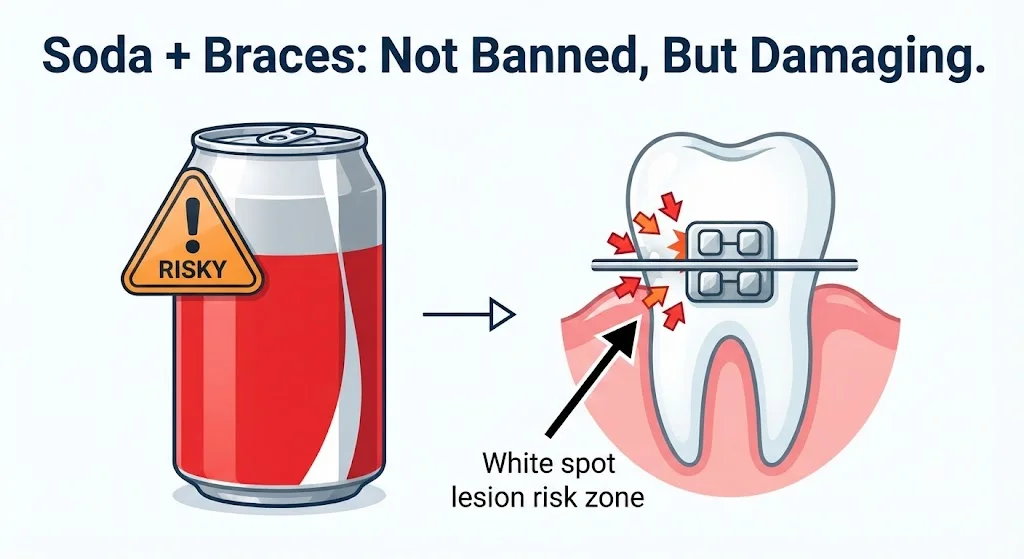
Soda does not dislodge brackets or damage wires — the risk is chemical. The phosphoric and citric acid in all sodas (including diet soda) demineralizes enamel and accelerates white spot lesion formation around brackets. This is one of the main dietary causes of the permanent white marks visible around bracket sites when braces are removed. If you drink soda with braces: use a straw, rinse with water immediately after, and wait 30 minutes before brushing.
Part of our Diet & Eating Guide. Also see: How to Remove White Spots After Braces.
The Chemistry: What Soda Acid Does to Enamel
Soda acid causes chemical enamel demineralization because its low pH (2.3–3.5) dissolves calcium phosphate minerals. Brackets shield acid around margins where natural saliva cannot easily neutralize it.
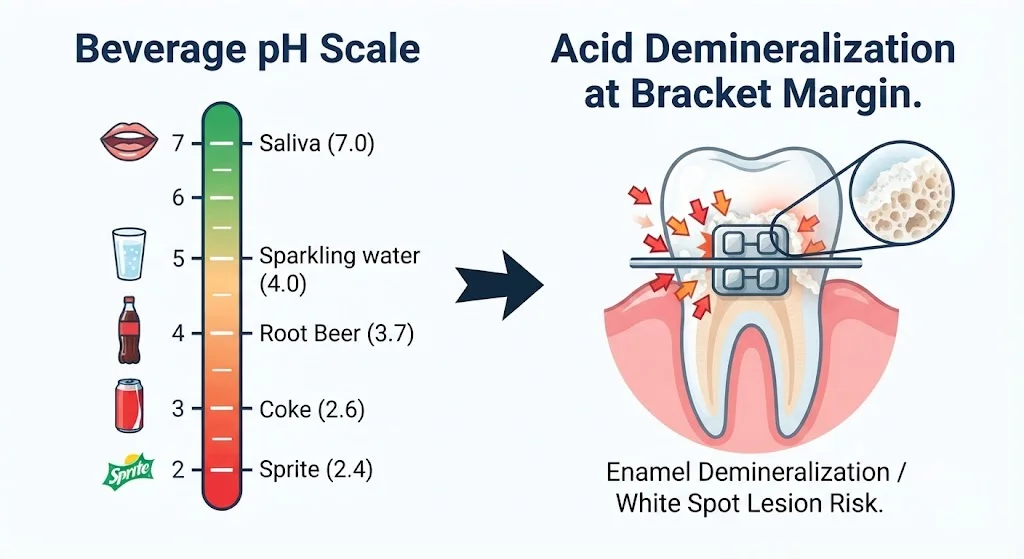
Tooth enamel is primarily hydroxyapatite — a crystalline calcium phosphate mineral. Acid dissolves hydroxyapatite through a process called demineralization: protonation of phosphate ions breaks the crystal structure. This is the same mechanism behind cavities and white spot lesions.
Most sodas have a pH of 2.3–3.5. Saliva has a pH of 6.8–7.4. Below pH 5.5 (the critical threshold for hydroxyapatite dissolution), enamel begins to soften. Every sip of soda triggers a demineralization event. Saliva neutralizes and partially remineralizes the surface within 30–60 minutes — which is why occasional soda consumption does not cause immediate enamel damage in healthy patients without braces.
With braces, the timeline changes. Bracket margins create sheltered spaces where acid lingers longer and saliva buffering is slower. A daily soda habit over 18–24 months of treatment means demineralization accumulates faster than remineralization can repair it.
The table below outlines key comparison data and practical guidelines for can you drink soda with braces? (what it actually does to your teeth).
| Drink | Approximate pH | Risk Level |
|---|---|---|
| Sprite / Mountain Dew | 2.3–2.8 | Highest |
| Coke / Pepsi | 2.5–3.0 | Very High |
| Diet Coke / Diet Pepsi | 2.6–3.7 | Very High |
| Root Beer | 3.5–4.0 | High |
| Flavored sparkling water | 2.7–4.5 | Moderate–High |
| Unflavored sparkling water | 4.0–5.0 | Moderate |
| Saliva (baseline) | 6.8–7.4 | Neutral |
White Spot Lesions: The Specific Braces Risk
White spot lesions (WSLs) form when demineralization is concentrated at a single location over time. The bracket margin — the precise edge where adhesive meets exposed enamel — is the most common site. Acid from soda, combined with acid from plaque bacteria that accumulate at the same margin, repeatedly attacks this zone.
When braces are removed, the area under the bracket is relatively intact (it was sealed). The surrounding enamel reveals accumulated demineralization — a white, chalky ring around each bracket site. These are permanent without treatment. Daily soda consumption over an 18–24 month treatment course is one of the most reliable ways to guarantee visible white spots at deband. For treatment options, see our guide on removing white spots after braces.
How to Minimize Damage If You Do Drink It
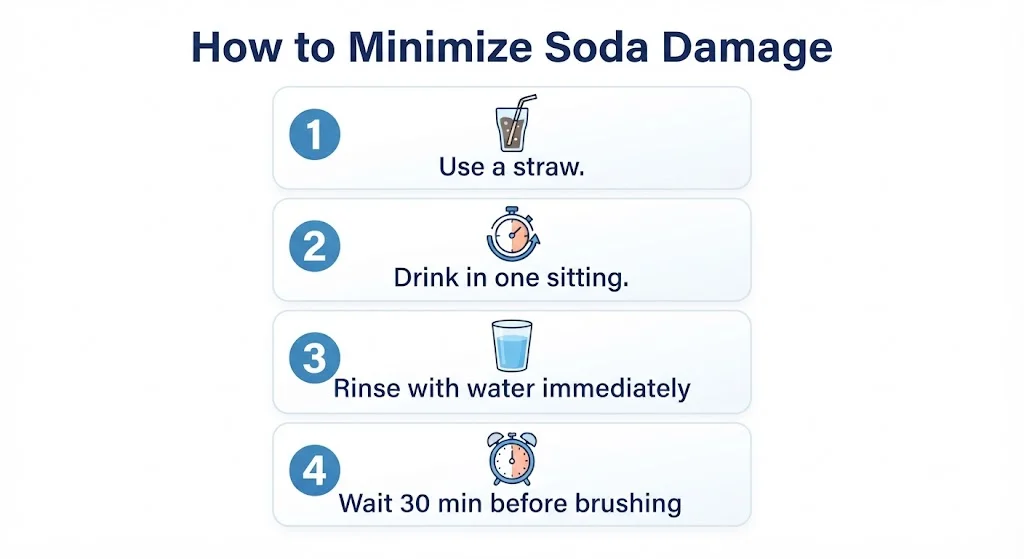
- Use a straw. Positioning the liquid past the front teeth reduces contact time with front bracket margins — the most visible zone for white spots.
- Drink in one sitting. Drinking a can in 15 minutes and then rinsing is far less damaging than slowly sipping over an hour, which extends the acid exposure window continuously.
- Rinse with water immediately after. Water washes acid off the enamel surface and rapidly raises oral pH toward neutral. This is not an alternative to stopping — but it significantly limits the damage window.
- Wait 30 minutes before brushing. Acid softens the enamel surface. Brushing immediately after removes softened enamel. Waiting allows saliva to begin remineralizing before you brush.
- Use fluoride toothpaste consistently. Fluoride remineralizes demineralized enamel and partially reverses early demineralization. It is chemical protection against the acid exposure you cannot entirely avoid.