Can You Eat Pizza with Braces? (Yes — With One Adjustment)
Quick Answer
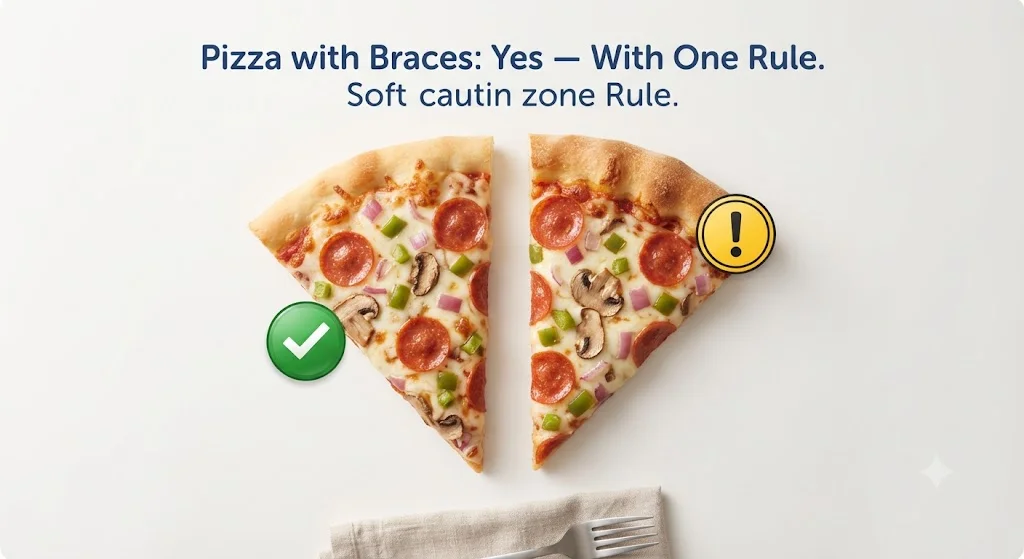
Yes — pizza is generally safe with braces. The soft cheese, toppings, and dough apply very little force to brackets. The one risk is a thick, tough, or very well-done crust — biting through a hard crust edge can apply enough shearing force to dislodge a bracket. Eat the soft interior of the slice and avoid biting the hard crust directly with your front teeth. Thin-crust and regular delivery pizza are the safest styles.
Part of our Diet & Eating Guide. Also see: Complete Braces Food Guide.
Why Pizza Is Generally Safe
Pizza is safe to eat with braces because soft cheese, dough, and cooked toppings apply minimal force to brackets. Standard slice interiors chewing smoothly without stressing bracket adhesive bonds.
Most concern about pizza and braces is unfounded. The actual structure of a pizza slice — soft dough, melted cheese, cooked sauce, soft toppings — applies very little force to brackets. There is nothing hard to bite through, nothing sticky enough to pull a bracket off, and the chewing motion required is minimal.
The bracket bond is designed to withstand normal chewing forces. Soft, yielding foods like pizza dough create no stress at the adhesive interface. The issue arises only when you introduce force — specifically the shear force required to get through a hard, stiff crust.
The One Real Risk: Hard Crust
Hard or overcooked pizza crust poses the primary threat to braces by generating high shear bite forces. Biting into tough crust with front teeth can instantly pop bonded brackets off enamel.
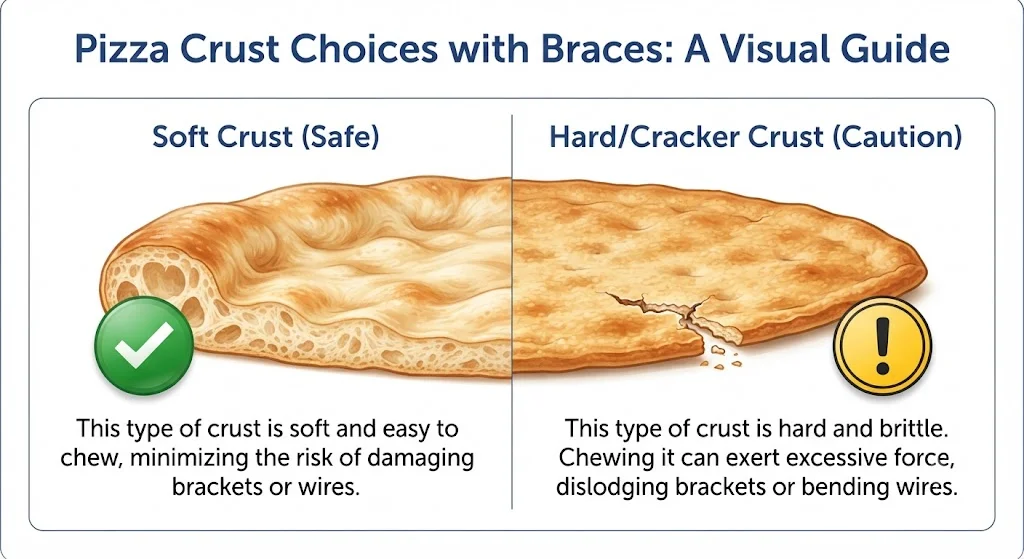
Pizza crust ranges from soft and pliable (most delivery pizzas) to very hard and crunchy (Roman-style cracker crust, or pizza reheated in an air fryer until the edge stiffens). The harder the crust, the more force it requires to bite through — and the greater the risk of bracket displacement.
Lower Risk Crust Styles
- Regular delivery pizza — soft crust
- Thin-crust pizza — usually soft, can be folded
- Deep dish / Chicago style — thick but soft if not overcooked
Higher Risk Crust Styles
- Roman-style cracker-thin pizza — snaps when bitten
- Artisan pizza with a stiff, charred crust edge
- Reheated pizza where the crust has hardened
How to Eat Pizza Without Risking Brackets
Eating pizza safely with braces involves cutting slices into bite-sized pieces with a fork and knife, chewing with back molars, and leaving behind tough outer crust edges.
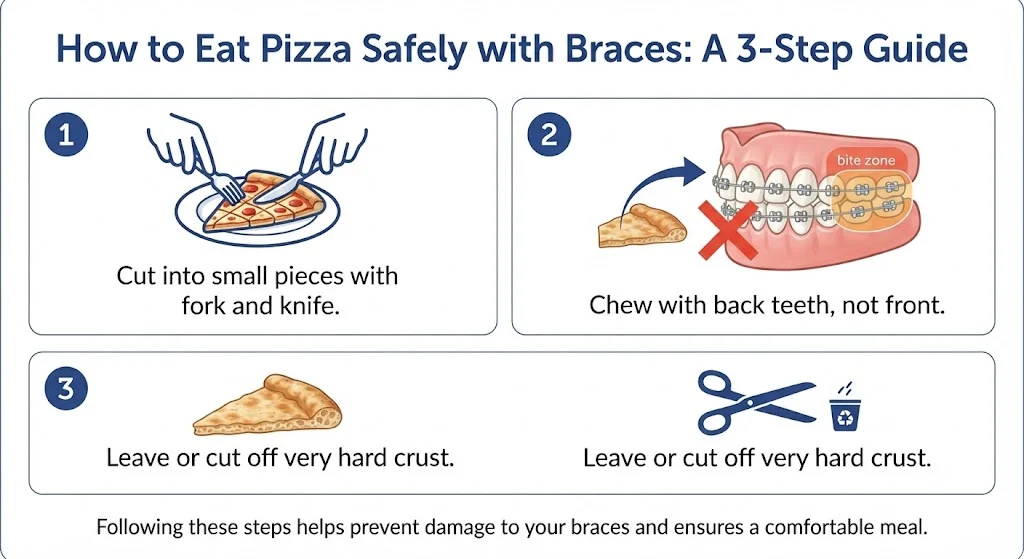
- Cut into small pieces with a fork and knife. This eliminates the temptation to bite through crust and removes all front-tooth shear stress.
- Use back teeth, not front teeth. Your molars handle chewing force much better than your front brackets, which are in the highest-risk zone for shear displacement.
- Leave the very hard crust or cut it off. If the crust edge is stiff, it is simply not worth the risk. Eat the soft interior and discard the crust.
- Fold thin-crust slices. The New York-style fold concentrates the crust along the side and keeps the biting surface soft — a practical technique for thinner slices.
What About Toppings?
Standard pizza toppings like pepperoni, sausage, mushrooms, and peppers are completely safe for braces. Only avoid crunchy toppings like toasted nuts, seeds, or extra-crispy fried toppings.
Standard toppings are not an issue — cheese, sauce, pepperoni, vegetables, chicken, and ham all fall apart easily under normal chewing without applying force to brackets. The only toppings to avoid are those that are hard or crunchy on their own: seeds, croutons, or extra-crispy fried toppings. If a topping would be crunchy eaten alone, it is still crunchy on pizza.