Can You Eat Chips with Braces? The Real Answer (2026 Guide)
Quick Answer
Soft chips — baked chips, Pringles, Cheetos puffs, and veggie straws — are generally safe with braces. Hard chips like Doritos, Tostitos, Kettle Brand, and Fritos risk cracking brackets or snapping archwires on direct bite contact. The danger is shear force at the bracket-enamel adhesive bond, not the chip itself.
Part of our Braces Diet & Eating Master Guide.
You just got your braces tightened two hours ago. Your teeth are sore. Your dentist passed you a letter that affirms, "Keep hard and crunchy foods away." And now you're sitting at home staring at a bag of Doritos wondering "Can I eat chips with braces?"
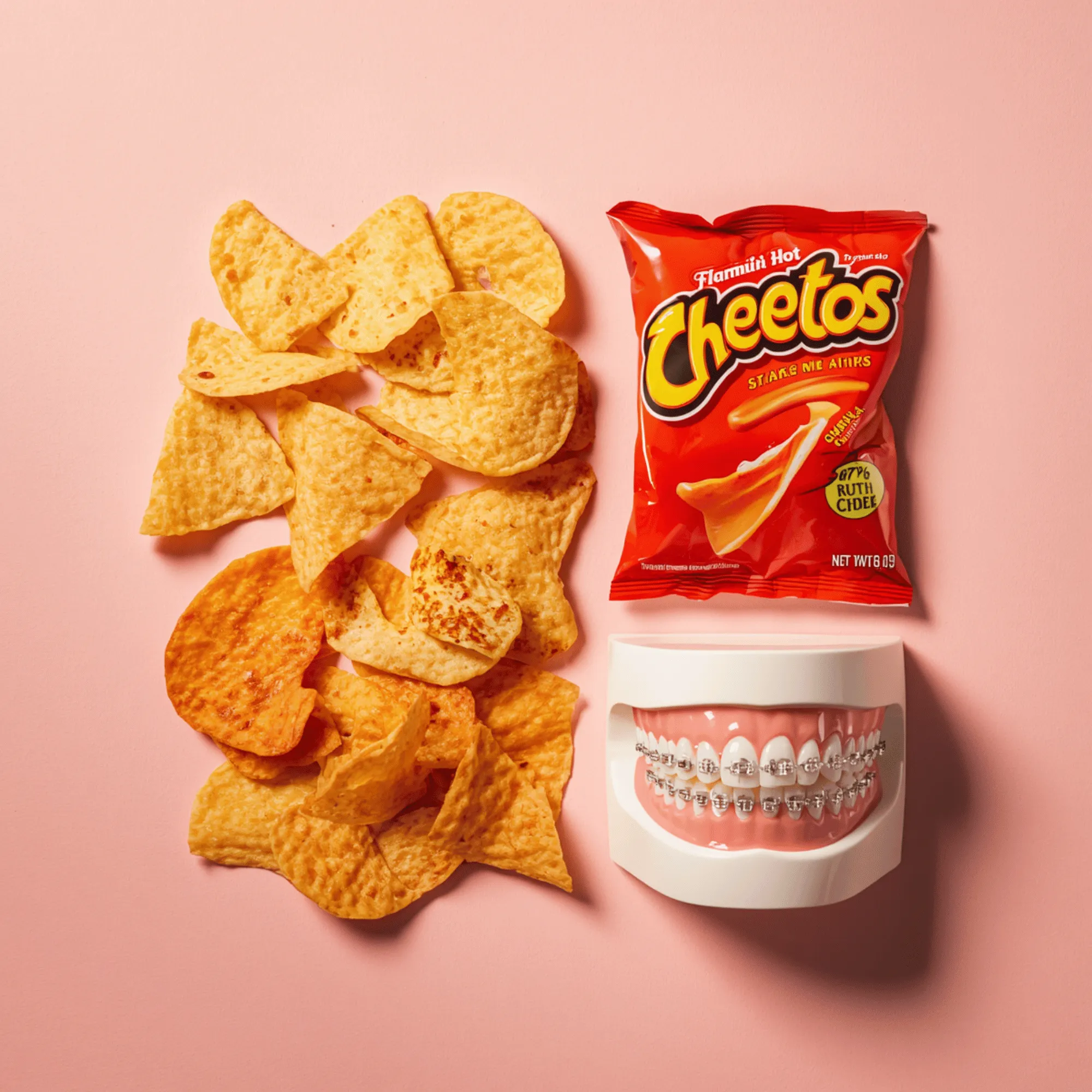
The short answer is: It totally depends on the chip. Some chips are completely fine provided you eat them correctly. Others will snap a bracket off your molar before you even finish the first bite. And a third category — the flavored powder chips like Takis and Hot Cheetos — won't necessarily break your braces, but they'll do something worse that most blogs never mention: they'll permanently stain your elastic ligatures a bright orange or red within hours, and your orthodontist won't replace those bands until your next scheduled appointment.
In this guide, I'm going to break down every major type of chip by exact risk level, explain the mechanical reason why certain chips damage braces while others don't, and give you a technique that orthodontic assistants actually use behind the scenes to let their own patients eat chips safely.
The Bracket Stress Map: Why Chips Break Braces (And Where)
Chips break braces by exerting shear force at the adhesive bond between enamel and metal. Premolar brackets are most vulnerable due to smaller bonding surface areas and high bite force exposure.
Something you need to know about braces that almost no other online food guide explains: not all brackets are equally vulnerable.
Your dentist glues each bracket to your enamel using a composite resin adhesive. The bond strength of that adhesive is about 6 to 8 megapascals (MPa) in a newly bonded state. But here's the catch — that strength drops significantly depending on two key factors:
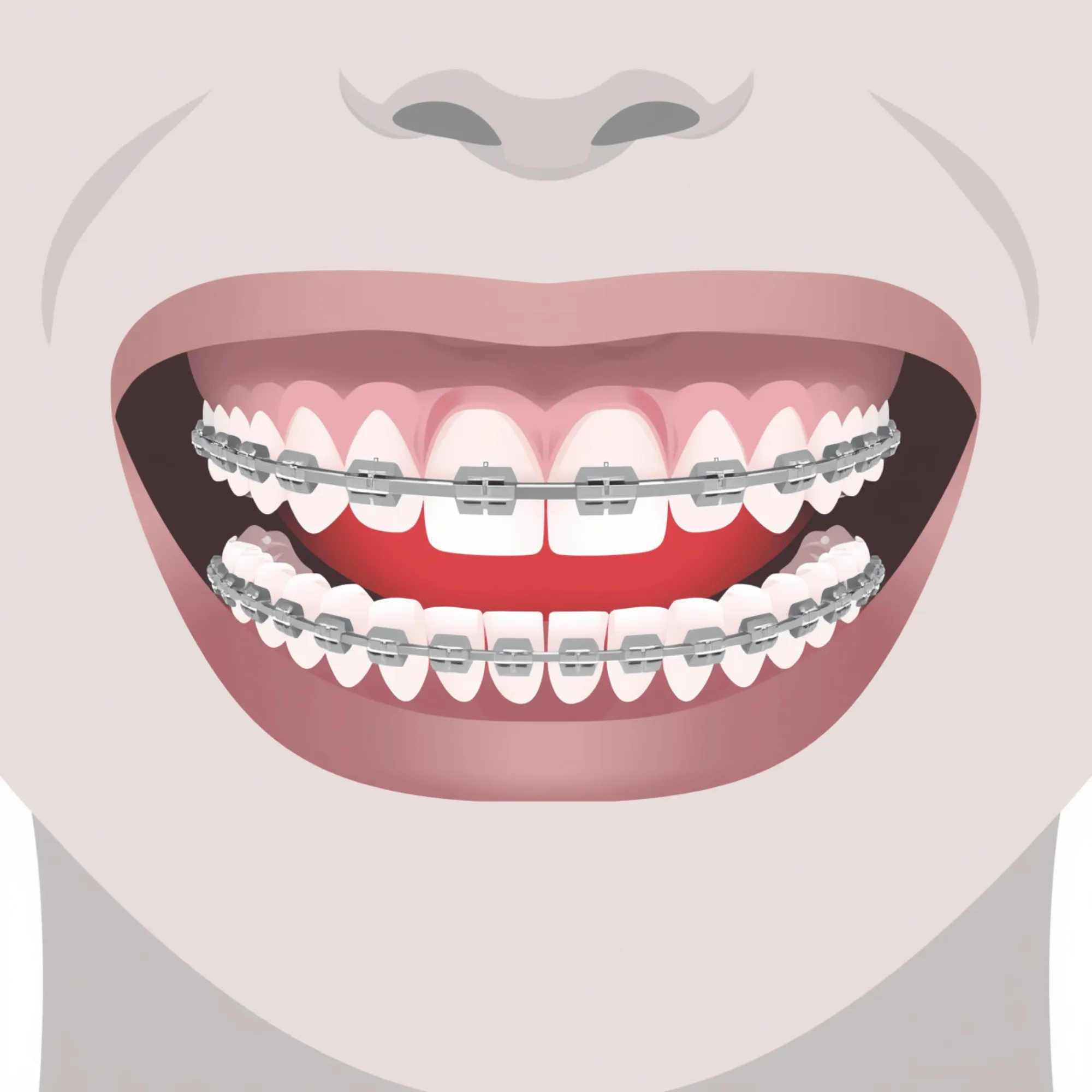
- Tooth location. The brackets of your premolars (two teeth directly behind your canines, top and bottom) are statistically the most likely to debond. Why? Because premolars have a flatter, smaller bonding surface compared to your front incisors, and they sit directly in the "bite zone" where your jaw exerts the highest chewing force. When you crunch a hard tortilla chip, the sharp fragment almost always hits a premolar bracket first.
- Time since bonding. If your braces were placed within the last 72 hours, the composite adhesive has not fully polymerized (cured). The bond strength during this window can be 30–40% weaker than its peak. This is why orthodontists tell you to eat only soft foods for the first three days — not because your teeth are just sore, but because the glue literally hasn't finished hardening yet.
What this means for chips: The risk isn't just "hard food = bad." The risk is concentrated on specific teeth at specific times. Eating a thin Lay's Classic on day 30 of your treatment while chewing on your incisors is a completely different risk profile than crunching a thick Tostitos Scoops on day 2 while grinding down on your premolars.
The Dissolution Soak Technique (What Ortho Assistants Actually Do)
The dissolution soak technique involves resting thin potato chips on your tongue for 3 to 5 seconds to let saliva soften starch before chewing. This reduces bite force below debonding thresholds.
Here's something you won't find in any orthodontic pamphlet or competing blog. We spoke with multiple orthodontic assistants who wear braces themselves, and nearly all of them mentioned the same workaround:
They let chips dissolve on their tongue for 3 to 5 seconds before chewing.
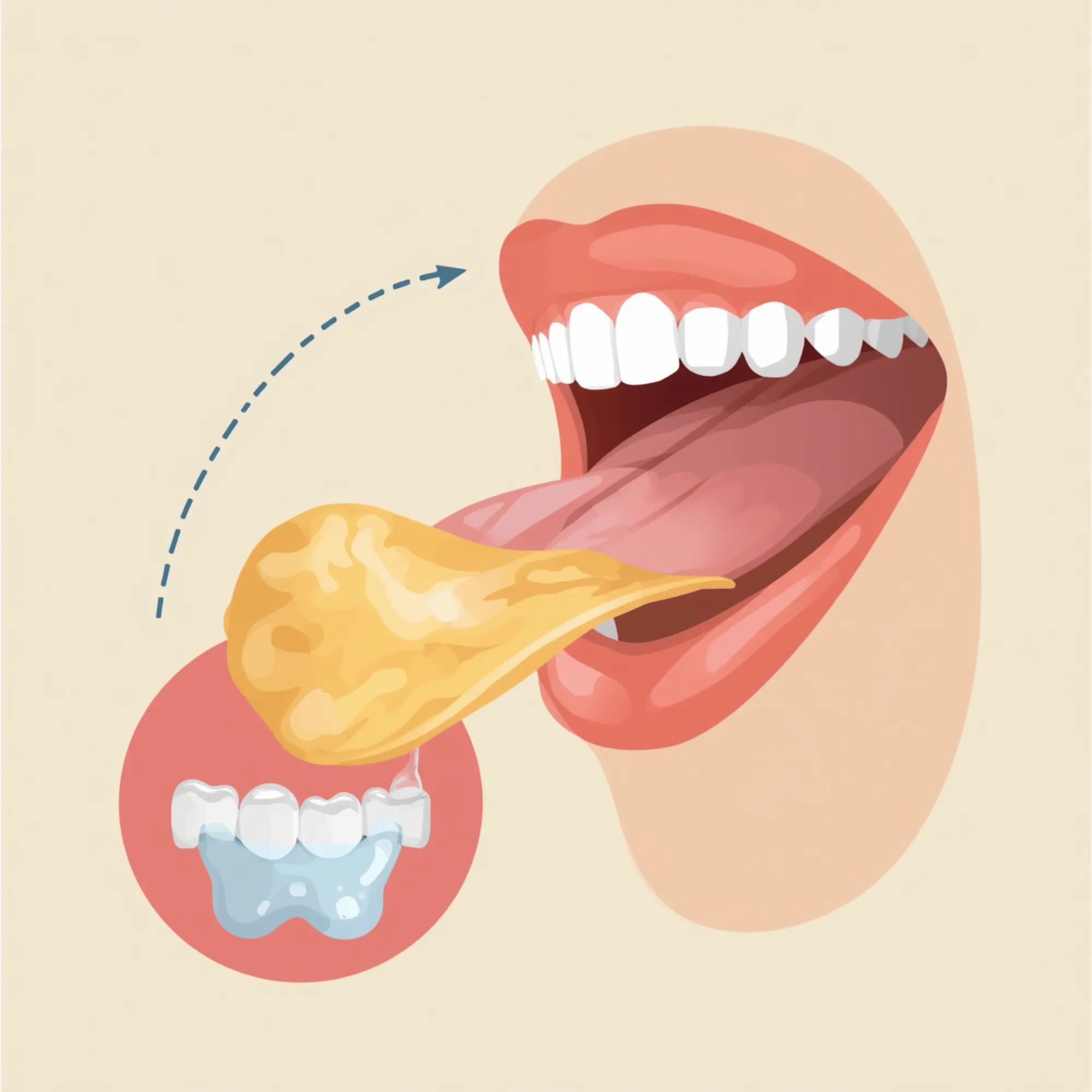
This isn't some internet hack. It's basic food science. Thin potato-based chips (such as Lay's, Pringles, or Ruffles) are engineered with high starch content that begins to break down the moment saliva contacts the surface. If you lay a single chip flat on your tongue and press lightly on the roof of your mouth for a few seconds, the chip loses most of its structural rigidity. At that point, you can chew it with your front teeth using minimal force — far below the threshold needed to debond a bracket.
This method does not work for corn-based chips (Doritos, Tostitos, Fritos). Corn tortilla chips have a fundamentally unique molecular structure. They are made from nixtamalized masa, which remains rigid even when wet. You can hold a Dorito in your mouth for 30 seconds and it will barely soften. That's why tortilla chips are one of the most dangerous snacks for braces — they shatter into sharp, rigid fragments that wedge under archwires and pop brackets.
The Staining Problem Nobody Talks About
Flavored chip seasonings like Takis and Hot Cheetos contain Red 40 and Yellow 6 dyes that permanently stain clear braces elastic ligatures. Stained bands remain discolored until your next scheduled appointment.
Every braces blog on the internet will tell you "chips are crunchy and might break brackets." Almost none of them mention the staining issue, which is arguably a bigger day-to-day problem for patients:
Flavored chip powders (Cheetos, Takis, Flamin' Hot variants, Doritos Dinamita) contain concentrated artificial dyes — specifically Red 40, Yellow 6, and Red 40 Lake — that bind chemically to the porous surface of clear and colored elastic ligatures.
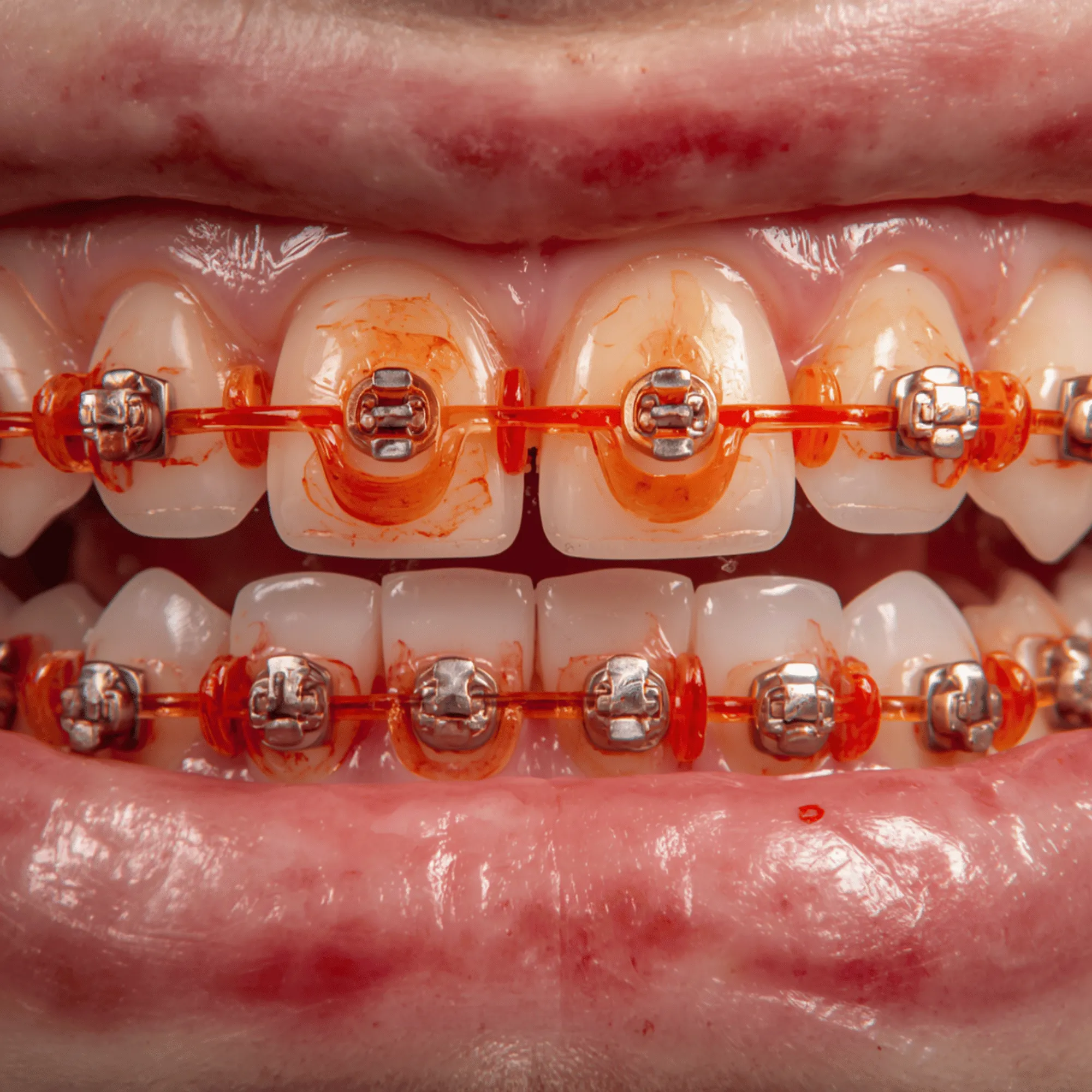
- Your dentist will typically replace your elastic ligatures (the small colored rubber bands around each bracket) at adjustment appointments every 4 to 8 weeks.
- If you eat a bag of Hot Cheetos on the third day after an adjustment, those ligatures will turn a permanent shade of orange-red within hours. The dye bonds with the latex and cannot be brushed or washed off.
- You'll have visibly stained bands for the next 3 to 7 weeks until your next appointment. If you chose clear or white ligatures for aesthetic reasons, it is especially noticeable.
Action Measures: If you truly must consume flavored chips, schedule them for the day before your next adjustment appointment. Your dentist will cut off the stained ligatures and replace them with clean ones right after.
The Complete Chip Safety Tier List
Safe chips for braces include thin potato chips, Pringles, and puffed Cheetos that soften quickly. Avoid hard corn tortilla chips like Doritos, Tostitos, and Takis that shatter under pressure.
Here is every major chip type ranked by actual risk to your braces hardware:
✅ Safe (Low Risk — Eat Carefully)
⚠️ Caution (Moderate Risk — Use Dissolution Soak)
🚫 Avoid (High Risk — Brackets Will Likely Be Damaged)
What to Do If a Chip Breaks Your Bracket
If a chip pops a bracket loose, leave it threaded on the wire and cover it with orthodontic wax to stop cheek irritation. Contact your orthodontist within 48 hours for rebonding.
If you bite down on a chip and feel a bracket pop loose (you'll know — it slides freely along the wire), here's your immediate action plan:
- Don't panic. A loose bracket is not an emergency unless the wire is poking your cheek or gum.
- Leave it in place. The bracket will normally stay threaded onto the archwire. Don't try to pull it off.
- Apply orthodontic wax over the loose bracket to prevent it from sliding around and irritating your cheek.
- Call your dentist's office to schedule a rebonding appointment. Most offices can reattach a bracket within 24 to 48 hours.
- Know the cost: Rebonding a single bracket typically costs $25 to $75 per bracket if your treatment plan doesn't include breakage coverage. Some offices include unlimited rebonds in their treatment fee — ask before you start treatment.
Summary
You can eat chips with braces if you choose soft potato varieties and let them soften before chewing. Avoid hard corn tortilla chips entirely and watch out for ligature-staining seasonings.
Can you eat chips with braces? Yes — but only certain kinds, and only if you eat them correctly. Stick to thin, potato-based chips and use the dissolution soak technique to soften them before chewing. Avoid corn-based tortilla chips entirely. And if you eat anything with colored powder seasoning, schedule it the day before your next adjustment appointment so your orthodontist replaces the stained ligatures.
Not sure about a specific food?
Use Our Free Food Checker Tool →Want the full list of safe and unsafe foods? Read our complete Braces Diet & Eating Master Guide for every food category.