Can You Eat Chocolate with Braces? (It Depends on the Type)
Quick Answer
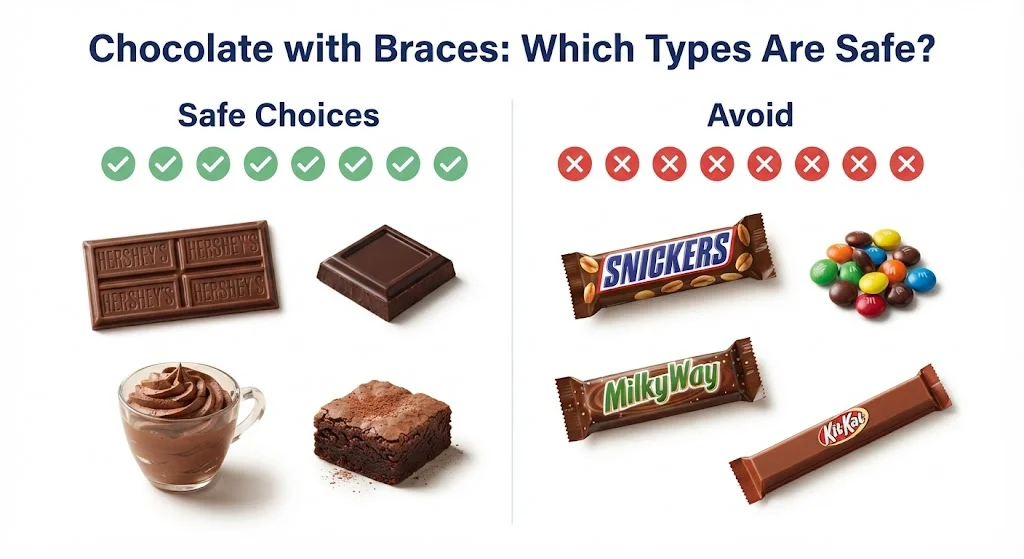
Plain milk chocolate and dark chocolate are safe with braces — they melt at body temperature without requiring bite force and do not stick to brackets. Avoid: chocolate with caramel or toffee (Snickers, Milky Way, Twix), chocolate with nuts (Almond Joy, Toblerone), hard candy-coated chocolate (M&Ms), and chocolate with crunchy interiors (Kit Kat, Crunch bar). The rule is not about the chocolate — it is about what is mixed into it.
Part of our Diet & Eating Guide. Also see: Complete Braces Food Guide.
Why Plain Chocolate Is Safe
Plain milk and dark chocolates are safe for braces because cocoa butter melts near body temperature. Melting rapidly in the mouth requires zero chewing force, protecting bracket adhesive bonds.
Chocolate has a melting point of approximately 34°C (93°F) — just below body temperature. Plain chocolate melts and dissolves almost immediately upon contact with the warmth of the mouth, requiring no sustained chewing force. The brief initial bite to break a piece of plain chocolate is short and no harder than biting through most normal soft foods.
Compare this to caramel: a sticky, high-adhesion substance that bonds to bracket surfaces and requires considerable force to tear. Or nuts: hard, dense pieces that concentrate force on a single point of the bracket. The distinction is not chocolate vs. non-chocolate — it is a soft melt versus a hard bite or sticky adhesion. Plain chocolate falls firmly in the safe-melt category.
Chocolate Types: Safe vs. Avoid
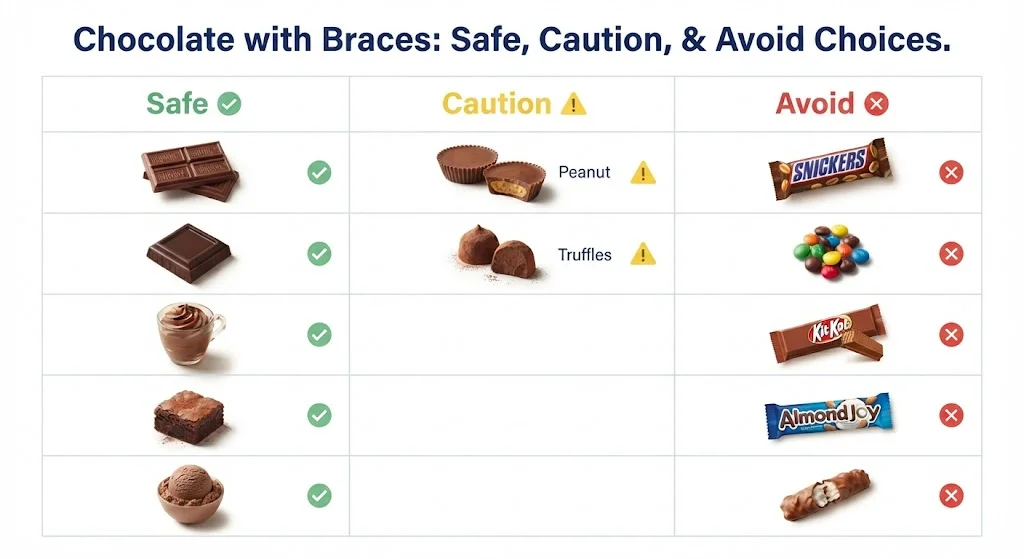
Safe chocolate choices include plain bars, mousse, and ice cream without hard mix-ins. Avoid chocolates containing caramel, whole nuts, toffee, or hard candy shells that snap brackets.
Safe
- Plain milk chocolate (Hershey’s, Cadbury Dairy Milk)
- Plain dark chocolate (at room temperature)
- White chocolate
- Chocolate mousse and pudding
- Soft chocolate brownies
- Chocolate ice cream (no hard mix-ins)
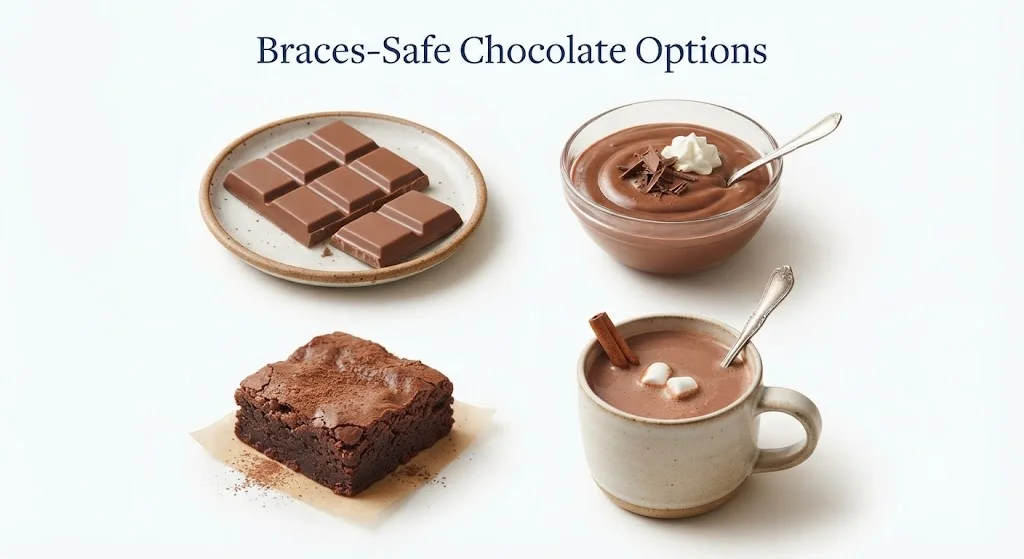
- Hot chocolate and chocolate milk
Avoid
- Snickers, Milky Way, Twix (caramel/nougat)
- Almond Joy, Mr. Goodbar, Toblerone (nuts)
- M&Ms, Smarties, Reese’s Pieces (hard candy shell)
- Kit Kat, Crunch bar (wafer/crisp interior)
- Turtles, Rolo (caramel center)
- Chocolate-covered pretzels or nuts
- Skor, Heath bar (toffee layer)
Temperature Matters
Room-temperature chocolate is far safer for braces than refrigerated chocolate. Cold chocolate hardens significantly, requiring dangerous biting force that can pop bonded brackets.
Chocolate straight from the refrigerator is significantly harder than chocolate at room temperature. Cold chocolate requires more bite pressure to break and applies more stress to brackets than the same chocolate eaten at room temperature. If you eat chocolate with braces, allow it to warm to room temperature first. This is especially relevant for dark chocolate, which has a higher cocoa butter content and is particularly hard when cold.
After Eating: Clean Brackets Promptly
Brushing or rinsing with warm water promptly after eating chocolate removes sugar residue from bracket margins. Eliminating leftover cocoa film prevents bacterial acid demineralization.
Chocolate residue, while not sticky in the gummy-candy sense, does deposit a sugar film on bracket surfaces. Brush after eating chocolate to prevent sugar from feeding bacteria at bracket margins. This is especially important for milk chocolate, which has a higher sugar content than dark chocolate. Rinsing with warm water before brushing helps dissolve and clear chocolate residue first.