Do Braces Hurt More at the Beginning or End? (2026 Guide)
If you’re about to get braces, or if you’re about to give up your remedy and enjoy amazing pain, you’re probably asking the same question that hundreds of thousands of orthodontic patients are asking: Do braces hurt more in starts or stops?
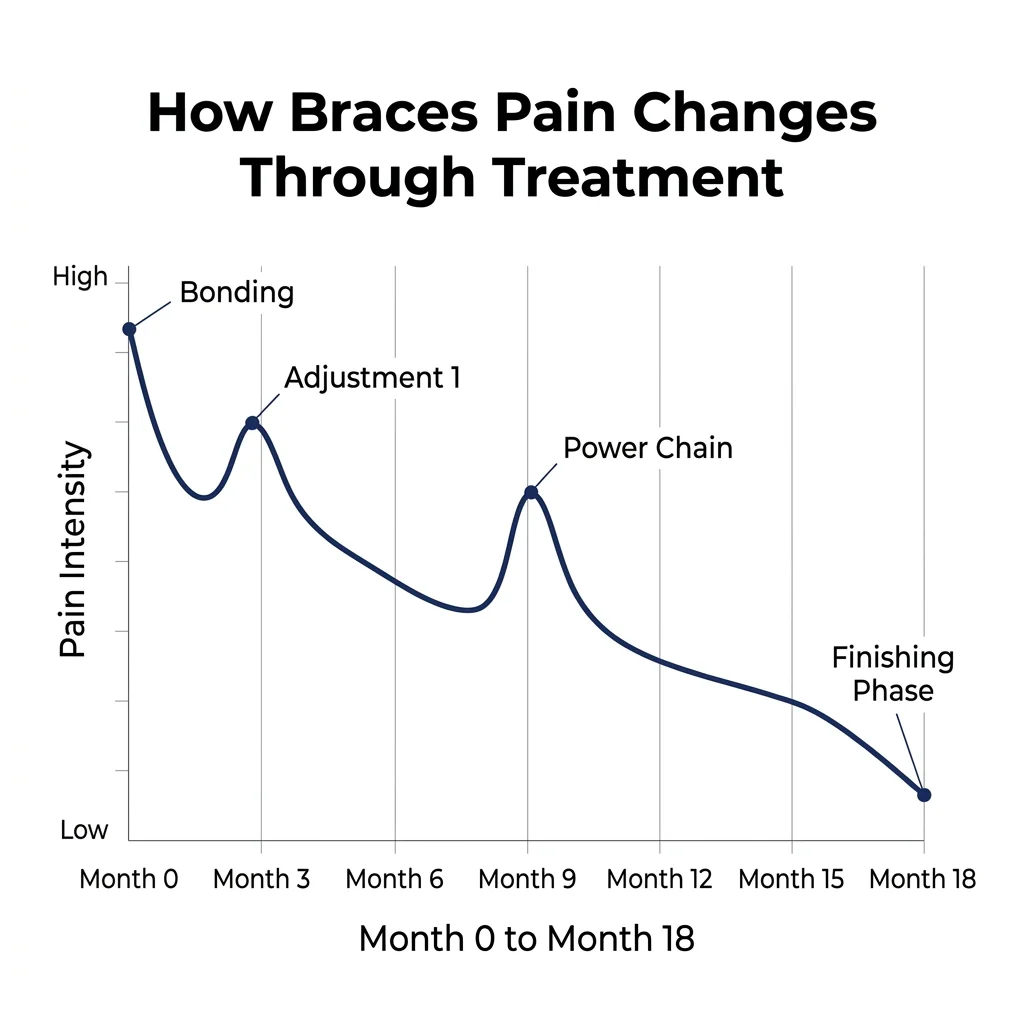
The brief answer is: Braces are designed to cause severe additional pain at the beginning of the remedy.
But there are unique phases near giving up of the remedy (sporting activities weight elastic or electrically powered chains) that may briefly aim at pain recovery
Here's a complete breakdown of the braces pain timeline, why the beneficial range does more harm than others, and a specific way to control pain at each stage of your dental collection journey
Why Do Braces Hurt at All?
To recognize the pain timeline, you first want to know how braces pass your tooth.
The teeth aren't rigidly embedded in your jaw bones like concrete. They are suspended from the sockets by way of a hammock-like structure called the dental ligament (PDL). When braces take a look at the unrelenting stress on the enamel, the PDL turns into an infected one.
This infection triggers osteoclasts (osteoblastic cells) on the aspect the tooth shift, and osteoblasts (bone-building cells) at the aspect it shifts miles away from The ache you've got is an inflammatory reaction within the periodontal ligament as your bone really rebuilds itself.
The Beginning: Why the First 7 Days Are the Worst
Almost every dentist agrees: the primary week after your braces are placed is the most painful part of the entire 1-to-2-year technique and here’s why it hurts so much to get started.
1. Early trauma to the teeth
Before you got your braces, your teeth probably never did well with constant, directional pressure. When the primary arch wire is tied into the brackets, all of your teeth are immediately activated. The ligaments around your teeth are uniformly infected. This creates a dull, massive sensation of pain that makes biting into hard food almost impossible.2. Soft tissue incision
The inside of your mouth (lips and cheeks) is coated with delicate, easy mucus. Sudden insertion of sharp metal brackets and wires into this environment causes friction. For the primary few weeks, the steel will rub towards your cheeks, causing small cuts, sores, and sores. (This is what tooth wax is designed to prevent).3. "Bite Shift".
As your enamel begins its initial movements, your chewing will briefly feel completely wrong. When you chew, your teeth can additionally hit each different at odd angles, creating a sharp pain-stroke on the precise enamel.Tip: The pain usually peaks on the second or third day and subsides considerably by the 7th day.
The Middle: The Maintenance Phase
After the first month, your mouth undergoes "keratinization" — the tissue on the inside of your cheeks toughens up to resist the metal brackets, meaning the sores go away.
Additionally, your teeth get used to the movement. During the middle of your treatment, you will go in for adjustments every 4 to 8 weeks.
Do adjustments hurt? Yes, but not nearly as much as the first week. When your orthodontist upgrades you to a thicker archwire, your teeth will ache for about 1 to 3 days. However, the pain is usually much milder and easily managed with over-the-counter pain relievers like Ibuprofen.
The End: Why Pain Can Return
Just when you think you’re inside the clear, the last few months of the remedy can introduce a new kind of discomfort. Although the overall pain is much less than the beginning, the pause section has a "finish and detail", which uses a specific mechanic.
1. Heavy Elasticity (Rubber Bands)
To restore your bite (overbite, underbite, or crossbite) your dentist will probably wear a rubber band joining your top and bottom jaw These put heavy constant pressure on jaw muscle tissue and joints, which can trigger jaw pain, muscle fatigue, or even anxiety headaches2. Power series
The power chains are connecting rows of elastic O-jewels stretched in multiple enamel. They are used only in the abandonment of the approach to close all last loopholes. Since they apply strong, tightening pressure to multiple teeth simultaneously, setting up a sparkling force chain can objective intense pain for 2 to four days3. Original torquing
In the final stages, dentists use thick rectangular wires to adjust the attitude of the enamel roots under the gums, rather than just a visible crown Moving the root requires additional pressure from moving the crown, causing deep, stupid pain inside the jaw bone.The Verdict: Beginning vs. End
The table below outlines key comparison data and practical guidelines for do braces hurt more at beginning or end.
| Phase | Pain Level (1-10) | Type of Pain | Duration |
|---|---|---|---|
| The Beginning (Week 1) | 7 - 9 | Widespread aching, cheek sores, sharp pain when chewing | 7 to 10 days |
| Middle (Routine Adjustments) | 3 - 5 | Mild soreness localized to specific teeth | 1 to 3 days after visit |
| The End (Elastics/Chains) | 5 - 7 | Jaw fatigue, deep root aching, tension headaches | 3 to 5 days after visit |
Note: Data reflects typical clinical guidelines and average provider estimates across standard treatment plans.
Conclusion: The beginning of treatment is definitively more painful because your mouth has to adapt to both the mechanical force on the teeth and the physical presence of the metal on your soft tissues.
5 Pro Tips to Survive Braces Pain at Any Stage
Whether you are in Week 1 or Month 18, here is how to manage the discomfort:
- Anti-inflammatories are king: Ibuprofen (Advil) or Naproxen (Aleve) photos are significantly higher for brace pain than acetaminophen (Tylenol), because brace ache is caused by infection in the PDL.
- Ice Water Tip: Arch wires used in current-day braces are warmth-activated (they harden while exposed in your body warmth). Drinking a glass of ice-blood-loose water temporarily chills the string, permitting it to loosen and offer immediate and short-term alleviation
- Rinse with Warm Salt Water: Rinsing with heat salt water (1 teaspoon of salt to eight oz. Of water) for cheek sores in the course of the primary month promotes quicker restoration of the wound.
- Stockpile Orthodontic Wax: Don’t wait till it hurts. If the bracket is sharp in opposition to your cheek, roll up a chunk of wax and press it right now onto the dry bracket.
- The Soft Food Diet: Make mashed potatoes, yogurt, smoothies and soups reachable for days straight away after adjusting or setup your strength chain.
Frequently Asked Questions
Does getting braces taken off hurt? No, there is no damage now inside the manner of removal. The dentist uses unique pliers to softly squeeze the bracket, breaking the adhesive bond. You'll pay attention a noisy cracking sound and feel some anxiety, but there's no ache.
Will a water flosser help with braces pain? A water flosser won't directly reduce the pain of tooth movement, but it will prevent gum inflammation. Puffy, inflamed gums make braces hurt significantly worse. Using a water flosser daily keeps the gums tight and healthy, which reduces overall discomfort.
Do ceramic braces hurt more than metal braces? No, the biological process of moving the teeth is exactly the same. However, ceramic brackets are slightly larger and have rougher edges than traditional metal brackets, so they may cause slightly more cheek irritation during the first few weeks.