How to Reduce Braces Pain at Night (2026 Guide)
You made it through the day. You’ve eaten greasy stuff, taken ibuprofen, and applied toothpaste to every sharp bracket. But as soon as your head hits the pillow, a deep, throbbing pain starts radiating through your jaw, making sleep completely impossible.
If this sounds familiar, you're not alone. Periodontal pain is almost always worse at night. The right news? You don't have to suffer through it again.
Here's exactly why braces do more harm at night and with the help of a step-by-step to relieve ordinary pain in the middle of the night, reduce inflammation, and get a few sleeps sooner or later.
Why Do Braces Hurt Worse at Night?
It's not just for your head—there are physical reasons why toothache increases the moment you get into bed.
1. Deflection factor
During the day, your brain is bombarded with sensory input: pictures, school, conversation, and physical activity. To focus on these responsibilities, your brain efficiently "just reduces" the stupid pain in your face. In a dark, quiet room at night, it’s impossible to detect anything other than an infection in your brain’s gums.2. Blood pressure and gravity
When you lie flat, blood flows and fluid moves towards your head. This increases the blood pressure in your head and neck, which increases the vibrating sensation in the ignited dental muscles (the tissue around your teeth).3. Bruxism.
Up to 30% of people grind or clench their teeth in their sleep. When you get newly activated braces, squeezing the teeth together applies a great deal of pressure to the already painful enamel trying to circulate, resulting in intense pain that can wake you upThe Ultimate Nighttime Pain Relief Routine
If you need to tighten your braces and sleep through the night time, you need to be active. Follow this exact plain 30 minutes before mattress.
Stage 1: Ice water shock (30 minutes before bed)
Modern dental wires are "thermocritical," which means they react to heat. The cord tightens and applies extra pressure to the warm temperature of your face when uncovered.The Fix: Drink a large glass of ice-blood-free water slowly. Bloodless water should be thrown around the mouth. Severe anemia will briefly freeze the arch wire and proceed to relax the tension in your tooth, causing it to drop to nearly zero. The effect handiest lasts for 15-20 mins, however it gives instant relief even when you transition into Step 2.
Step 2: Strategic Anti Inflammatory (20 minutes before bedtime)
Brace pain is the end result of gum contamination, not a headache. So you need an NSAID (Non-Steroidal Anti-Inflammatory Drug).- Take ibuprofen (Advil) or Naproxen (Aleve).
- Do not take Acetaminophen (Tylenol) anymore. Tylenol blocks the pain receptors within the mind yet does nothing to protect the physical contamination occurring in your jawbones.
Always follow the dosing instructions on the bottle and seek the recommendation of your clinical medical doctor if you have a systematic scenario.
Step 3: Numb the gums (10 minutes before mattress)
In some special enamel for localized, sharp pain, exercise topical oral anesthesia before going to mattress.- Use a Q-tip to apply a generous dab of Orajel or Anbesol (which includes 20% benzocaine) at once over the throbbing enamel at the gum line.
- This will numb the soft tissue for about forty-5 minutes, giving you a window of complete pain relief when you nod off.
Step 4: Keep your head elevated (in bed).
Because mendacity flat increases blood pressure for your head and makes throbbing worse, you want to use gravity to your advantage.- Sleep with more pillow to keep your head up in 30 diploma attitude.
- This prevents blood from pooling in your head, reducing the pulsating sensation in your gums.
What to Do About Sharp Wires and Cheek Sores at Night
Sometimes the pain is not bone deep pain; From time to time, you may experience a pointed, stinging pain due to twine or brackets digging into your cheek.
At night, the tissues in your mouth barely dry out, increasing friction between the metal brackets and the sensitive cheek lining.
The Orthodontic Wax Solution
Don’t wait until you have an ulcer. If the bracket is even slightly tight, make it into a well.- Dry the bracket: The wax will no longer set with a wet bracket. Use a tissue or Q-tip to completely dry the bracket and enamel.
- Wax Roll: Pinch a pea-sized piece of toothpaste wax and roll it on your fingers until it is warm and pliable.
- Press and Mold: Press the wax firmly onto the offending bracket. Mold the rims around so they are locked in the area.
Is it safe to sleep with wax? Yes. Dental wax is non-toxic. If you accidentally swallow it while sleeping, it will harmlessly bypass your digestive system.
When to Call the Orthodontist
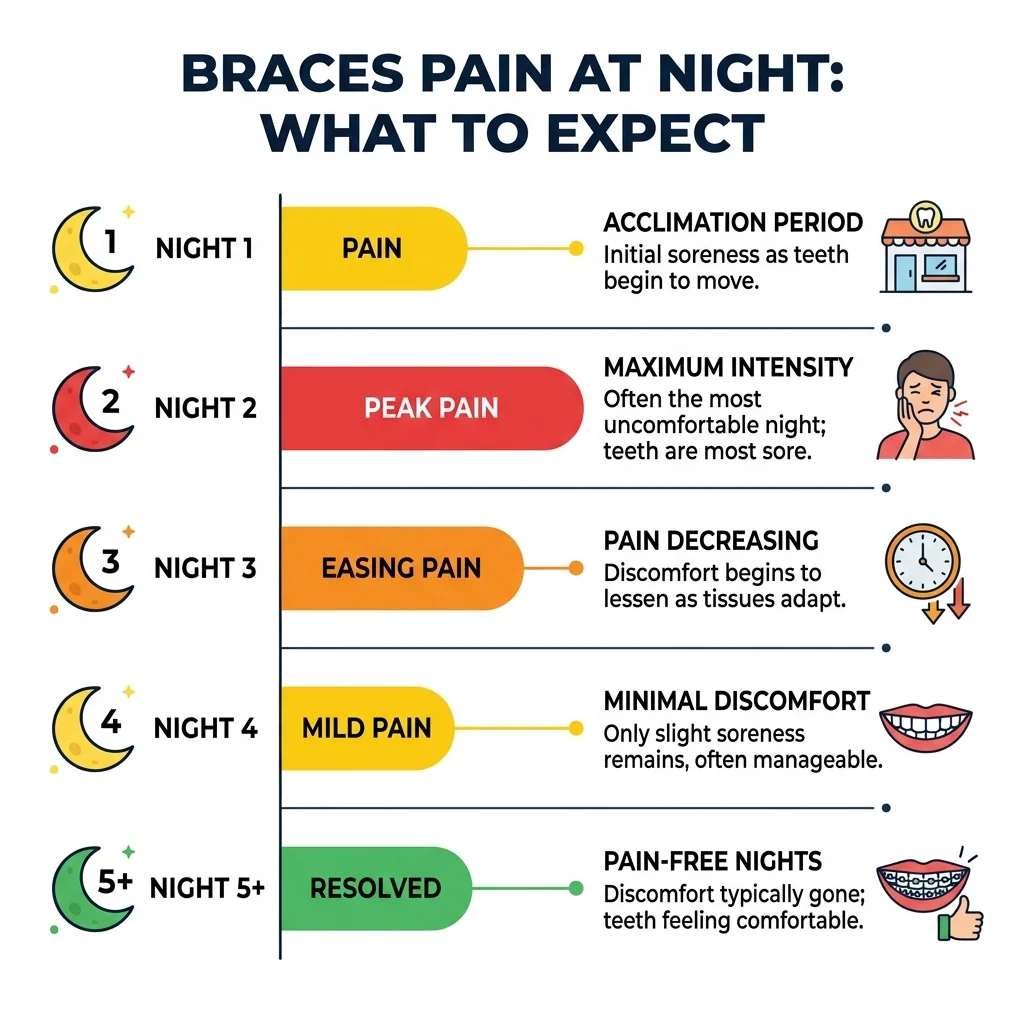
Mild to moderate palpitations are completely controlled in the first 3 to 7 days after receiving or adjusting braces. However, it is necessary to call your dentist in the morning if you experience:
- A Poking Archwire: If the archwire has slipped out of the returned bracket and stabbed your cheek again, wax will quickly help best. You need your dentist to clip the twine.
- Increasing pain after 7 days: Tooth-to-tooth pain may peak in the second to third day and should subside regularly. If the pain gets worse after every week, you could have an infection or a hardware problem.
- Swollen, bleeding gums: While some gums are regular, gums that may be bright purple, closely bleeding, and throbbing aggressively may also imply gingivitis
Frequently Asked Questions
Does sleeping on your side make braces hurt more? Yes, it's far far from done. Sleeping for your facet presses the cheek firmly into the bracket, which can boom friction and cause soreness. If possible, after a few nights of adjustment, strive to snuggle interior you once more to primary.
Is it normal for my teeth to feel loose at night? Yes. The bone around them truly has to barely melt in order to pass your enamel. It is completely plain on your tooth to barely feel wiggly or loose when you slice. No more twirling them in your arms!
Can I use a heating pad for braces pain? No, heat increases blood flooding and infection, with the intention of making spasms worse. Always use cold therapy (an ice pack on the outside of your jaw, or in ice water) to reduce infection.