Can a Retainer Fix Crooked Teeth? What It Can and Cannot Do (2026)
If your teeth have shifted after years of not sporting your retainer, or if you’ve never had braces but want to fix crooked teeth, you’re probably wondering Can a retainer fix crooked teeth?
The short solution is not. Retainers are designed to hold (protect) teeth in their modern position, no longer circulating. However, even if your teeth are most effectively shifted in microscopic amounts, there's a small danger that an adjusted retainer could push them back.
Here's what the retainer can and can't do, the difference between energized aligners and passive retainers, and what you should do now if your tooth has shifted
Retainer vs. Orthodontic Appliance: The Core Difference
To understand why a wearer can’t restore a crooked tooth, you need to know how enamel flows at all.
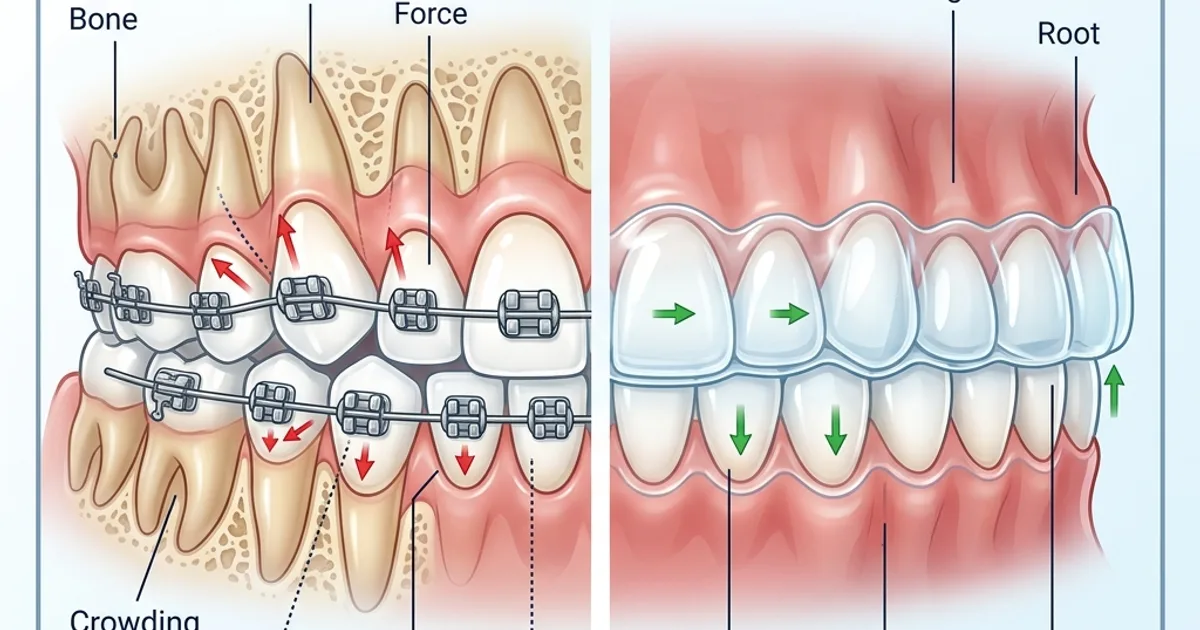
Moving enamel through solid bone requires a living, consistent, managed force. When you wear braces or clear aligners (like Invisalign), they follow the continuous stress of periodontitis (PDL). This stress causes osteoblasts (osteoblasts) to form a barrier under the bone on one side of the enamel, while at the same time other cells (osteoblasts) form new bone on the opposite side, allowing the tooth to move.
What is a Retainer?
The holder is a passive device. Nonstop force does not follow. It is perfectly molded to the shape of your straight tooth. The best procedure for this is to face the movement and prevent the elastic fibers up to your gums from pulling your teeth back into their authentic crooked positionsThe table below outlines key comparison data and practical guidelines for can a retainer fix crooked teeth.
| Feature | Retainer | Braces / Aligners |
|---|---|---|
| Primary purpose | Hold teeth in current position | Move teeth to new positions |
| Force applied | Minimal to none | Controlled continuous force |
| Duration of action | Ongoing (years/lifetime) | Fixed treatment period |
| Examples | Hawley, Essix, bonded wire | Metal braces, Invisalign, lingual |
Note: Data reflects typical clinical guidelines and average provider estimates across standard treatment plans.
When CAN a Retainer Fix Shifting Teeth? (The 1mm Rule)
There is only one situation in which the wearer can restore a crooked tooth: minor tooth reaction.
If you just finished braces a few months ago, forget to put your retainer on for a week, and your teeth barely shifted (less than 1mm), your retainer might push them back down into the area.
The Squeeze Test
If your teeth have shifted slightly, try putting your retainer in.- If it fits tight but goes all the way: The wearer will observe pressure on the relocated teeth. If you keep it in it 24/7 for some weeks, it can push those enamel back to proper alignment.
- If not healthy or calls for intense strength: STOP. Do not press the retainer onto your teeth. Unhealthy plastic trays can cause extreme pain by forcing them onto teeth, damaging enamel, killing tooth roots, or pushing teeth into bad places
The Hawley Retainer Adjustment
If you’ve got a traditional Hawley retainer (an acrylic plate with metal twine), the dentist can occasionally use pliers to squeeze the thread loops (Omega loops) This tightens the twine slightly against your front tooth, which can close very small gaps or restore small tipping. However, it is most effective for changes under 1mm.What to Do Right Now If Your Teeth Have Shifted
If your enamel shifts after braces and your retainer doesn't fit, you have a "repeat tooth alignment." Here is what you want to take with the help of the exact step-by-step:
1. Stop trying to Jam the old Retainer On
As mentioned above, if it doesn’t fit, throw it out or put it in a drawer. Don’t force it. You are in danger of causing permanent damage to the periodontal disease.2. Book a recurrence consultation
Call your authentic dentist (or a brand new one in case you are transferring) and provide an explanation for whom you previously had braces and yet your enamel has been transferred. Many dentists offer relaxed or nicely discounted consultations for recurring issues.3. Ask about the "express" treatment
If your teeth are just barely shifting, you probably don’t want 2-year metal braces now and again. Many dentists offer "Invisalign Express" or "Invisalign Lite" (or clean at-home aligners) specifically designed for recurring issues. These remedies typically involve five to 10 aligner trays and take at best three to 6 months to bring the enamel back into best alignment.4. Get (and keep!) a new retainer.
Once the quick direction treatment is complete, your dentist will scan your teeth and print the logo new holder. To prevent this from ever happening again, you should decide to wear this every single night for the rest of your life.Can I Just Buy Clear Aligners Online?
Pushing upwards of direct-buyer clean aligners groups (like SmileDirectClub or Byte), many humans with small recurrences are trying to order aligners on line to cost-effectively fix crooked teethProceed with an extreme warning. It is equally dangerous to move a tooth without taking x-rays to examine the bones and roots of the teeth. If you’ve had underlying bone loss or gum disease, shifting a tooth with online aligners can actually cause your enamel to fall out. Always have your dentist compare your piece individually before placing teeth.
Frequently Asked Questions
Can a retainer push teeth back into place? A retainer can nudge teeth back a very small amount — typically only if the shift happened recently and is minor (less than 1mm). If your retainer no longer fits, forcing it in consistently may push slightly shifted teeth back. However, if the retainer no longer fits at all, wearing it can damage teeth and gums. You need a new orthodontic evaluation.
My retainer doesn't fit anymore — what do I do? Schedule an orthodontic consultation as soon as possible. If the shift is very minor (weeks without wear), your orthodontist may be able to order a new retainer from updated impressions. If significant shifting occurred (months or years of no wear), you will likely need short-course treatment — typically Invisalign — to move teeth back before a new retainer is made.
Can a retainer fix one crooked tooth? Not typically. Traditional wire retainers and clear plastic retainers hold teeth in position — they do not have the mechanical design to move a single tooth into a new position. Some orthodontists can modify a Hawley retainer with springs to make very minor adjustments (less than 1mm). For a noticeably crooked tooth, Invisalign or bonded brackets are the appropriate treatment.
What is the difference between a retainer and braces? Braces and aligners are active appliances — they apply controlled force to move teeth into new positions. Retainers are passive appliances — they apply little to no force and are designed to maintain teeth in their current position. A retainer's job is to resist movement, not create it.
Can teeth shift back to straight with a new retainer? For very short, recent shifts: now and again. If you stopped wearing your retainer for weeks and the teeth have barely shifted at their best, a new retainer made from contemporary impressions can observe the soft stress that pushes the tooth back. Anything past very minor changes requires an animated tooth restorative treatment first.