Can You Use an Electric Toothbrush with Braces? (Yes — Here’s How)
Quick Answer
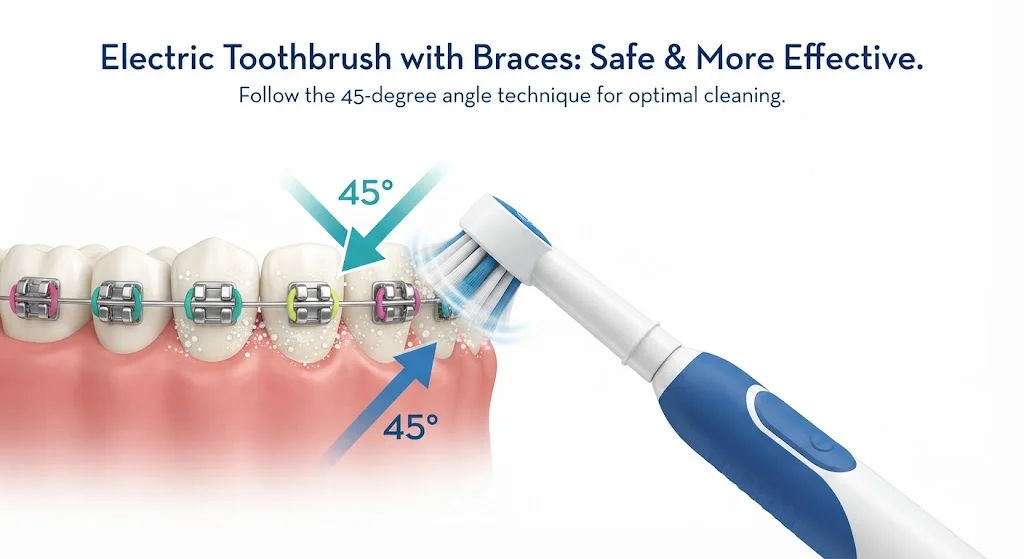
Yes — electric toothbrushes are safe with braces and generally more effective than manual brushing. Studies show oscillating-rotating electric brushes reduce plaque around brackets by up to 21% more than manual brushes. Use a round brush head on standard or sensitive mode. The two-angle technique (45° above and below each bracket) applies whether your brush is electric or manual.
Part of our Maintenance & Care Guide.
1. Electric vs Manual: What the Evidence Says
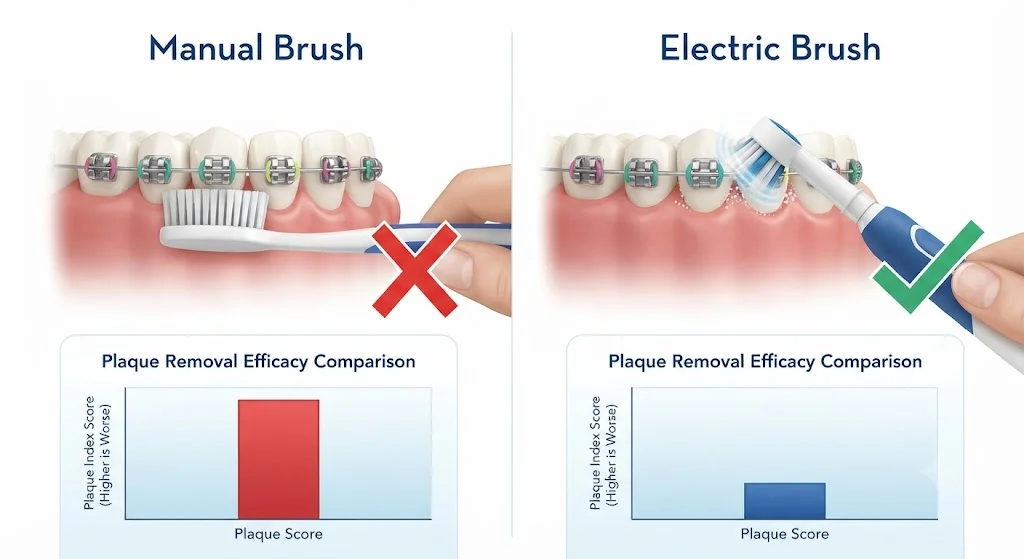
Electric toothbrushes remove up to 21% more plaque around braces brackets than manual brushes according to clinical trials. Small round oscillating brush heads navigate complex bracket hardware more effectively than flat manual bristles.
Clinical studies consistently show electric toothbrushes outperform manual brushing for plaque removal, especially around orthodontic brackets. A Cochrane systematic review found oscillating-rotating electric brushes reduced plaque scores significantly more than manual brushing over 3-month periods. The advantage is larger in braces patients because the complex geometry of brackets and wires creates more surface area for plaque accumulation — and electric brush motion navigates that geometry more consistently than manual scrubbing.
That said, a manual brush used with perfect technique beats an electric brush used carelessly. The two-angle method matters regardless of brush type.
2. The Two-Angle Technique (Works for Both Brush Types)
Brushing braces with an electric toothbrush requires angling bristles 45 degrees downward above brackets, then 45 degrees upward below brackets. This two-angle method clears plaque traps where white spot lesions originate.
The most common mistake with braces brushing is holding the brush flat against the teeth — this cleans only the front face of the bracket and misses the margins above and below it. That is exactly where white spot lesions (permanent enamel damage) begin.
Then brush all other surfaces normally — backs of teeth, chewing surfaces, tongue.
3. Which Brush Head to Use
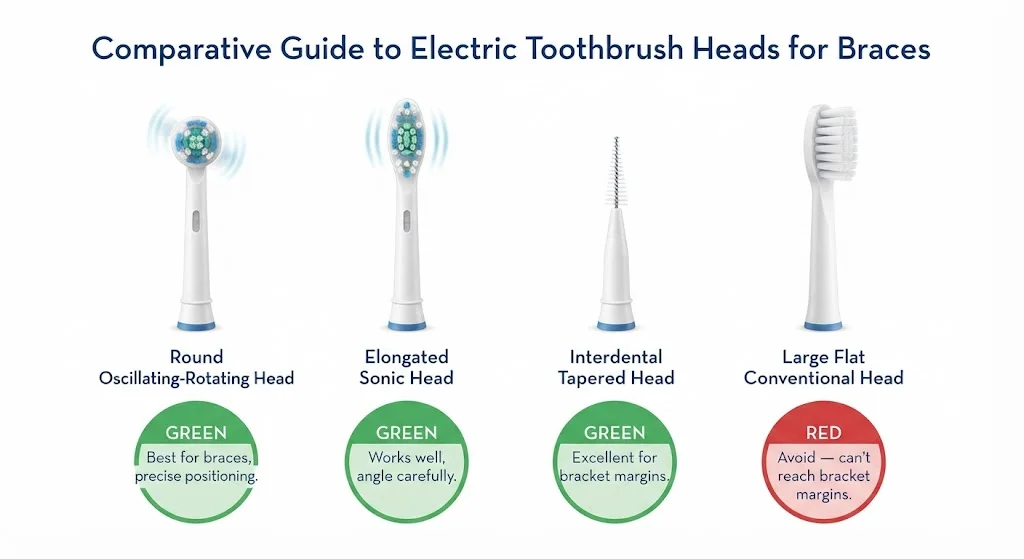
Small round oscillating brush heads and interdental specialized heads are best for braces because they clean individual bracket margins precisely. Large flat brush heads should be avoided as they skip bracket edges.
The table below outlines key comparison data and practical guidelines for can you use an electric toothbrush with braces?.
| Brush Head Type | Verdict | Why |
|---|---|---|
| Round / small head (Oral-B) | ✅ Best for braces | Small diameter positions precisely at each bracket margin — address each bracket individually |
| Sonic / elongated head (Sonicare) | ✅ Works well | Cleans 2–3 brackets at once — works fine with deliberate angling at each bracket |
| Interdental brush head | ✅ Excellent | Narrow design gets between brackets and under the wire — ideal for bracket margins |
| Large flat-head brush | ❌ Avoid | Cannot reach bracket margins — leaves plaque exactly where damage starts |
| Hard or medium bristle head | ❌ Avoid | Scratches bracket surfaces and abrades gum tissue — soft bristles only |
Note: Data reflects typical clinical guidelines and average provider estimates across standard treatment plans.
4. Settings and Pressure
Use Sensitive or Daily Clean mode on your electric toothbrush with light pressure when wearing braces. Rely on the built-in 2-minute timer and pressure sensor light to avoid excessive force on bracket adhesive.
Use Standard or Sensitive mode. High-pressure or deep-clean modes add no cleaning benefit for braces and create unnecessary vibration at the bracket bond over repeated use. If your brush has a built-in pressure sensor (most mid-range and premium models do), pay attention to it — the light turns on when you are pressing too hard. This is the most common mistake with electric brushes and braces.
Use the built-in 2-minute timer. Most patients underbrush significantly without a timer. Two minutes is the minimum — 3 minutes is better with braces given the additional surfaces to clean.
Frequently Asked Questions
Can you use an electric toothbrush with braces?
Yes — electric toothbrushes are safe with braces and are more effective than manual brushing. Use a round brush head at 45° above and below each bracket on standard or sensitive mode.
Which electric toothbrush is best for braces?
Oral-B oscillating-rotating brushes with round heads are ideal for braces. Philips Sonicare elongated heads also work with careful angling. Both are significantly better than manual brushing for plaque around brackets.
What setting should I use on my electric toothbrush with braces?
Standard or Sensitive mode. Use the built-in 2-minute timer and pay attention to the pressure sensor — pressing too hard against brackets is the most common mistake.
Can an electric toothbrush damage braces?
Not when used correctly. Let the bristles do the work, not the pressure. Pressing the brush body hard against brackets is the only way damage can occur.
Do I still need to floss if I use an electric toothbrush with braces?
Yes. Electric toothbrushes clean tooth surfaces and bracket margins but cannot reach between teeth. Floss threaders or water flossers are needed for interproximal cleaning.