
Ceramic Braces vs Metal Braces: Which Is Better for You? (2026)
Quick Answer
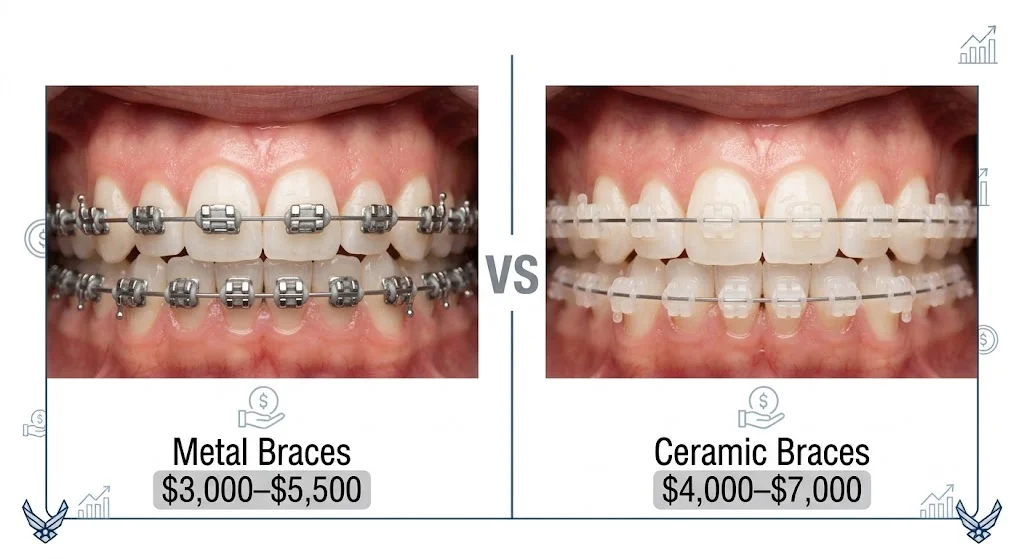
Ceramic braces and metal braces work the same way — brackets bonded to teeth, connected by an archwire — but differ in visibility, cost, durability, and maintenance. Metal braces cost $3,000–$5,500 and are the most durable option. Ceramic braces cost $4,000–$7,000, use tooth-colored or clear brackets that blend with enamel, but stain more easily and are more fragile. For most complex bite cases, metal braces are the better clinical choice. For adults and teens who prioritize appearance, ceramic braces are the most popular alternative.
Part of our Braces Types & Colors Master Guide.
1. Head-to-Head Comparison
Metal braces cost $3,000 to $5,500 and provide superior durability, while ceramic braces cost $4,000 to $7,000 and offer a clear, tooth-colored aesthetic. Both systems deliver identical tooth movement efficiency for standard orthodontic cases.
The table below outlines key comparison data and practical guidelines for ceramic braces vs metal braces: which is better for you?.
| Feature | Metal Braces | Ceramic Braces |
|---|---|---|
| Cost | $3,000 – $5,500 | $4,000 – $7,000 |
| Visibility | Highly visible | Much less visible |
| Durability | Excellent | More fragile (brackets can chip) |
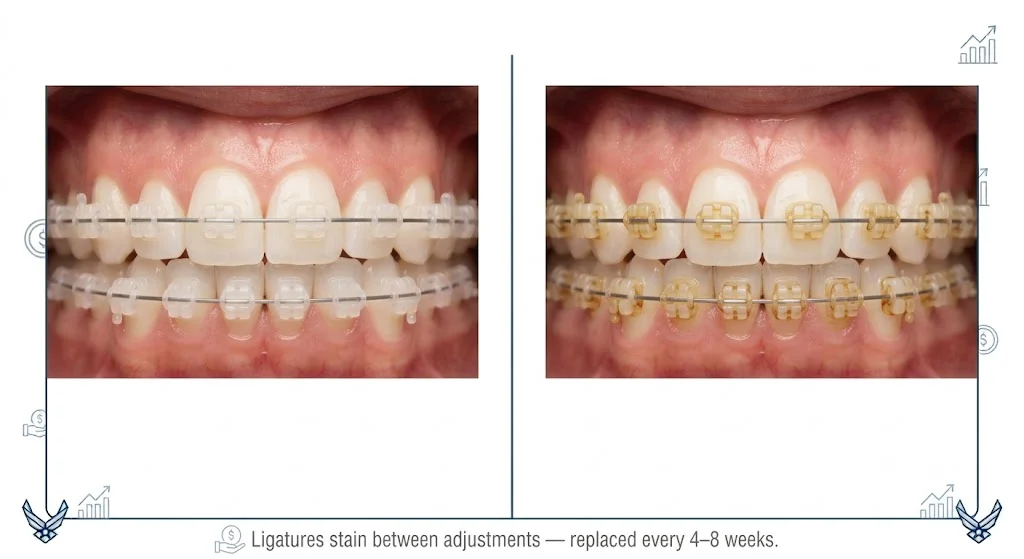
| Staining | None | Ligatures stain between adjustments |
| Cleaning difficulty | Standard | Slightly more effort |
| Treatment speed | Full capability | Same for most cases |
| Best for | Complex cases, budget-conscious | Adults, teens, appearance-focused |
| Insurance coverage | Same | Same |
Note: Data reflects typical clinical guidelines and average provider estimates across standard treatment plans.
2. How They Work (What’s the Same)
Both metal and ceramic braces utilize identical mechanical forces: bonded brackets, archwires, and elastic ligatures. The archwire applies continuous pressure to guide teeth along the arch, regardless of whether brackets are stainless steel or polycrystalline alumina.
Both metal and ceramic braces use the same fundamental mechanics. Brackets are bonded to each tooth with dental adhesive. An archwire threads through slots in the brackets and is held in place by small elastic ligatures. The wire applies controlled pressure, and over weeks the teeth move in the direction the wire dictates.
The archwire sequence is identical for both: starting with thin, flexible nickel-titanium wires for initial alignment, then progressing to stiffer stainless steel wires for space closure and bite correction. The bracket material — metal vs. ceramic — does not change how the wire works.
3. What’s Actually Different
The primary differences between ceramic and metal braces lie in bracket material, tie stain susceptibility, and mechanical friction. Ceramic brackets use tooth-colored polycrystalline alumina that can chip upon heavy impact and require careful ligature maintenance to prevent visible discoloration.
Bracket material. Metal brackets are stainless steel or titanium — extremely durable and nearly impossible to chip or crack during normal treatment. Ceramic brackets are made from polycrystalline alumina (aluminum oxide), the same material used in industrial ceramics. They are strong, but not as tough as metal. A sharp impact — a sports ball, a fall — can chip a ceramic bracket in a way that would leave a metal bracket intact.
Elastic ligatures. The tiny bands holding the wire to each bracket are where staining actually happens. On metal braces, staining on the ligatures is barely visible because the bracket is already silver. On ceramic braces, dark-stained ligatures against a white bracket are much more noticeable. Switching to self-ligating ceramic brackets — which use a built-in clip instead of elastic bands — eliminates this issue but adds cost.
Friction. Ceramic brackets produce slightly more friction against the wire than metal brackets. In practice, this is a minor factor that most orthodontists account for in their treatment planning.
4. Who Should Choose Metal Braces
Patients requiring treatment for severe bite misalignments, contact sport athletes, and budget-conscious individuals should choose metal braces. Metal brackets withstand high forces and impact without cracking or chipping during aggressive orthodontic adjustments.
- Patients with severe crowding, skeletal bite issues, or cases requiring significant arch expansion
- Patients who play contact sports — metal brackets are far more impact-resistant
- Patients on a tight budget where the extra ceramic cost is meaningful
- Children and younger teens who are less concerned about appearance
- Patients with a deep overbite where lower ceramic brackets could chip against upper teeth
5. Who Should Choose Ceramic Braces
Adults and working professionals desiring discreet orthodontic treatment should choose ceramic braces. Tooth-colored ceramic brackets blend naturally with enamel, providing an aesthetic appearance during speech and social interactions.
- Adults in professional environments where visible metal brackets are undesirable
- Older teens who are self-conscious about the look of braces
- Patients with mild to moderate crowding or spacing issues
- Patients willing to pay the additional cost for a less visible option
- Patients who do not drink heavy amounts of staining beverages
6. The Hybrid Option
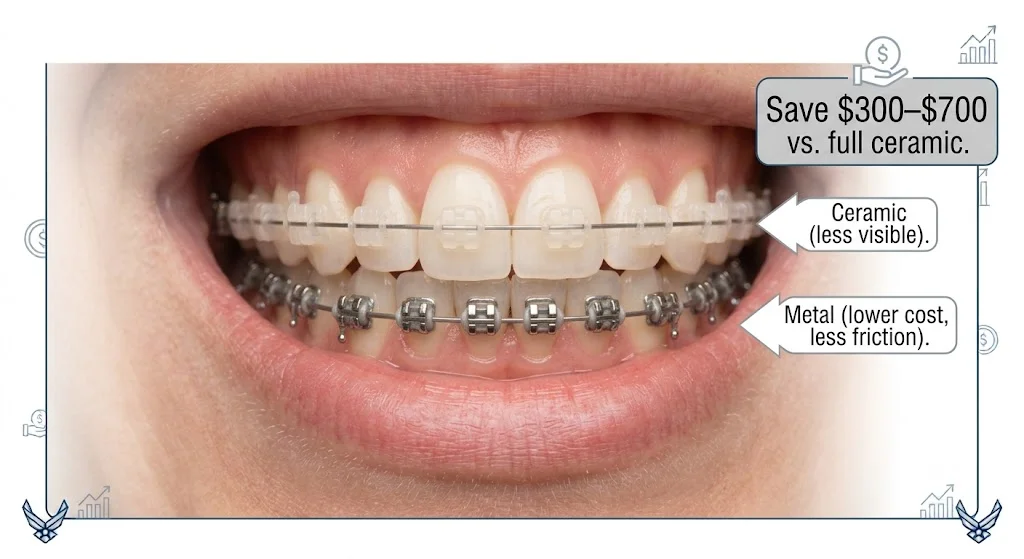
A hybrid braces setup pairs clear ceramic brackets on the upper visible arch with durable metal brackets on the lower arch. This hybrid approach saves $300 to $700 while minimizing bracket wear against upper teeth.
Many orthodontists use a hybrid approach: ceramic brackets on the upper arch (visible when smiling) and metal brackets on the lower arch (less visible, lower friction, less risk of chipping against the upper teeth). This gives you most of the aesthetic benefit of ceramics at a lower cost than full ceramics — typically saving $300–$700 compared to ceramic upper and lower.
7. Cleaning Ceramic Braces
To clean ceramic braces effectively, brush at a 45-degree angle after every meal and rinse immediately after consuming dark beverages. Water flossers and interdental brushes remove food debris around clear brackets without staining ligatures.
Ceramic braces require the same cleaning routine as metal — brushing at 45° above and below each bracket after every meal, using interdental brushes under the wire, and flossing with a threader or water flosser.
The one added step: rinse with water immediately after drinking coffee, tea, or other staining beverages to flush the ligatures before pigment sets. An electric toothbrush with a round oscillating head is particularly effective at cleaning around ceramic brackets. Patients who stay consistent with this routine keep their ligatures noticeably cleaner between appointments.
Frequently Asked Questions
Are ceramic braces better than metal braces?
Neither is objectively better — they serve different priorities. Metal braces are more durable, cost $500–$1,500 less, and are the best choice for severe crowding or complex bite cases. Ceramic braces are less visible, making them popular with adults and older teens, but they are more fragile, stain more easily, and require more careful cleaning. The right choice depends on your case complexity, budget, and how much the appearance of braces matters to you.
Do ceramic braces cost more than metal?
Yes. Ceramic braces typically cost $500 to $1,500 more than metal braces for the same case. Metal braces average $3,000 to $5,500; ceramic braces average $4,000 to $7,000. The price difference reflects higher material cost and additional care at each adjustment. Insurance coverage is the same for both — the extra cost comes out of pocket.
Do ceramic braces stain?
The ceramic brackets themselves do not stain significantly. The elastic ligatures (tiny rubber bands holding the wire to each bracket) stain easily from coffee, tea, red wine, turmeric, and tomato sauce. These ligatures are replaced at every adjustment appointment (every 4–8 weeks), so staining resets. Drinking staining beverages through a straw and brushing after eating keeps ligatures noticeably cleaner between appointments.
Are ceramic braces slower than metal?
Not meaningfully. For most cases, ceramic and metal braces move teeth at the same rate because they use the same archwire mechanics. The only exception: some orthodontists prefer metal brackets in the lower arch because lower ceramic brackets are more likely to chip against upper teeth in patients with a deep overbite. In those cases, a hybrid approach (ceramic upper, metal lower) is common.
Can you switch from metal to ceramic braces mid-treatment?
Yes, though most orthodontists prefer to keep the same bracket type throughout. Switching mid-treatment requires debonding existing brackets and rebonding new ones, adding chair time, a rebonding fee ($150–$400), and a brief gap in active treatment while the adhesive sets. It is better to choose ceramic at the start than switch later.