Can You Get Braces with Cavities? (2026)
Quick Answer
No — orthodontists will not start braces treatment if you have active, untreated cavities. Cavities (dental caries) are bacterial infections in tooth structure. Placing braces on teeth with active decay traps more bacteria and accelerates the decay, potentially destroying the tooth during the 12–24 months of treatment. All cavities must be filled and all active infections resolved before brackets are placed. Once treated, cavities do not prevent braces — a filled tooth accepts brackets the same as a healthy tooth.
Part of our Demographics & Eligibility Master Guide.
Why Braces and Active Cavities Don't Mix
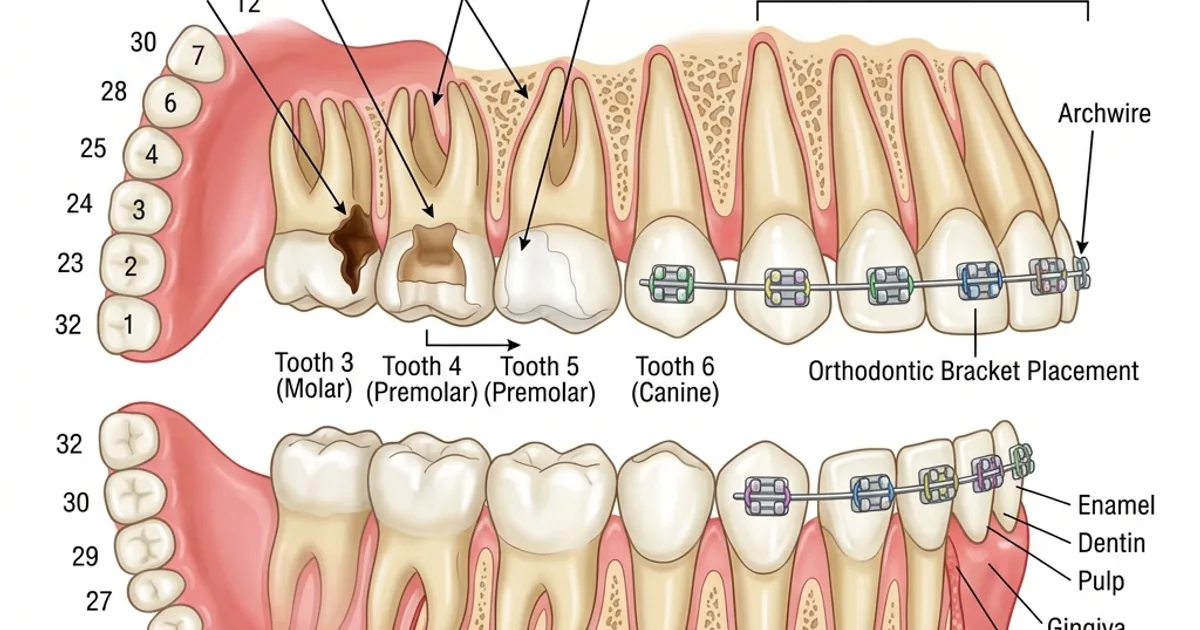
Active cavities must be restored before placing braces because brackets create additional plaque traps that accelerate decay into inner pulp layers rapidly.
Brackets and wires create dozens of new plaque traps around your teeth. In a patient with good oral hygiene and no existing decay, this is manageable with diligent brushing and flossing. But if active cavities exist, braces dramatically accelerate the damage.
Decay that might take 2 years to reach the pulp (nerve) in a non-braces patient can reach it in 6 months when brackets hold plaque against the tooth surface 24/7. This can lead to root canals, extractions, or complete compromise of the orthodontic treatment plan.
White Spot Lesions: The Braces Cavity Warning Sign
White spot lesions are early demineralization zones around brackets. Arresting these pre-cavity lesions requires high-fluoride toothpaste and interdental brush cleaning.
White spot lesions (WSLs) are the most common orthodontic complication — small patches of demineralized enamel that form around brackets when plaque accumulates. They are not full cavities yet, but they are early-stage decay and look like chalky white marks on enamel. They can become permanent if not arrested.
The Pre-Braces Dental Clearance Process
Pre-braces dental clearance involves diagnostic X-rays, cavity restoration by a general dentist, and formal clearance documentation before bracket bonding.
- Your orthodontist takes initial records (X-rays, photos, impressions)
- Cavities and infections are identified — treatment is prescribed before brackets are placed
- Your dentist fills cavities and resolves any infections (1–6 weeks depending on severity)
- Dentist issues written clearance to your orthodontist
- Bracket placement is scheduled — now you're cleared to start
Frequently Asked Questions
Why can't you get braces with cavities?
Brackets and wires create plaque traps around the teeth. If cavities already exist, braces dramatically accelerate decay. Decay that might take 2 years to reach the pulp in a non-braces patient can reach it in 6 months with brackets holding plaque against the tooth surface. This can require root canals, extractions, or compromise the entire orthodontic treatment plan.
How long does it take to get cavities filled before starting braces?
A single small cavity can be filled in one appointment. Multiple cavities across several teeth may require 2–4 appointments over 2–6 weeks. Once your dentist clears you, your orthodontist can begin. Most practices won't schedule bracket placement until they receive dental clearance confirmation.
What happens if a cavity develops while wearing braces?
The orthodontist will typically remove the bracket from the affected tooth, send you to your dentist for the filling, and then rebond the bracket once the tooth is restored. This adds time to treatment and costs money. It is why cavity prevention during braces is critical — not just at the start, but throughout the entire treatment.
Can you get white spot lesions from braces?
Yes — white spot lesions are the most common orthodontic complication. They are small patches of demineralized enamel that form around brackets when plaque is not removed consistently. They are early-stage decay and can become permanent if not arrested. Fluoride toothpaste and rigorous brushing significantly reduce the risk.
Do braces cause cavities?
Braces themselves do not cause cavities — bacteria and sugar do. However, braces make it significantly harder to clean all tooth surfaces, creating more opportunities for plaque accumulation. Patients who maintain excellent hygiene throughout treatment (brushing after every meal, flossing daily, fluoride rinse nightly) rarely develop cavities.