Can You Get Braces with Crowns or Veneers? (2026)
Quick Answer
Yes, you can get braces with crowns or veneers, but it is more complicated than standard treatment. Brackets bond differently to crown and veneer surfaces than to natural enamel, which affects adhesion strength and increases the risk of bracket detachment. Veneers made of porcelain are especially vulnerable — the bonding agent can permanently etch the surface when the bracket is removed. Your orthodontist will assess each restoration individually and may recommend specific bracket types or adhesive protocols to reduce damage risk.
Part of our Demographics & Eligibility Master Guide.
How Brackets Bond to Different Surfaces
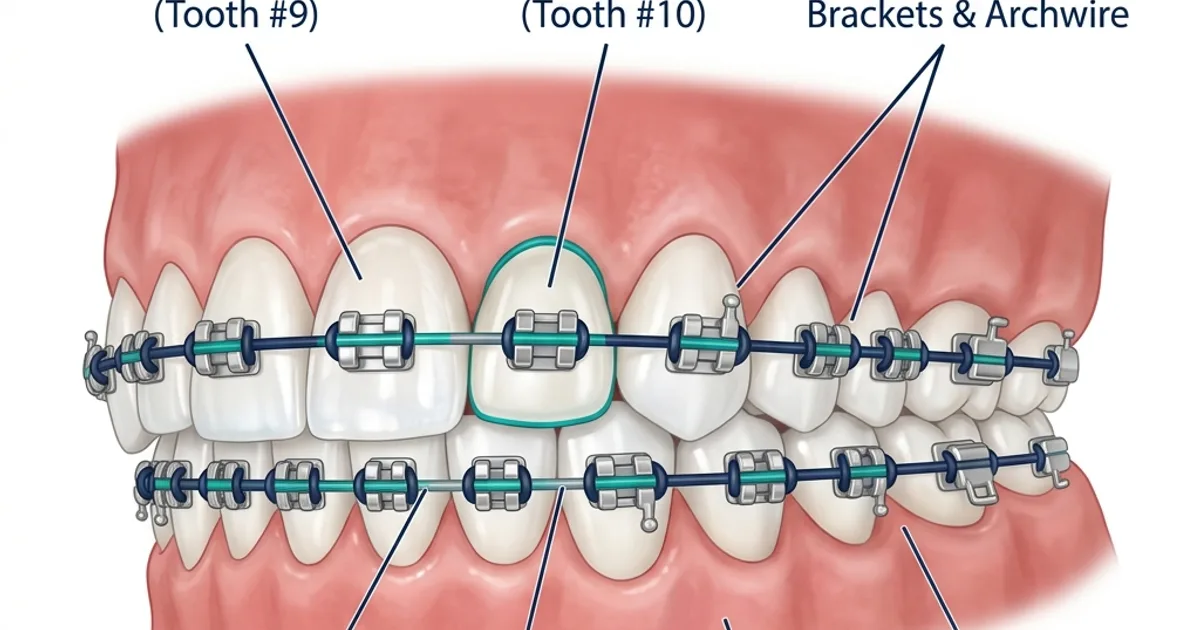
Brackets can bond to dental crowns and veneers using special porcelain primers or hydrofluoric acid etching. Bonding to porcelain creates a slightly weaker bond than natural enamel.
Standard orthodontic brackets bond to natural tooth enamel using a dental adhesive that chemically grips the microscopic surface texture of enamel. Crowns and veneers do not have this same surface texture — they are smooth, glazed, or polished restorations made from porcelain, zirconia, gold, or porcelain-fused-to-metal (PFM).
The table below outlines key comparison data and practical guidelines for can you get braces with crowns or veneers?.
| Crown Type | Bonding Difficulty | Bracket Risk | Notes |
|---|---|---|---|
| Zirconia | Moderate | Low-moderate | Requires air abrasion or special primer; bonds acceptably |
| Porcelain-fused-to-metal | Moderate | Low-moderate | Metal substructure is stable; porcelain surface needs prep |
| All-ceramic/porcelain | High | Moderate-high | Similar to veneer — removal risk of surface fracture |
| Gold/metal alloy | High | Moderate | Smooth metal surface; poor bonding without sandblasting |
Note: Data reflects typical clinical guidelines and average provider estimates across standard treatment plans.
The Veneer Risk: Bracket Removal
The primary risk with braces on porcelain veneers occurs during debonding, where removing bracket adhesive can chip, scratch, or micro-fracture fragile porcelain glaze.
Veneers present a more significant concern than crowns for one specific reason: bracket removal. When a bracket is removed from natural enamel, the process involves prying the bracket off and polishing away residual adhesive. Enamel can tolerate this. Porcelain veneers cannot always.
The removal process can chip the veneer edge, crack the porcelain, remove the surface glaze (leaving the veneer looking dull or matte), or in rare cases, debond the veneer from the underlying tooth entirely. Many orthodontists recommend alternatives to traditional braces for patients with multiple porcelain veneers.
Your Options if You Have Veneers
If you have porcelain veneers, clear aligners like Invisalign or lingual braces are preferred alternatives to traditional metal brackets to protect cosmetic surfaces.
Frequently Asked Questions
Can you get braces if you have dental crowns?
Yes. Brackets can be bonded to crowns using specialized adhesive protocols, though the bond is typically weaker than on natural enamel. Metal and zirconia crowns accept bonding reasonably well. PFM crowns require surface preparation (sandblasting or etching) before bonding. Brackets on crowns are monitored closely because they detach more frequently.
Can you get braces with veneers?
Yes, but veneers carry a higher risk. When a bracket bonded to a porcelain veneer is removed, the removal process can chip, crack, or permanently dull the veneer surface. Some orthodontists refuse to place brackets directly on porcelain veneers and recommend Invisalign or lingual braces instead.
Will braces damage my veneers?
Bracket placement itself rarely damages veneers. The risk comes at bracket removal — porcelain is brittle and can micro-fracture or lose its glaze when the bracket is pried off. Some patients need veneer replacement after braces. Ask your orthodontist about their debonding technique before committing.
What type of braces are safest for veneers?
Invisalign is generally the safest option — no adhesive is applied to the veneer surface. Lingual braces are another option if veneers only cover the front surface. If traditional braces are necessary, ceramic brackets with a low-force debonding technique cause the least surface damage.
Do I need to replace crowns before getting braces?
Not necessarily. If your crown is structurally sound, your orthodontist can work around it. Crowns that are old, cracked, or poorly fitted may need replacement before orthodontic treatment because braces exert pressure on teeth for 12–24 months — a compromised crown may not survive that. Your dentist and orthodontist should coordinate before treatment starts.