Can Braces Cause Headaches? (When It's Normal and When It's Not)
Quick Answer
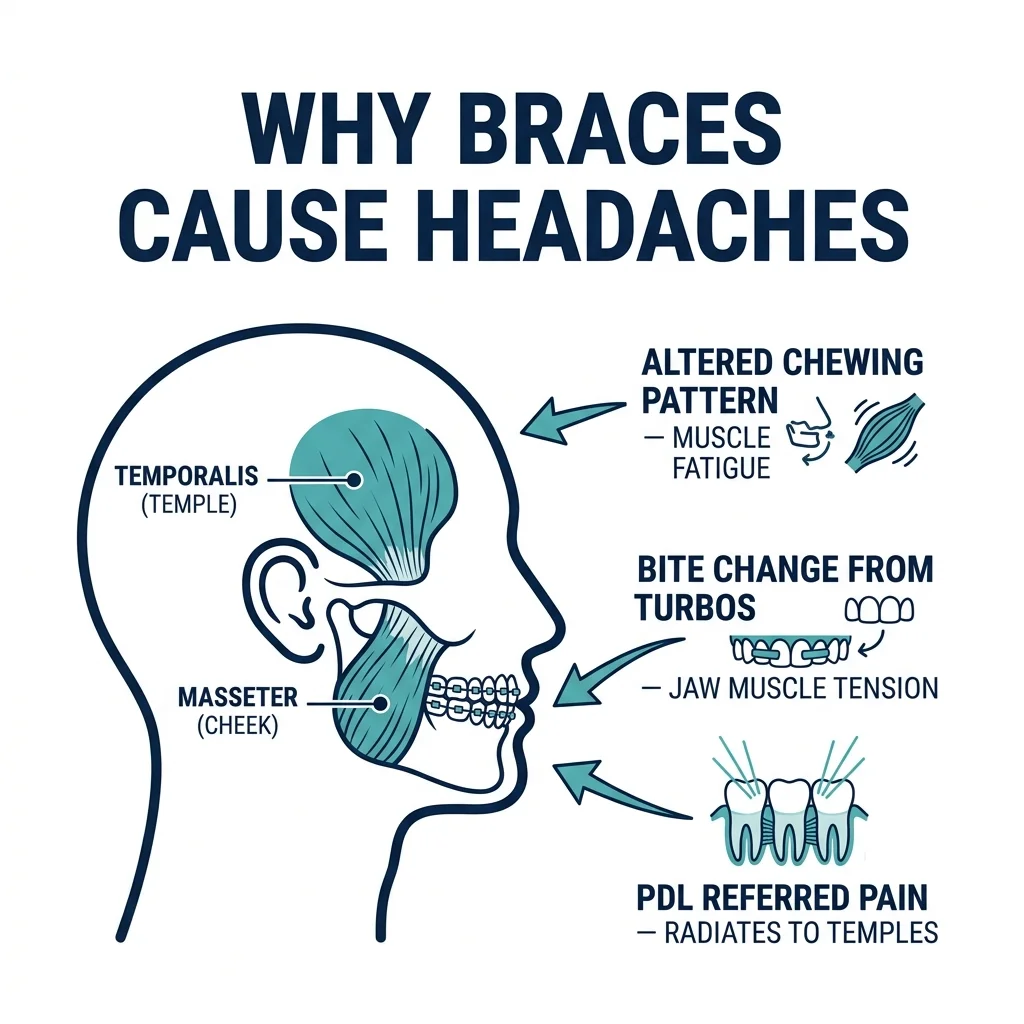
Yes — Braces can cause headaches, especially in the first few days after an adjustment. The most not uncommon cause is referred to as pain and muscle anxiety from the jaw and dental ligaments. Chewing on a sore tooth causes the jaw muscle tissues (masseter, temporalis) to work differently and fatigue more rapidly, which can radiate into headache pain. Changing the bite — mainly when it is deliberately opened or raised — can also quickly disrupt jaw mechanics. These headaches are brief, usually last 1–3 days after adjustment, and respond to ibuprofen. Persistent or severe headaches not associated with adjustment warrant evaluation.
Why Braces Cause Headaches
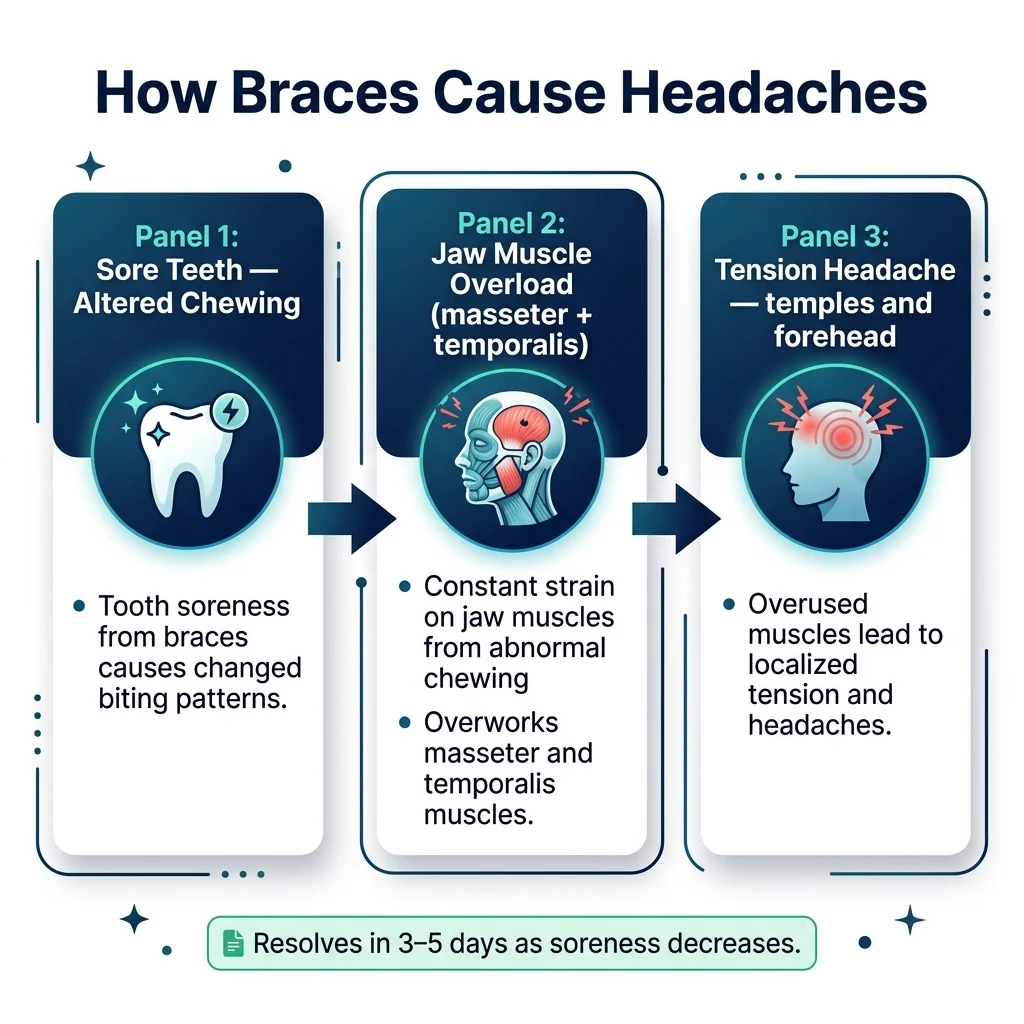
When enamel pain occurs after an adjustment, patients instinctively protect painful teeth by changing their bite — chewing one side, biting more softly, or straining the jaw. The masseter (cheek muscle) and temporalis (temple muscle) are the primary chewing muscles. When they work harder than usual or asymmetrically, they fatigue and develop trigger points that refer pain to the temples and forehead.
The PDL is densely innervated. The same pain pathways that transmit tooth soreness can refer diffusely to the head and face — similar to how a heart attack can refer pain to the left arm.
When bite turbos are placed, the back teeth no longer fully contact. The masseter and temporalis cannot close along their usual path — leading to muscle fatigue and frequent headaches in the first 2–4 weeks. Most patients adapt within 3–6 weeks.
Normal Headache vs. Warning Sign
How to Relieve Braces Headaches
- Ibuprofen: 400–600 mg every 6–8 hours in the primary 48 hours after adjustment. Addresses both PDL inflammation and the muscle tension aspect of headaches.
- Warm compress on the jaw: Applying warmth to the masseter and temporalis muscle groups reduces tension and provides relief. 15–20 minutes, 2–3 times per day.
- Soft food regimen: Reduces chewing workload on tired jaw muscles. Eat foods requiring minimal jaw engagement for 2–3 days after adjustment.
- Avoid gum and hard foods: These increase jaw muscle engagement and worsen tension headaches during the sore period.
- Hydration: Dehydration worsens tension headaches. Stay well hydrated, especially in the first 48 hours after adjustment.
Frequently Asked Questions
Can braces cause headaches?
Yes — braces-related headaches are common, especially in the first few weeks and after each major adjustment. When teeth are sore, patients instinctively alter their chewing pattern to avoid painful teeth, overworking the masseter and temporalis muscles. Muscle fatigue in these jaw muscles commonly refers pain to the temples and forehead — producing a tension-type headache.
How long do braces headaches last?
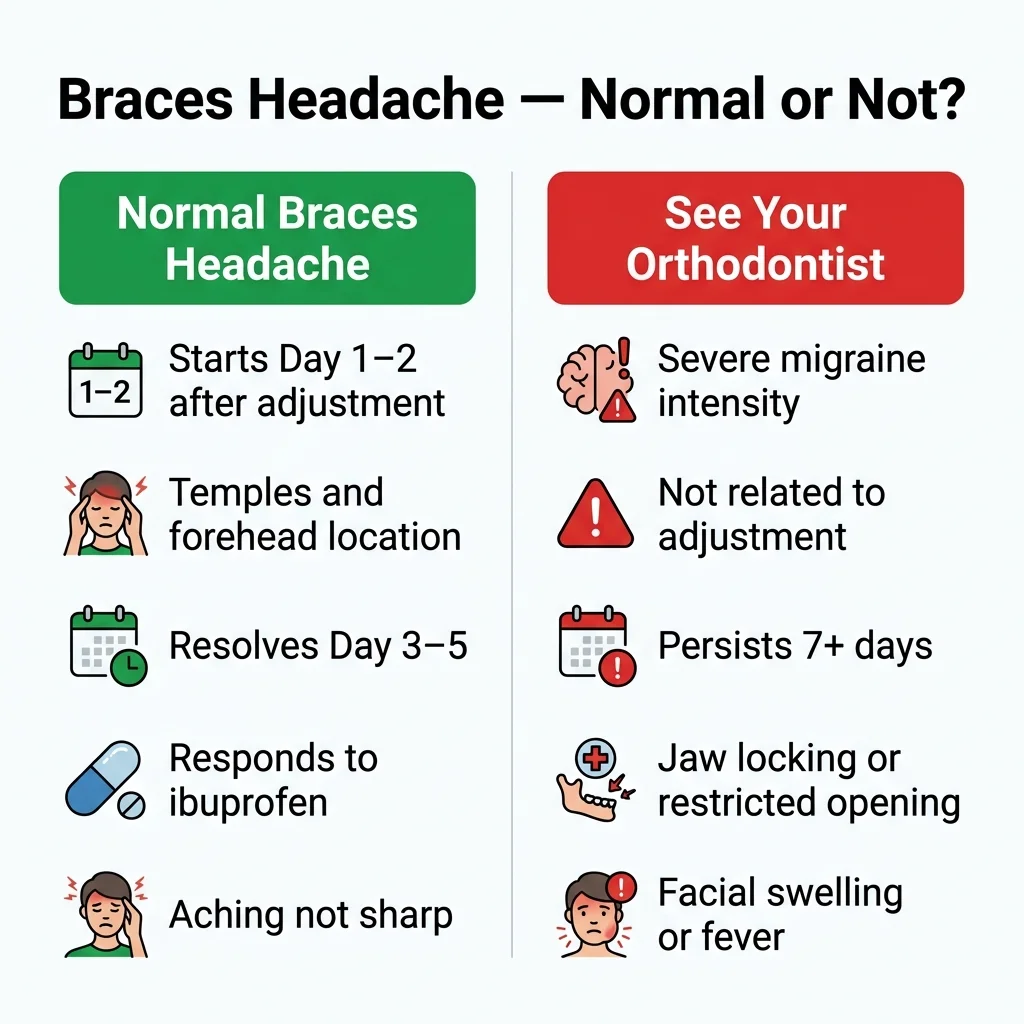
Braces-related headaches typically follow the same timeline as adjustment soreness — worst on Day 2 after an adjustment and resolve by Day 3–5. Complications may be more severe during the first 1–2 weeks of brace wear at primary time because the jaw muscle groups adjust to the new hardware. After the first few adjustments, most patients document that the headache is minimally increased or stops occurring.
Do bite blocks or turbos cause headaches?
Yes — bite turbos temporarily change the bite height, preventing the back teeth from fully closing. The jaw muscles engage differently and cannot close in their accustomed path. Patients routinely record jaw discomfort, muscle fatigue, and headaches within the first 2–4 weeks of bite turbo placement. These headaches resolve as the muscles adapt to the new bite position and as the bite is progressively corrected.
Can braces cause TMJ problems or jaw pain?
Braces do not rationalize TMJ problems (TMD) — although they can temporarily affect jaw comfort during treatment. Patients with current TMJ symptoms should discuss this with their dentist before starting treatment. In some cases, correcting a deep overbite or crossbite with braces actually reduces pre-existing TMJ symptoms by improving how the teeth meet. Report any worsening clicking, popping, or locking of the jaw during treatment.
When should I be worried about headaches from braces?
Concerns if: the headache is excessive (migraine-level intensity), not related to the latest adjustment, lasts beyond 7 days, accompanied by jaw locking or limited opening, or accompanied by facial swelling or fever. These conditions go beyond normal adjustment-related discomfort and require evaluation. Headaches reliably occurring 1–2 days after every adjustment that resolve by Day 4–5 are normal.