What Happens at the First Orthodontist Appointment? (2026 Guide)
Quick Answer
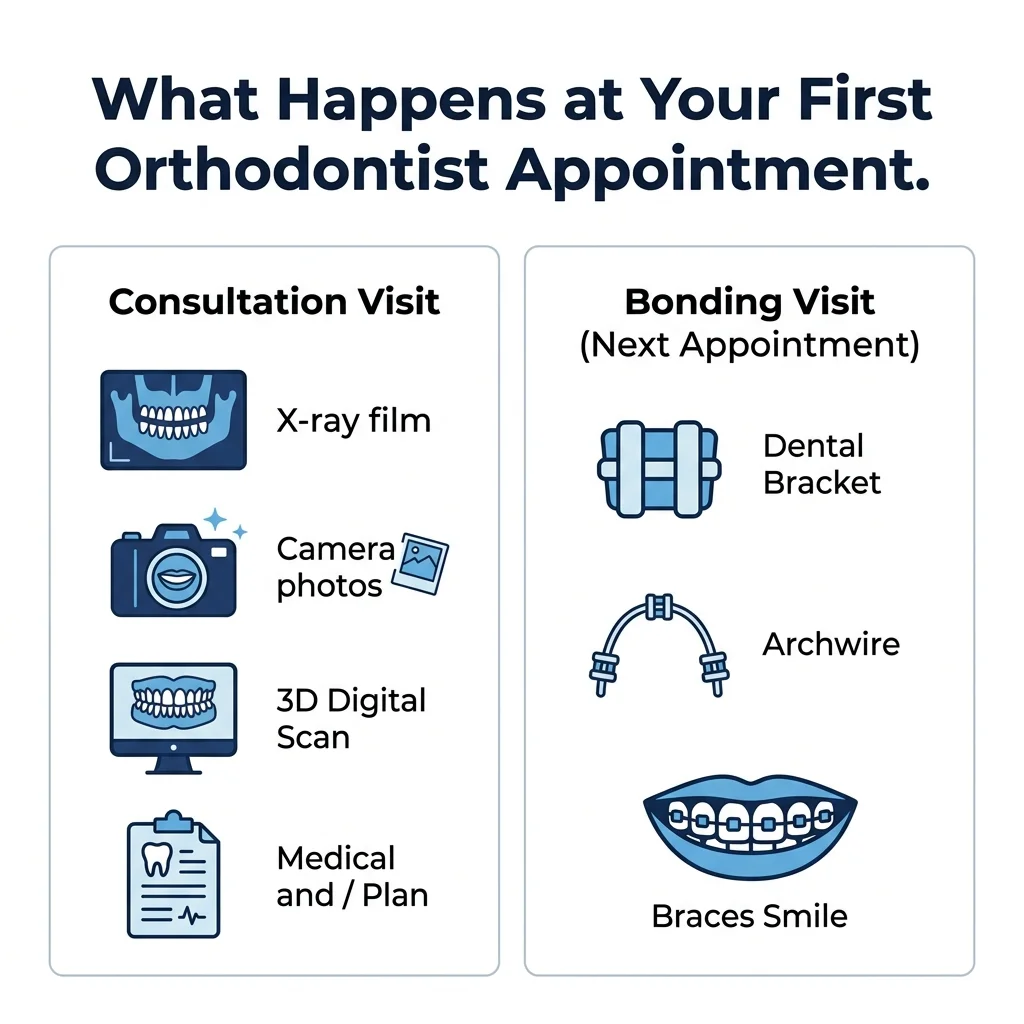
The first dentist appointment is a consultation, no longer a remedy appointment — no braces are positioned to go into this. The dentist examines your enamel, chewing, and jaw, takes diagnostic facts (x-rays, pictures, and impressions or digital scans), evaluates what treatment is desired and you leave with an analysis and treatment options. A separate appointment is scheduled for binding (setting of cells). Consultations typically last 60–ninety minutes and are usually unbound or low-cost.
Part of our Timeline & Process Guide. Also see: How Are Braces Put On?
What the Orthodontist Is Looking For
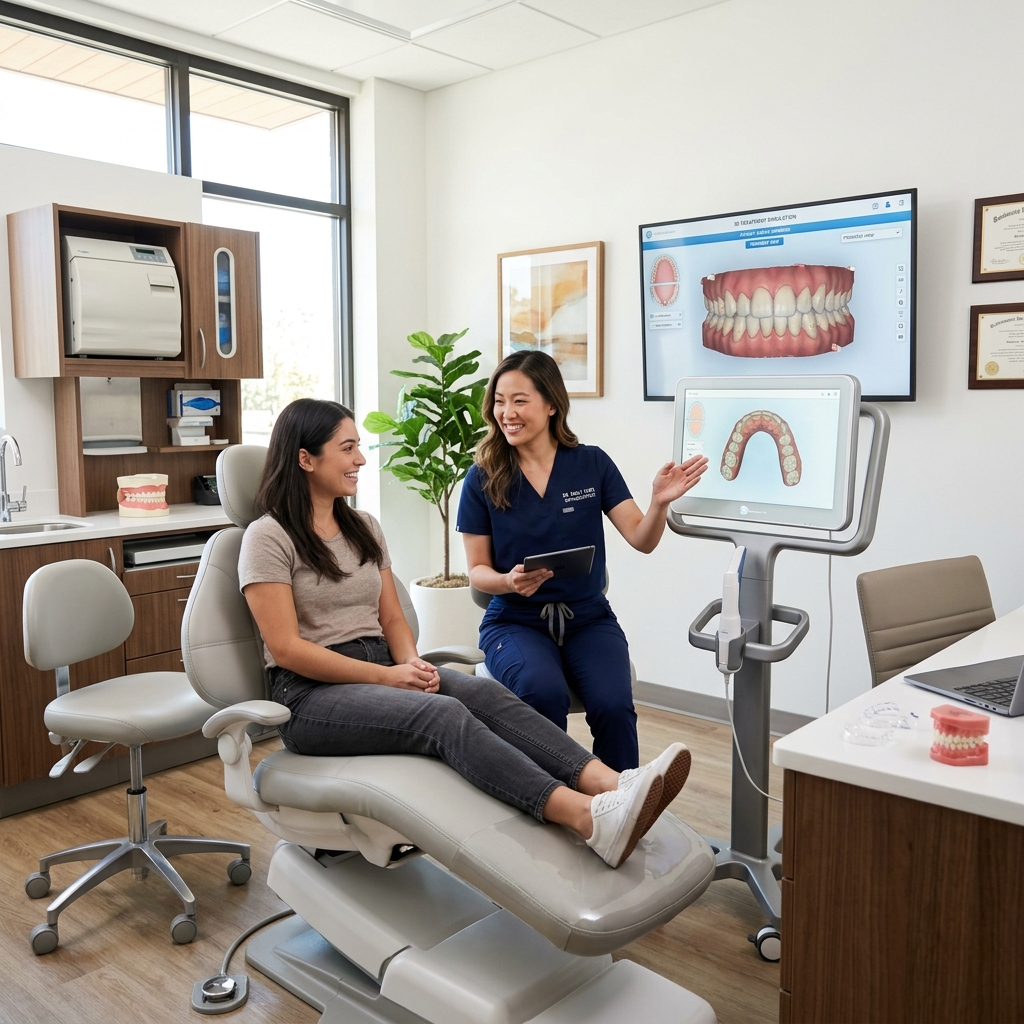
The session is diagnostic type. The dentist classifies your chewing (first, second, or third), assesses the severity of crowding or gaps, identifies any skeletal components for discrepancies, checks for jaw joint fitness, compares facial symmetry, and any findings that want to address before treatment begins (cavities, missing teeth, inseparable tooth).
- Class I: Normal jaw relationship — crowding or spacing is the issue, not jaw position
- Class II: Upper jaw or teeth are too far forward (overbite) or lower jaw is too far back
- Class III: Lower jaw is too far forward or upper jaw is too small (underbite tendency)
The Diagnostic Records
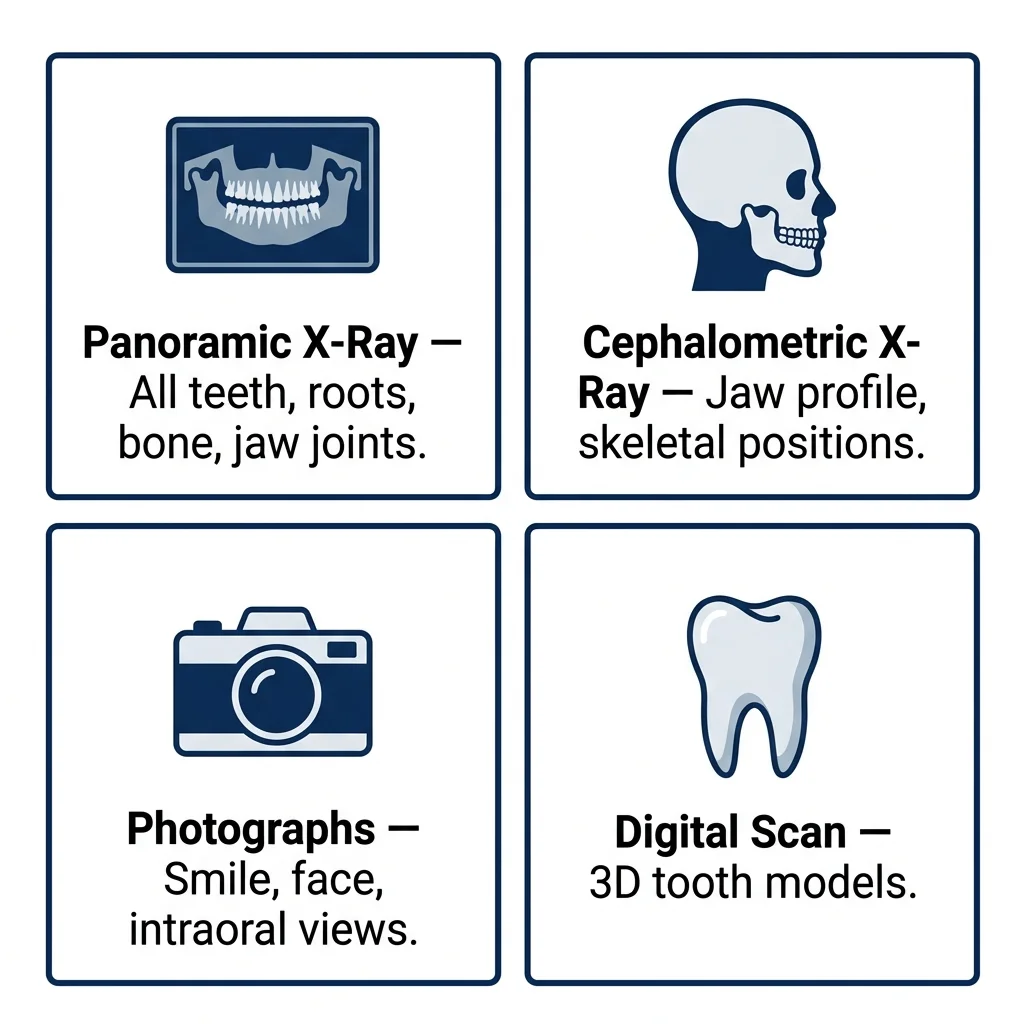
- Panoramic X-Ray: This gadget rotates around your head and captures all the teeth, bones and jaw joints in one image. The dentist uses this to assess enamel (to be aware of missing or excess enamel), examine root period and appearance, decide bone scores, and compare jaw joints.
- Lateral craniometric x-ray: A side-view x-ray of your skull. The dentist plots the unique landmark (top of the jaw, inside the nostril, middle of the jaw joint) and measures the angles on them. This determines whether the bite is bothered by the tooth (tooth placement) or skeleton (duration or position of the jaw).
- Intraoral and facial pix: Six to 8 standardized photos of your enamel taken in several locations and from the front and side of your face. Used for remedy planning and as a baseline for comparison over the course of remedies.
- Impression or Virtual Scan: A body impression (cyst tray) or virtual exam (intraoral digicam) creates a 3-D model of your tooth. It was used to observe the section, to design the remedy plan, and in certain cases to construct the tools.
The Treatment Discussion
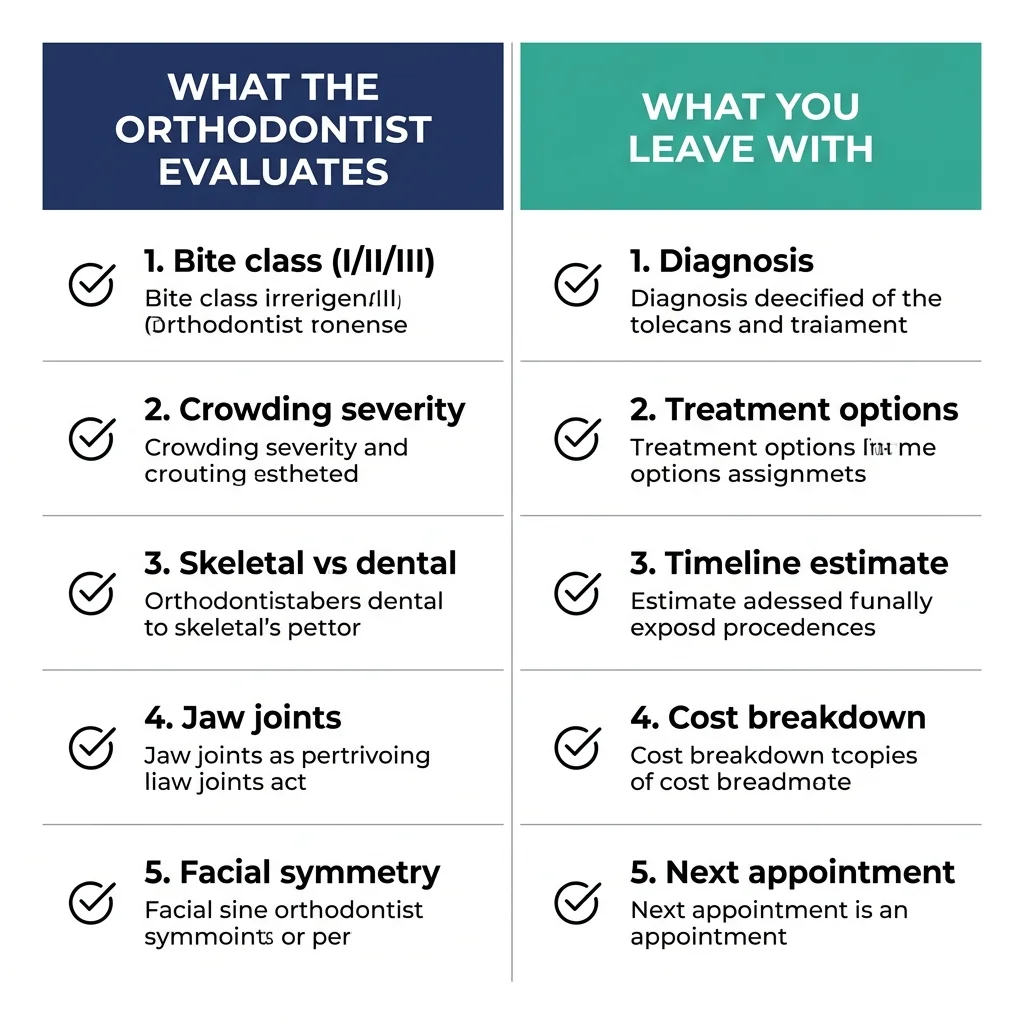
After reviewing the records, the orthodontist presents:
- The diagnosis (what is misaligned and why)
- Treatment options (metal braces, ceramic braces, Invisalign, or a combination)
- Estimated treatment duration
- Whether any pre-treatment work is needed (tooth extractions, gum treatment, dental work)
- Cost and payment options
This is your opportunity to ask questions. The most important questions to ask: What is causing the problem (dental or skeletal)? Are extractions recommended, and why? What happens if I don't treat?
When Braces Are Placed
Bonding — the actual placement of the brackets on the tooth — takes place in a separate appointment, typically 1–4 weeks after the consultation. Before that appointment, the dentist researches the data, finalizes the remedy plan, and orders any custom appliances. Some practices now offer same-day bonding after a session if pre-treatment photos are not desired and the affected person wishes to proceed without delay.
Frequently Asked Questions
What happens at the first orthodontist appointment?
The first appointment is a diagnostic consultation. The dentist visually examines your tooth and bite, takes a sequence of diagnostic statistics — typically panoramic X-rays, lateral brain X-rays, photos of the inner face and mouth, and physical impressions or digital application of your enamel — and then analyzes those facts to decide what is misaligned. The visit concludes with a discussion of remedies where the dentist provides options, timelines, and fees. There are no braces placed at this visit.
Do they take X-rays at the first orthodontist appointment?
Yes — normally two x-rays are taken. The panoramic x-ray shows all the teeth (erupted and unerupted), roots, bones, and jaw joints in a single picture. The lateral cephalometric x-ray indicates the side profile of the skull, revealing the positions of the upper and lower jaw relative to each other and the skull base. These views together allow the dentist to classify the bite, identify skeletal anomalies, and properly plan tooth movements.
How long does the first orthodontist appointment take?
Most initial consultations take 60–90 minutes. The examination and records portion takes 30–45 minutes. The treatment discussion portion — reviewing findings, presenting options, discussing costs and timelines — takes another 20–30 minutes. If a financial coordinator is involved (discussing payment plans and insurance), add another 10–15 minutes. Some practices do same-day bonding if the patient is ready, which extends the appointment significantly.
Is the first orthodontist appointment free?
Many dental workplaces offer non-binding initial consultations — that's common as a competitive exercise to attract new patients. Some workplaces charge an information fee ($100–$300) to dump the cost of x-rays, photographs, and virtual scans, which can then be made closer to the overall prevention fee if you continue. Call in advance to verify the policy. The consultation price (if any) is deducted from a relaxed medical fee and is normally disclosed at the time of booking.
What should I bring to the first orthodontist appointment?
Bring a dental insurance card, a list of any current medications (several have an effect on tooth movement recovery), and if you have the latest dental x-rays, pass them along — they can shop for second-hand value. If you have been concerned about specific problems (pain, crowding, a particular tooth), write them down so you don't forget to tell them all through the exam.