Can You Eat Popcorn with Braces? The Hidden Danger (2026 Guide)
Quick Answer
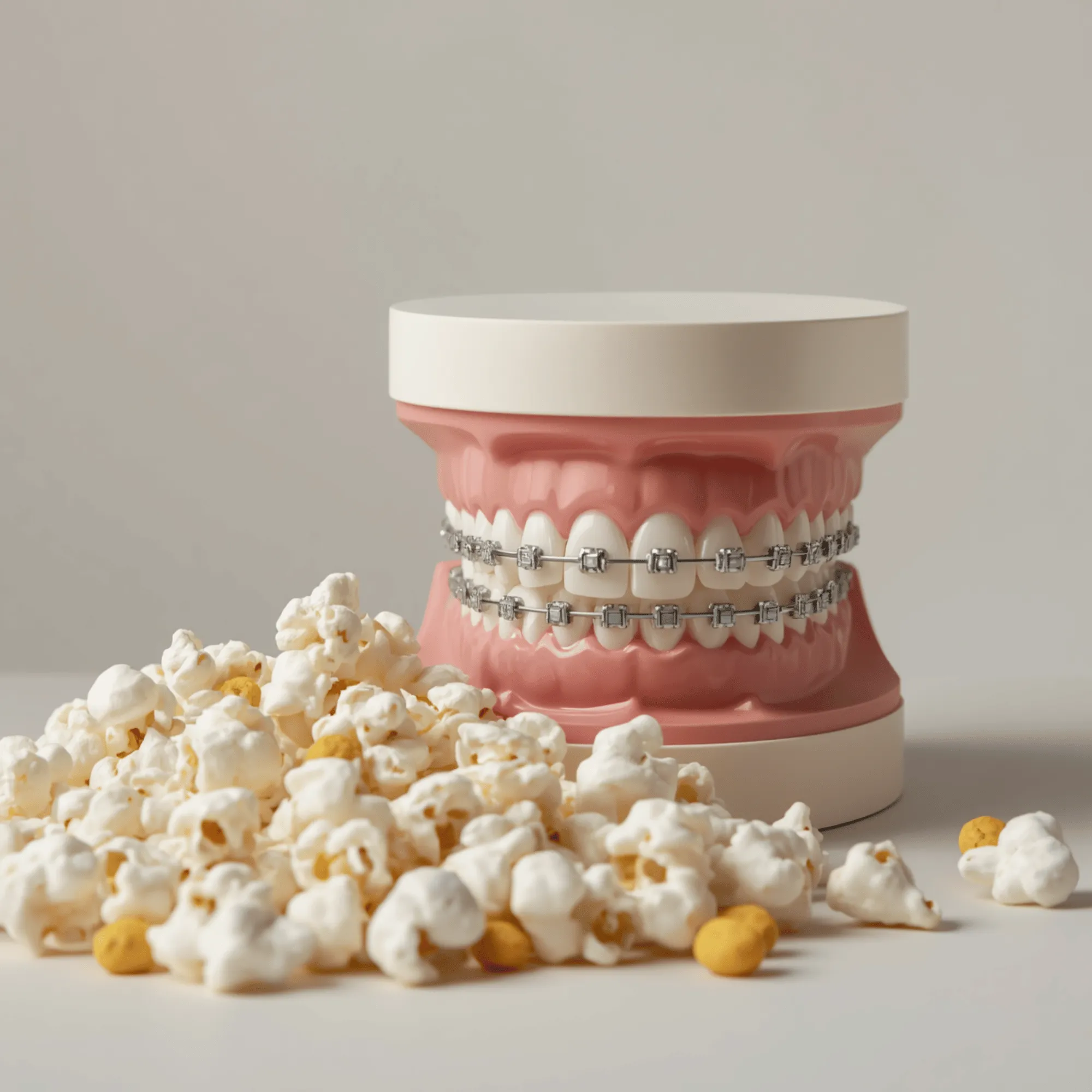
No — popcorn should be avoided entirely during braces treatment. The risk comes from two sources: unpopped kernels that can crack brackets on direct impact, and thin hull fragments that wedge between brackets and gum tissue, triggering a painful localized infection that can require antibiotics if not removed promptly.
Part of our Braces Diet & Eating Master Guide.
You are sitting in a dark movie theater. The smell of hot, buttery popcorn is filling the air. Your friends are passing a giant tub back and forth, crunching away. You look down at your phone, touch the metal brackets on your teeth, and wonder: "Can I eat popcorn with braces?"
If you search the internet, every dental blog will give you the same cookie-cutter warning: "Avoid popcorn because the kernels are hard and can break your brackets."
While that is true, it only covers 10% of the actual problem. The real threat of popcorn isn't just a hard unpopped kernel breaking a bracket. There is a much sneakier, far more painful danger that orthodontists see in their clinics every single week—one that has nothing to do with broken brackets and everything to do with painful gum infections, periodontal abscesses, and emergency dental extractions.
In this guide, we are going to explore the mechanical physics of why popcorn is uniquely dangerous for braces, what happens when a hull gets trapped beneath your gumline, and how you can satisfy your popcorn cravings with four delicious, 100% braces-safe alternatives.
The Anatomy of a Popcorn Hull: A Braces Nightmare
Popcorn hulls are curved cellulose shell fragments that resist saliva breakdown and get trapped behind archwires. Biting down forces these rigid hulls beneath the gumline where standard brushing cannot reach.
To understand why popcorn is a braces nightmare, we have to look at the anatomy of a popped kernel.
Every popcorn kernel has a shell called the pericarp (often referred to as the hull). The pericarp is made of cellulose, which is extremely tough, highly insoluble, and virtually indestructible by human saliva or stomach acid. During the popping process, the soft starch inside expands, but parts of the curved, cup-shaped pericarp remain attached to the fluffy white structure.
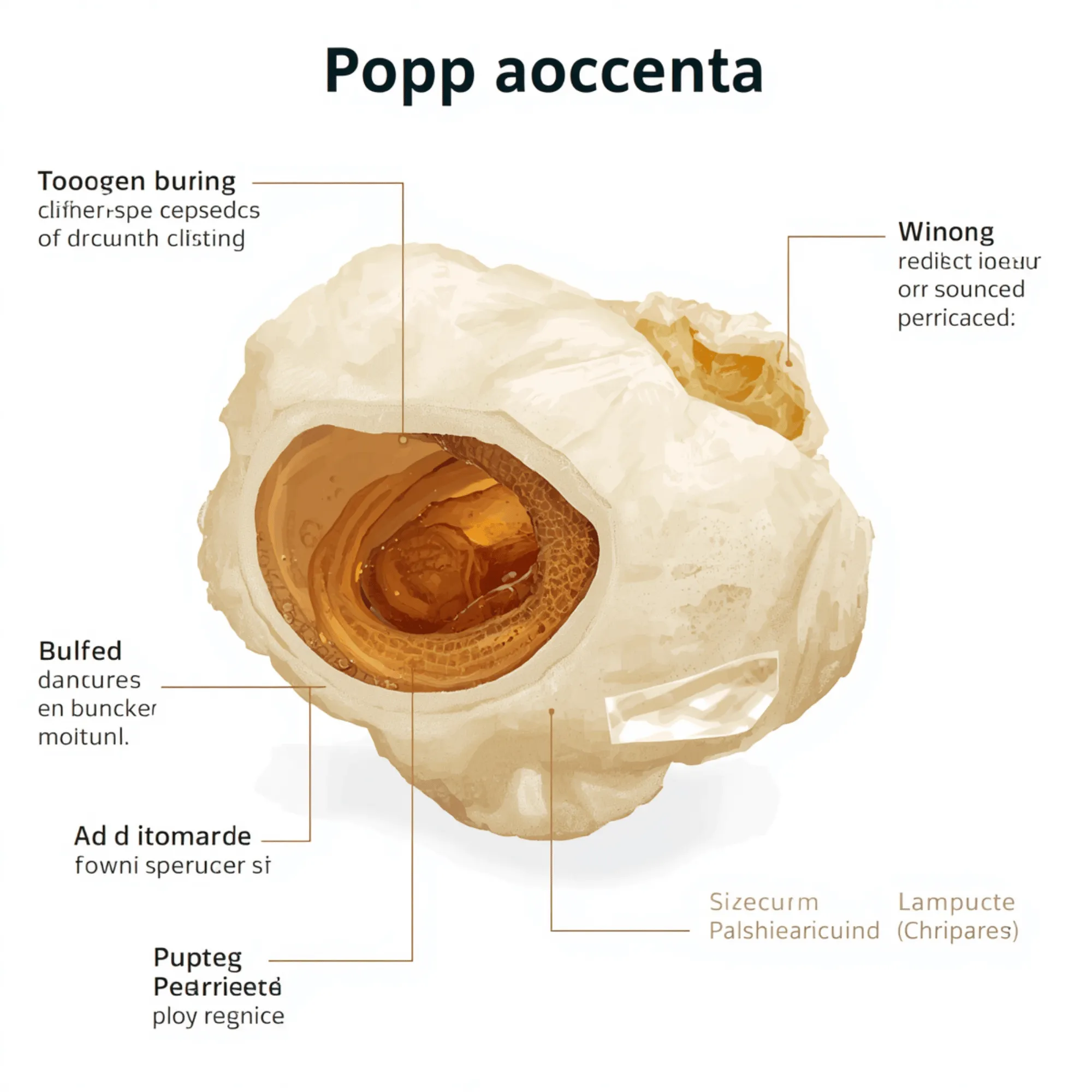
- The Trapping Mechanism: Your archwire, brackets, and elastic bands form a dense matrix of metal and rubber. As you chew, the curved, translucent hulls detach. Because of their curved shape, they act like tiny cups that scoop up food debris and get easily hooked under your archwire or behind your brackets.
- The Saliva Proofing: Unlike potato chips, which dissolve in saliva, a popcorn hull will not break down. It can sit in your mouth for days or weeks without losing its shape or rigidity.
- The Slide under the Gumline: When you bite down, the hull can slide flat against the surface of your tooth and slip deep into the gingival sulcus—the natural pocket between your tooth and your gum tissue. Because the braces wire pushes your gums slightly and limits natural flossing motion, the hull gets jammed deep under the gumline where your toothbrush cannot reach.
Popcorn Gingivitis & The Foreign Body Response
Trapped popcorn hulls under gums trigger a foreign body inflammatory reaction called popcorn gingivitis. Left untreated, this buildup develops into painful abscesses and localized tissue damage.
When a piece of popcorn hull gets lodged deep beneath the gumline, it triggers what dentists call a foreign body response.
Because the body cannot digest or break down the cellulose hull, it treats it as an invading object (like a splinter in your finger). The body sends white blood cells to the area, causing immediate inflammation, swelling, and localized pain.
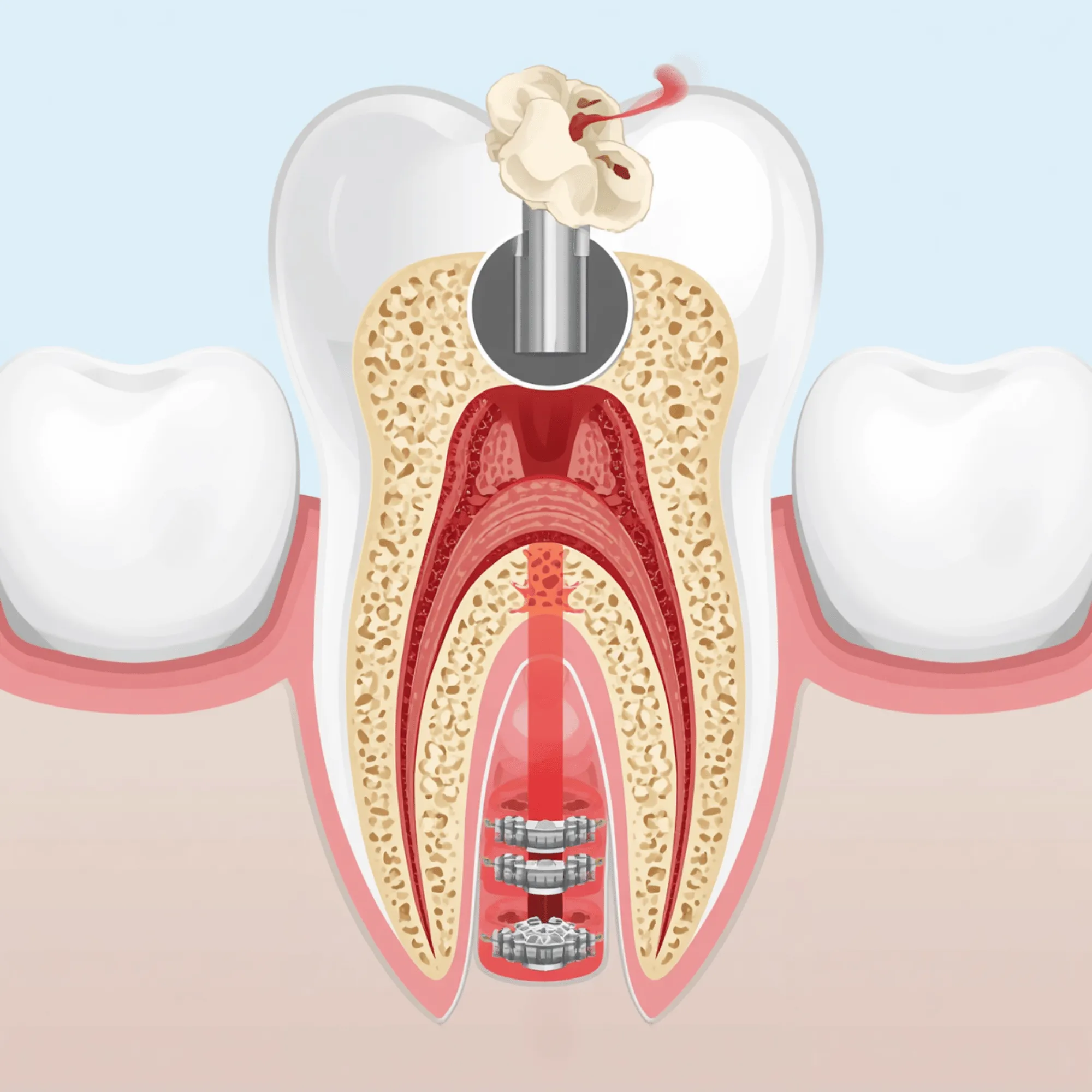
- Day 1–2 (Popcorn Gingivitis): The gums around the affected tooth become bright red, swollen, and tender. They will bleed easily when you brush.
- Day 3–5 (Periodontal Abscess): If the hull is not removed, bacteria build up in the pocket. The area swells further, forming a painful bump on your gums filled with pus. This is a localized infection that can cause severe, throbbing pain that mimics a toothache.
- Day 5+ (Tissue damage): In severe cases, the chronic inflammation can cause temporary bone loss around the tooth and damage the periodontal ligament.
In orthodontic clinics, assistants regularly have to use specialized instruments—like dental scalers, periodontal probes, or ultra-fine curettes—to dig deep under the gums of braces patients to hook out these hidden hulls. It is an incredibly painful extraction process that can easily be avoided.
The Danger Zones: Which Popcorn is Worst?
Movie theater popcorn is the most dangerous for braces due to hard unpopped kernels that snap brackets. Microwave popcorn carries moderate risk, while hull-less heirloom popcorn offers lower risk.
If you are going to take the risk, you should at least know which types of popcorn carry the highest probability of orthodontic emergency:
Movie theater popcorn is popped in massive commercial kettles and contains a high ratio of unpopped or partially popped kernels ("half-pops"). These are extremely hard and will instantly shear the adhesive bond of your brackets if you bite down on one.
Slightly better because you can filter out the unpopped kernels at the bottom of the bag, but the hulls are still thick and rigid. Fluffy, extra-large varieties (like "mushroom" style popcorn) tend to have larger, tougher hulls.
Brands that utilize specific heirloom corn varieties (like black or red kernels) produce much smaller, thinner hulls. When popped, these hulls shatter into microscopic pieces that are far less likely to get trapped under gums.
How to Get a Trapped Popcorn Hull Out of Your Braces
Removing a stuck popcorn hull requires flushing warm water with a water flosser, pulling knotted floss under the wire, or using a proxabrush. Never use sharp metal tools to dig under inflamed gums.
If you have already eaten popcorn and suspect a hull is stuck, do not wait for your gums to swell. Follow this step-by-step emergency removal protocol:
- Use a Water Flosser (Hydro-Irrigation): Fill your water flosser with warm water. Aim the tip at a 90-degree angle directly at the gumline where the hull is trapped. Start on a low pressure setting and gradually increase it to flush out hulls hidden under the gums.
- The Knot-in-Floss Trick: If water doesn't work, take a piece of orthodontic floss (or regular floss with a threader). Tie a single, small knot in the middle of the floss. Thread the floss under your archwire, pull it into the gap between the teeth, and gently drag the knot across the gumline to hook the hull.
- Interdental Brushes (Proxabrush): Gently slide an interdental brush under the wire and push it flat against the tooth, moving it upward from the gumline. Do not use metal pins, as you can easily puncture your inflamed gums and push the hull deeper.
4 Braces-Safe Popcorn Alternatives
Braces-safe popcorn substitutes include popped sorghum, hull-free puffcorn, roasted water lily seeds, and baked veggie straws. These alternatives deliver movie-snack crunch without kernel or hull risks.
You don't have to give up salty, crunchy snacks during your treatment. Here are four excellent substitutes that give you the same texture and flavor without any of the risks:
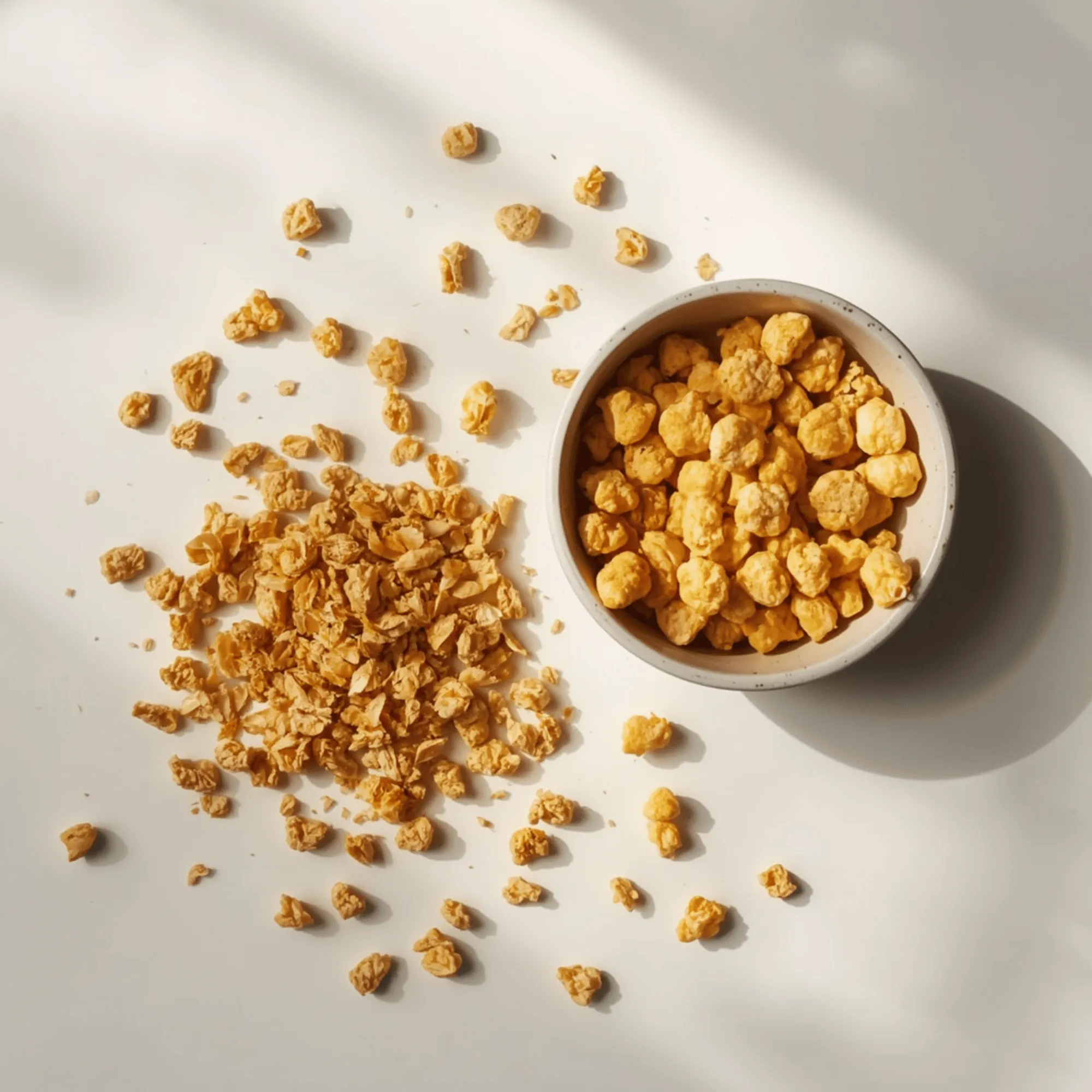
- Popped Sorghum: Sorghum is an ancient grain that looks like miniature popcorn when popped. The kernels are tiny, light, and because they do not have a hard pericarp, they are 100% hull-free.
- Puffcorn (Puffed Corn Snacks): Brands like Chester's or Pirate's Booty make baked puffed corn snacks. Because they are made from cornmeal and then puffed, they have no hulls or unpopped kernels whatsoever.
- Popped Water Lily Seeds (Makhana): Popular in Indian cuisine, water lily seeds can be roasted and popped. They have a light, airy, crunchy texture very similar to popcorn but contain zero hulls.
- Baked Veggie Straws: If you miss the crunch of movie theater popcorn, baked veggie straws offer a satisfying crunch with very low density, meaning they break down easily under minimal bite force.
Summary
Avoid traditional popcorn with braces to prevent popped brackets and severe gum infections from trapped hulls. Satisfy salty cravings safely using puffed corn snacks or popped sorghum.
Popcorn is on the orthodontic "do not eat" list for a reason. While a broken bracket is a nuisance, a popcorn hull trapped deep under your gums can lead to painful infections and emergency dental visits. Stick to braces-safe alternatives like Popped Sorghum or Puffcorn to get your crunchy snack fix.
Not sure about a specific food?
Use Our Free Food Checker Tool →Want the full list of safe and unsafe foods? Read our complete Braces Diet & Eating Master Guide for every food category.