Before and After Braces: What to Realistically Expect (2026)
Quick Answer
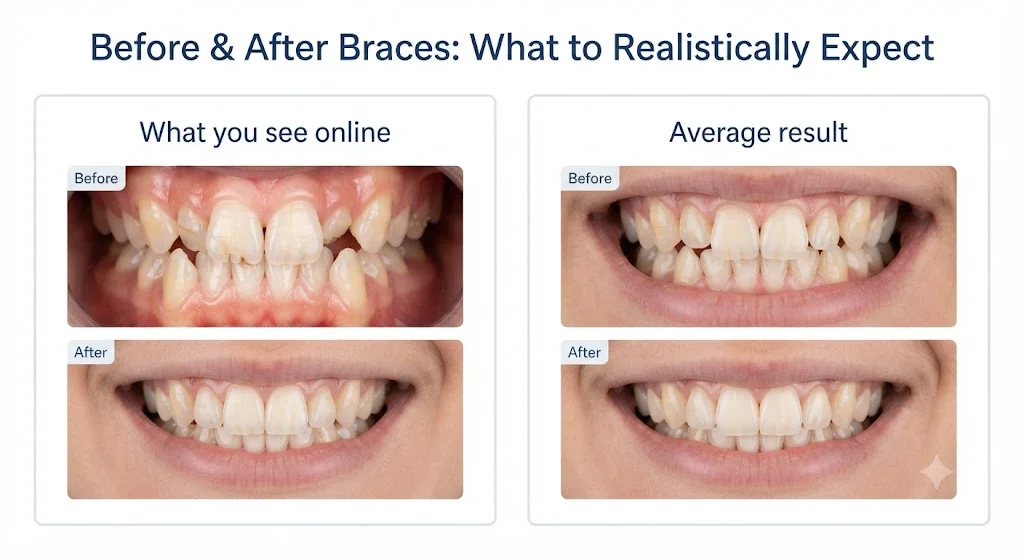
Braces reliably straighten crowded or gapped teeth, correct most bite problems (overbite, underbite, crossbite, open bite), and close gaps. The visible result depends heavily on your starting point — severely crowded teeth or significant bite issues will see the most dramatic changes. What braces do not change: jaw bone size (without surgery), tooth color, individual tooth size or shape. The before-and-after photos you see online represent exceptional case outcomes, not the average.
Part of our Results & Facial Changes Guide. Also see: Do Braces Change Your Face Shape?
What Braces Reliably Change
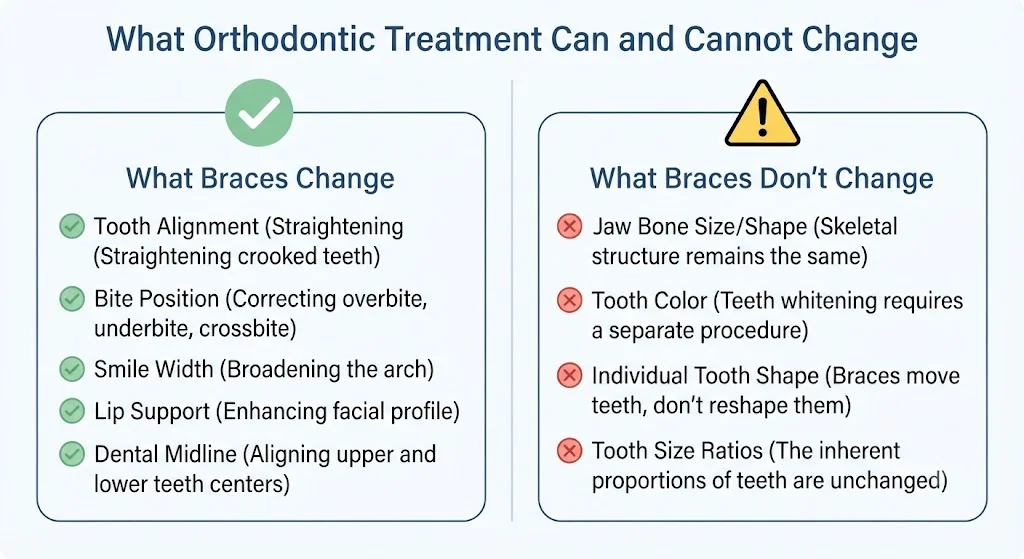
Braces reliably correct dental crowding, close gaps, expand narrow smile arches, and realign uneven bite relationships. Adjusting tooth position also changes soft-tissue lip support, enhancing overall facial profile symmetry.
Dental Alignment
Crowded, rotated, tilted, or spaced teeth are moved into correct positions within the arch. The result is predictable and stable with proper retention.
Bite Correction
Overbite, underbite, crossbite, and open bite can all be addressed with braces. Dental cases respond very well; skeletal issues may require additional appliances or surgery.
Smile Width
A narrow arch compresses a smile and creates dark shadows at the corners. Widening the arch widens the smile and reduces buccal corridors, creating a fuller, more attractive smile.
Lip Support
Front tooth position directly affects how the lips rest. Flared front teeth push the lips out; teeth set too far back flatten the lip profile. Correcting tooth position changes where the lips naturally rest.
Facial Symmetry
Correcting dental midlines that don't align with the center of the face improves smile symmetry — a visible improvement when smiling.
What Braces Cannot Change (Without Additional Treatment)
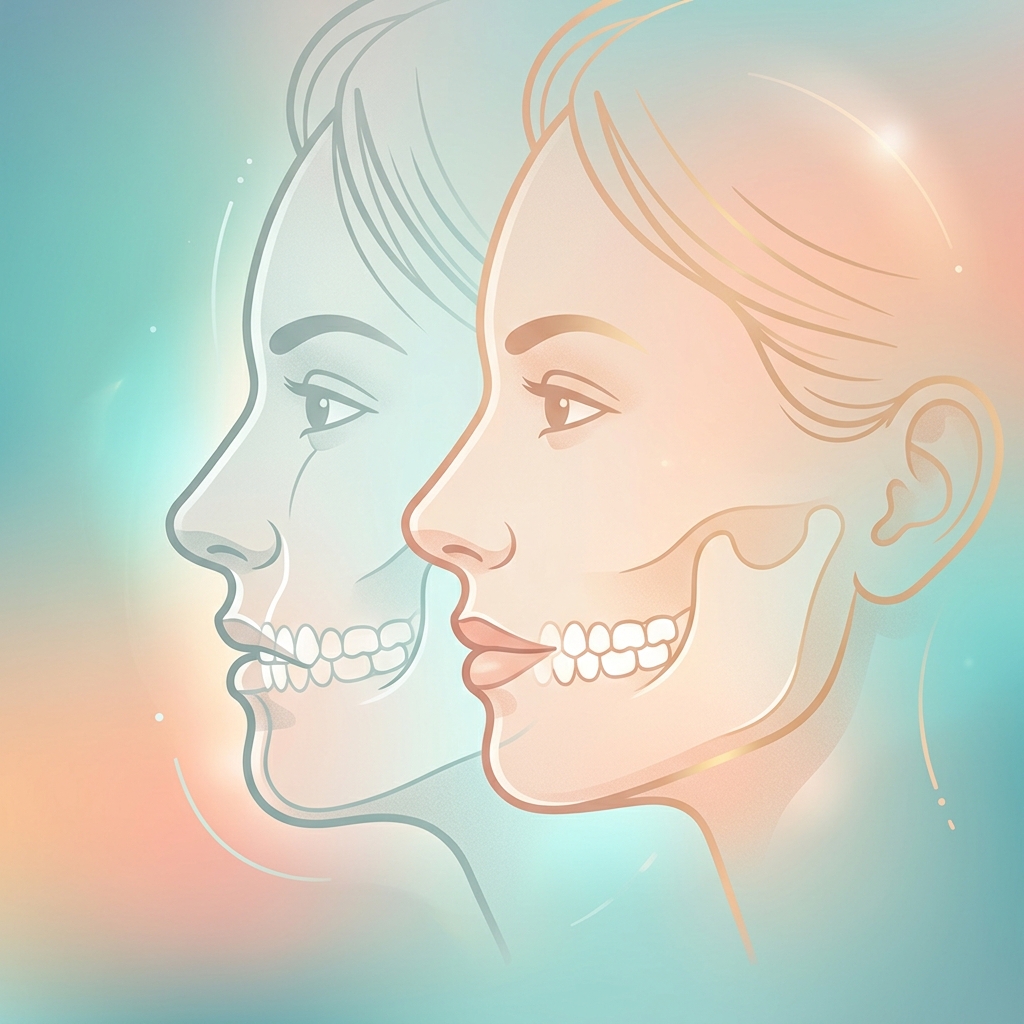
Braces cannot alter adult jawbone size, change natural tooth color, or reshape worn or chipped enamel edges without cosmetic dental procedures. Skeletal jaw discrepancies require surgical orthognathic correction.
- Jaw bone size and shape: Braces move teeth, not bones. Skeletal problems in adults require orthognathic surgery.
- Tooth color: Whitening should be done after braces are removed — whitening applied under brackets creates uneven coloration.
- Individual tooth shape: Worn, chipped, or unusually shaped teeth cannot be reshaped with braces. These issues can be addressed after alignment with dental bonding, veneers, or contouring.
- Tooth size ratios: If teeth are naturally small relative to arch size, restorative measures (bonding, veneers) may be used to create better proportions after alignment is complete.
Managing Expectations from Social Media
Social media before-and-after photos showcase extreme transformation cases rather than average outcomes. Your personal result depends on starting crowding severity, bite alignment, age, and strict retainer compliance.
Before-and-after photos on social media and orthodontist websites consistently show the most dramatic cases — selected specifically because they are impressive. The average braces result is not as dramatic as featured marketing cases.
Your own result depends almost entirely on your own starting point:
- If you start with moderate crowding and a normal bite, you will end with well-aligned teeth in a normal bite — a meaningful improvement that won't look like a jaw-dropping transformation.
- If you start with severe crowding, a deep overbite, and a narrow smile, the correction will be far more visible and the before-and-after photos will be genuinely striking.
Frequently Asked Questions
What do braces actually change?
Braces change tooth position and bite alignment — they straighten crowded or rotated teeth, close gaps, correct overbites, underbites, crossbites, and open bites, and align dental midlines. They also change how the lips are supported, which can subtly alter lip position and facial profile. What braces do not change: jaw bone size (without surgery), tooth color, individual tooth size, or tooth shape.
Do braces change your face?
Yes — in proportion to how much they change your tooth and bite positions. Correcting a significant overbite changes the lip-chin relationship and profile. Moving flared front teeth inward reduces lip protrusion. Widening a narrow arch widens the smile and reduces dark buccal corridors. These are real and often significant changes — but they come from shifting teeth, not changing bones. Dramatic photos typically show cases with major bite correction.
How long until you see results from braces?
The first visible change typically appears within 3–4 months. Crowding starts to resolve and rotations correct. By the 6-month mark, most patients see a noticeable improvement. The full result is only visible once braces are removed and the retainer is placed — usually at 18–24 months.
Do braces results last forever?
The results last as long as you wear your retainer. Normal aging and jaw changes cause teeth to shift throughout life. Without retainer support, teeth will gradually move — most noticeably in the lower front teeth. Most orthodontists now recommend wearing retainers nightly indefinitely after treatment.
What factors determine how dramatic the results will be?
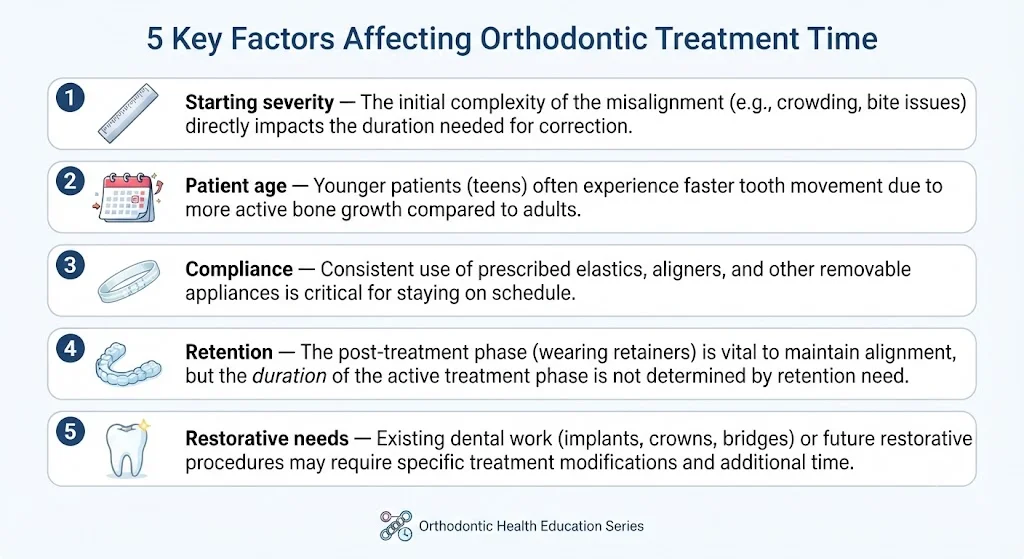
Five main factors: (1) Severity of starting point — more crowding means more visible change. (2) Age — growing patients can achieve bite corrections not possible in adults without surgery. (3) Compliance — elastics, headgear, and retainers must be worn as prescribed. (4) Retention — results are only maintained with long-term retainer wear. (5) Restorative needs — some cases require bonding or veneers after braces for tooth shape or size issues braces cannot fix.